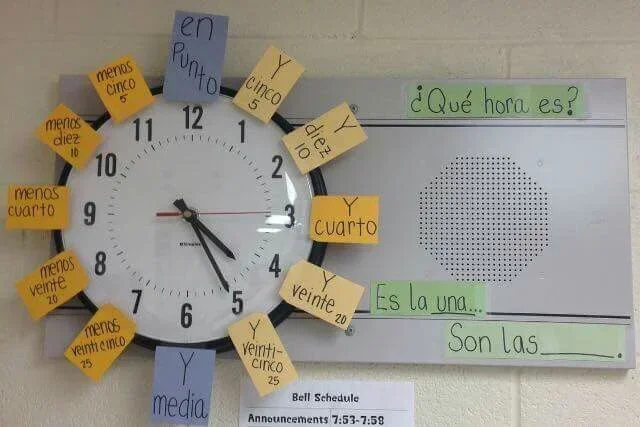

Learning how to say time in Spanish is one of the most useful skills for any language learner. You will master Spanish numbers, clock formats, and everyday phrases that make telling time feel natural. This guide covers hours, minutes, special expressions, and even texting shortcuts. With clear examples and simple tips, you will build confidence fast. Start practicing today and impress native speakers with your Spanish time-telling skills.
Knowing how to say time in Spanish opens doors in everyday life. Whether you are traveling, texting friends, or just trying to sound more natural, mastering time expressions is a must. This guide breaks everything down into simple, easy-to-follow steps. You will learn numbers, phrases, clock formats, and even casual texting shortcuts. By the end, you will feel confident telling time in Spanish in any situation.
Telling time in Spanish is not as hard as it sounds. The core ideas are simple, and the patterns repeat often. Once you learn a few basic rules, you can handle almost any time-related conversation. Let us dive in and build your skills step by step.
Key Takeaways
- Spanish numbers 1-29 are essential: You need these to tell any time accurately.
- Use “es” for 1:00 and “son” for all other hours: This is a key grammar rule many learners miss.
- “y” means “past” and “menos” means “to”: These simple words form the backbone of Spanish time expressions.
- The 24-hour format is common in Spain: Knowing both formats helps you understand clocks everywhere.
- Morning and evening phrases matter: “De la mañana,” “de la tarde,” and “de la noche” change how you speak about time.
- Text abbreviations exist in Spanish too: Casual texting uses shortcuts similar to English slang.
- Practice with real conversations: Speaking with native speakers is the fastest way to improve.
📑 Table of Contents
- Understanding the Basics of Telling Time in Spanish
- How to Say Hours in Spanish
- How to Say Minutes in Spanish
- Special Time Expressions and Phrases
- The 24-Hour Format in Spanish
- Texting and Casual Ways to Talk About Time
- Common Mistakes When Saying Time in Spanish
- Quick Tips to Master Spanish Time-Telling
- Expert Insights on Learning Spanish Time Expressions
- Key Takeaways
Understanding the Basics of Telling Time in Spanish
Before you jump into complex phrases, you need a solid foundation. The basics of telling time in Spanish rely on three things: numbers, verb choice, and simple connectors. Once you understand these building blocks, everything else clicks into place.
Spanish Numbers You Need to Know
You cannot tell time without knowing your Spanish numbers. Here is what you need to focus on first:
- Numbers 1 through 12: These are the core hours on a clock. Learn them cold.
- Numbers 13 through 29: You need these for minutes past the hour.
- Special words: “Media” means half, and “cuarto” means quarter. These are game-changers.
Spend a few minutes each day reviewing these numbers. Flashcards work great. You can also use apps to quiz yourself. The more automatic these numbers become, the easier time-telling will feel.
How the Spanish Clock Works
Spanish uses a slightly different approach than English when talking about time. In English, you say “it is three fifteen.” In Spanish, the structure changes a bit. The verb “ser” (to be) plays a big role here.
For hours from 2 to 12, you use “son.” For example:
- Son las dos. (It is two o’clock.)
- Son las cinco. (It is five o’clock.)
For 1 o’clock, you use “es” instead of “son”:
- Es la una. (It is one o’clock.)
This is one of the first rules you should memorize. It trips up many beginners, but once you get it, it becomes second nature.
How to Say Hours in Spanish
Saying the hour is the easiest part of how to say time in Spanish. Once you know your numbers, you are already halfway there. Let us look at the different ways to express hours.
Saying O’Clock Times
O’clock times are the simplest. You just state the hour and add “en punto” for emphasis, though it is optional. Here are some examples:
- Son las tres en punto. (It is three o’clock.)
- Es la una en punto. (It is one o’clock.)
- Son las doce en punto. (It is noon or midnight.)
The phrase “en punto” means “sharp” or “on the dot.” People use it when they want to stress that the time is exact. In casual conversation, you can skip it and just say the hour.
Common Hour Expressions
Beyond the basic hours, Spanish has some handy expressions for common times of day:
- Mediodía means noon.
- Medianoche means midnight.
- La madrugada refers to the early morning hours, usually between midnight and dawn.
These words help you be more precise in your conversations. Native speakers use them all the time, so adding them to your vocabulary will make your Spanish sound much more natural.
How to Say Minutes in Spanish
This is where things get a little more interesting. Minutes in Spanish follow a few clear patterns. Once you understand them, you can express any time on the clock.
Minutes Past the Hour
To say minutes past the hour, you use the word “y,” which means “and.” The structure is simple: hour + y + minutes.
- Son las dos y diez. (It is two ten.)
- Son las cuatro y media. (It is four thirty.)
- Son las siete y cuarto. (It is seven fifteen.)
Notice how “media” (half) and “cuarto” (quarter) replace numbers for common minute marks. This makes speaking faster and more natural. You will hear these words used constantly in real conversations.
Minutes to the Next Hour
When the minutes are closer to the next hour, Spanish uses “menos,” meaning “minus” or “to.” The structure flips slightly:
- Son las tres menos diez. (It is ten to three / 2:50.)
- Es la una menos veinticinco. (It is twenty-five to one / 12:35.)
This might feel backwards at first. In English, we say “ten to three,” which means the same thing. But the word order in Spanish puts the hour first, then “menos,” then the minutes. Practice a few examples out loud, and it will start to feel normal.
Special Time Expressions and Phrases
Beyond the clock, Spanish has a rich set of time expressions. These help you talk about daily routines, schedules, and plans with confidence.
Half Past and Quarter Times
Half past and quarter times come up all the time. Here is how to say them:
- Media = half past (e.g., “Son las seis y media” = It is six thirty)
- Cuarto = quarter past (e.g., “Son las nueve y cuarto” = It is nine fifteen)
- Menos cuarto = quarter to (e.g., “Son las diez menos cuarto” = It is ten forty-five)
These three words cover a huge portion of the times you will mention daily. Memorize them, and you will handle most conversations with ease.
Morning, Afternoon, and Evening
Spanish splits the day into three main periods. Adding the right one after the time makes your message clear:
- De la mañana = in the morning (midnight to noon)
- De la tarde = in the afternoon (noon to around 6 or 7 PM)
- De la noche = in the evening/night (after 6 or 7 PM)
So “Son las dos y media de la tarde” means “It is two thirty in the afternoon.” The period marker helps listeners picture the exact time of day. This is especially useful when texting or making plans.
The 24-Hour Format in Spanish
When to Use Military Time in Spanish
In many Spanish-speaking countries, especially Spain, the 24-hour clock is standard. You will see it on train schedules, TV guides, and official documents. Here is how it works:
- 14:00 = two in the afternoon (las catorce horas)
- 21:30 = nine thirty at night (las veintiuna y media)
- 00:00 = midnight (medianoche)
The 24-hour format eliminates any confusion about morning versus evening. When you first hear it, it might sound confusing. But after a few days of practice, it becomes second nature. If you are traveling, learning this format is especially helpful.
Texting and Casual Ways to Talk About Time
When you are texting friends in Spanish, things get even more casual. People use shortcuts and abbreviations to save time. Understanding these helps you keep up with fast-paced casual Spanish conversation in messages.
For example, if someone texts you Wtw meaning in text, they are asking what you are up to or what is going on. You might respond with the current time or a plan. Similarly, Ts meaning in text can show up in messages when someone is referencing a timestamp or time slot. Knowing these abbreviations helps you stay in the loop during informal chats.
Here are a few other casual time-related shortcuts you might encounter:
- “A qué hora?” = At what time?
- “¿A qué hora quedamos?” = What time do we meet?
- “Llego a las…” = I arrive at…
These phrases are perfect for everyday texting and chatting. They make your Spanish sound more natural and relaxed. The more you practice them, the more fluent your conversations will become.
Common Mistakes When Saying Time in Spanish
Even with the best preparation, learners make mistakes. Here are the most common ones to watch out for:
- Using “son” for 1 o’clock: Always use “es” for one o’clock, not “son.”
- Forgetting “y” for minutes past: Leaving out “y” can change the meaning entirely.
- Mixing up “menos” and “y”: “Menos” means minutes before the next hour, while “y” means minutes after the current hour.
- Ignoring the time of day: Saying “Son las dos” without “de la tarde” or “de la mañana” can confuse listeners.
- Translating directly from English: Some time expressions do not follow a direct translation. Learn the Spanish way instead.
Making mistakes is a normal part of learning. The key is to notice them, correct them, and keep practicing. Every error you fix brings you closer to fluency.
Quick Tips to Master Spanish Time-Telling
Want to speed up your progress? Try these practical tips:
- Set your phone to Spanish: Seeing Spanish time on your lock screen builds familiarity fast.
- Practice out loud every day: Say the time whenever you check your watch or phone.
- Watch Spanish TV or videos: Pay attention to how native speakers say the time.
- Use flashcards for numbers 1-29: Quick recall is the foundation of fluent time-telling.
- Find a language partner: Ask a native speaker to quiz you on the time in Spanish.
Consistency beats intensity. Spending ten minutes a day on time-telling practice will yield better results than one long session per week. Make it a habit, and you will see real progress.
Expert Insights on Learning Spanish Time Expressions
Language teachers agree that time expressions are among the first practical skills a learner should master. Why? Because you use them every single day. Whether you are catching a bus, meeting a friend, or scheduling a call, time is always relevant.
One expert tip is to think in Spanish when you look at a clock. Instead of mentally translating from English, try to form the time directly in Spanish. At first, it feels slow. But with practice, it becomes automatic. This mental shift is what separates fluent speakers from beginners.
Another valuable insight is to pay attention to regional differences. In Spain, the 24-hour format dominates. In Latin America, the 12-hour format with “de la mañana” and “de la tarde” is more common. Both are correct, and knowing both makes you a more versatile speaker.
Key Takeaways
- Master the verb “ser” and its forms “es” and “son”: This is the foundation of every time sentence.
- Learn “y” for past and “menos” for to: These two words handle most minute expressions.
- Use “media” and “cuarto” for common times: They make your speech faster and more natural.
- Add time-of-day markers for clarity: “De la mañana,” “de la tarde,” and “de la noche” prevent confusion.
- Practice the 24-hour format: It is essential for travel and understanding official schedules.
- Stay curious about casual abbreviations: Understanding text slang like Wtw meaning in text and other shortcuts keeps your informal Spanish sharp.
- Practice daily with real conversations: The fastest path to confidence is consistent, real-world practice.
Frequently Asked Questions
Is it hard to learn how to say time in Spanish?
Not at all. The basic structure is simple and follows clear patterns. Once you know your Spanish numbers up to 29 and a few key words like “y,” “menos,” “media,” and “cuarto,” you can tell almost any time. It just takes a little daily practice.
Do I need to learn both the 12-hour and 24-hour formats?
It helps to know both. The 12-hour format is used in everyday conversation across Latin America. The 24-hour format is standard in Spain and in official settings. Learning both makes you more versatile and confident.
What is the easiest way to practice telling time in Spanish?
Set your phone or watch to Spanish and say the time out loud every time you check it. You can also practice with a language partner or use language apps that focus on time-telling exercises. Consistency is the key to building speed and confidence.
Do Spanish speakers use abbreviations when texting about time?
Yes, they do. Casual texting in Spanish often includes abbreviations and slang. Understanding terms like common text shortcuts helps you follow along in fast-moving group chats and informal conversations.
What verb do I use when telling time in Spanish?
You use the verb “ser,” which means “to be.” Use “es” for one o’clock and “son” for all other hours. This is one of the most important rules to remember when you are learning how to say time in Spanish.
Can I use the same time expressions in all Spanish-speaking countries?
Most expressions work everywhere, but there are regional preferences. Spain favors the 24-hour clock, while Latin American countries often use the 12-hour format with morning and evening markers. Both approaches are correct and widely understood.
=== CONCLUSION ===
Learning how to say time in Spanish is a practical and rewarding skill. You now have the numbers, the verb rules, the minute expressions, and the casual shortcuts to handle real conversations. The key is to practice a little every day. Say the time out loud, text a friend in Spanish, or watch a show and pay attention to the timestamps.
Do not worry about making mistakes. Every fluent speaker started exactly where you are now. The more you expose yourself to Spanish time expressions, the more natural they will feel. Trust the process, stay consistent, and you will be telling time in Spanish with confidence before you know it.



