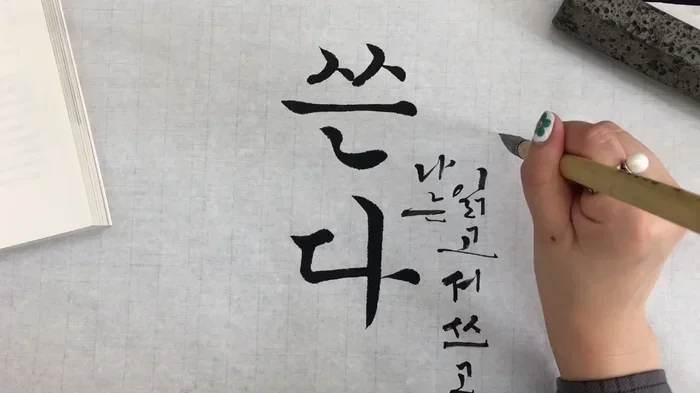

Learning how to say my name is in Korean is simpler than you think. This guide covers the Korean word for “name,” the Hangul writing system, pronunciation tips, and real-life phrases you can use today. Whether you are introducing yourself in a classroom, on a video call, or at a Korean restaurant, these steps will help you sound natural and confident from day one.
Key Takeaways
- 이름 (ireum) is the Korean word for “name,” and it is the foundation of every self-introduction.
- How to say my name is in Korean uses the simple formula: 이름은 [Your Name]입니다 (ireumeun [Your Name]imnida).
- Hangul, the Korean alphabet, has 14 consonants and 10 vowels, making it easy to learn and write any name phonetically.
- Korean names follow a family-name-first structure, which is the opposite of Western naming order.
- Using the right honorifics like -요 (-yo) or -습니다 (-seumnida) shows respect and politeness in Korean culture.
- Practice with audio clips and shadowing native speakers to master the rhythm and tone of Korean pronunciation.
- You can use your Korean name on devices, gaming profiles, and social media to practice daily.
📑 Table of Contents
- How to Say My Name Is in Korean: A Complete Beginner Guide
- The Korean Word for “Name” and Basic Phrases
- How to Write Your Name in Korean (Hangul)
- Korean Name Structure and Pronunciation Tips
- Politeness Levels: How to Sound Respectful
- Common Mistakes to Avoid When Saying Your Name in Korean
- Fun Ways to Practice Your Korean Name
- Final Thoughts on Saying Your Name in Korean
How to Say My Name Is in Korean: A Complete Beginner Guide
Have you ever walked into a Korean restaurant, joined a gaming lobby, or met someone from Seoul and wanted to introduce yourself properly? Knowing how to say my name is in Korean opens doors. It shows respect. It builds connections. And it is way easier than most people expect.
The Korean language has a beautiful, logical writing system called Hangul. Once you learn a few basic phrases, you can introduce yourself in any situation. This guide walks you through everything step by step. You will learn the exact words, the correct pronunciation, and the cultural rules that make your introduction sound natural.
By the end of this article, you will know how to say your name in Korean confidently. You will also understand why Korean names work the way they do. Let us dive in.
Why Learning to Introduce Yourself in Korean Matters
First impressions matter everywhere. In Korean culture, how you introduce yourself sets the tone for every interaction. Koreans value politeness and respect. Using the right phrases shows that you care about their language and traditions.
Even a simple attempt to speak Korean earns you huge points. People appreciate the effort. It breaks the ice faster than any translator app ever could. Plus, knowing how to say my name is in Korean is the first step toward learning more Korean phrases for beginners. Once you nail this, other parts of the language start to feel much more approachable.
Think about it this way. When someone tries to speak your language, even imperfectly, you feel respected. The same goes for Koreans. Your effort tells them, “I see your culture, and I want to be part of it.” That is a powerful message.
The Korean Word for “Name” and Basic Phrases
The Korean word for “name” is 이름 (ireum). This single word is the building block of every self-introduction. Let us break down the most common phrases you will need.
The standard way to say “my name is” in Korean is:
- 이름은 [이름]입니다 (ireumeun [ireum]imnida) — This is the polite, formal version. Use it in most situations.
- 이름이 [이름]이에요 (ireumi [ireum]ieyo) — This is the casual, friendly version. Use it with people your age or younger.
Here is how these phrases work in real life:
- 제 이름은 존입니다 (je ireumeun jon-imnida) — My name is John.
- 내 이름은 마리아여 (nae ireumeun maria-yeo) — My name is Maria (casual).
- 이름이 김이에요 (ireumi kim-ieyo) — My name is Kim.
Notice how the structure stays the same. You just swap out the name. The word 이름 (ireum) always comes first, followed by the subject marker, then the name, and finally the verb “to be.”
Essential Phrases for Self-Introduction
Beyond just stating your name, Koreans often use a few extra phrases when they meet someone new. Here are the most useful ones:
- 안녕하세요 (annyeonghaseyo) — Hello. This is the standard greeting for almost any situation.
- 만나서 반갑습니다 (mannaseo bangabseumnida) — Nice to meet you. This is the polite version.
- 반가워 (bangao) — Nice to meet you (casual). Use with friends or people your age.
- 한국어를 배우고 있어요 (hangugeoreul baeugo isseoyo) — I am learning Korean. This is a great icebreaker.
Putting it all together, a full introduction sounds like this:
안녕하세요. 제 이름은 사라입니다. 한국어를 배우고 있어요. (Annyeonghaseyo. Je ireumeun saraimnida. Hangugeoreul baeugo isseoyo.)
Translation: “Hello. My name is Sarah. I am learning Korean.”
That is it. Three short sentences. You just introduced yourself like a native. Practice this out loud a few times until it feels natural.
How to Write Your Name in Korean (Hangul)
One of the coolest parts of learning Korean is writing your name in Hangul. Hangul is the Korean alphabet, and it was created in the 15th century to make literacy accessible to everyone. Unlike Chinese characters, Hangul is phonetic. Each letter represents a sound. This means you can write any name from any language using Korean letters.
The Korean alphabet has 14 consonants and 10 vowels. Together, they form syllable blocks. Each block represents one syllable of a word. For example, the word “cat” in Korean is 고양이 (goyangi), which has three syllable blocks: 고, 양, 이.
Writing Your Western Name in Hangul
To write your English name in Korean, you match each sound to the closest Korean letter. Here is a quick reference:
- A — ㅏ (a) or ㅐ (ae)
- B — ㅂ (b)
- J — ㅈ (j)
- K — ㅋ (k)
- M — ㅁ (m)
- N — ㄴ (n)
- P — ㅂ (b) or ㅍ (p)
- S — ㅅ (s)
- T — ㅌ (t)
Let us try a few examples:
- John → 존 (jon)
- Maria → 마리아 (maria)
- David → 데이비드 (deibideu)
- Emily → 에밀리 (emilli)
- Michael → 마이클 (maikeul)
See how straightforward that is? You do not need to memorize hundreds of characters. You just sound out your name using the Korean alphabet. Many people even customize their Apple Watch name or gaming profiles with their Korean name for fun.
Using a Korean Name Converter
If you want a more accurate phonetic match, you can use a Korean name converter tool online. These tools analyze the sounds in your name and match them to the closest Korean equivalents. Some even consider Korean naming conventions to make your name sound more natural.
Keep in mind that some sounds in English do not exist in Korean. For example, the “th” sound does not have a direct Korean equivalent. In these cases, Koreans often substitute it with ㅅ (s) or ㄷ (d). So “Thomas” becomes 토마스 (tomaseu), not “thomas.”
Korean Name Structure and Pronunciation Tips
Understanding how Korean names work helps you appreciate the language even more. In Korean culture, the family name always comes first. This is the opposite of Western naming order, where the given name comes first.
For example, the famous Korean actor Lee Min Ho has the family name Lee (이) and the given name Min Ho (민호). When you address him formally, you would say 이민호 (Lee Min Ho). The family name Lee sits in front.
Common Korean Family Names
Here are some of the most common Korean family names you will encounter:
- 김 (Kim) — The most common Korean surname, used by about 20% of the population.
- 이 (Lee) — The second most common, shared by many Koreans worldwide.
- 박 (Park) — The third most common, with deep historical roots.
- 최 (Choi) — A very popular surname with many famous bearers.
- 정 (Jung/Cheong) — Another widely used family name.
If you want to create a Korean name for beginners, you can pick a family name and combine it with a given name that sounds good. Some people choose a name that resembles their original name. Others pick a name with a meaning they love.
Pronunciation Tips for Korean Names
Pronunciation is key to sounding natural. Here are some tips to help you get it right:
- Pay attention to vowel length. Korean distinguishes between short and long vowels. For example, 무 (mu, meaning radish) sounds different from 무 (mu, meaning nothing) because of vowel length.
- Batchim (final consonants) matter. Many Korean syllables end with a consonant. These final consonants change the sound of the next syllable. Practice saying them slowly at first.
- Use a mirror. Watch your mouth shape as you pronounce Korean letters. The tongue position for Korean sounds is different from English.
- Listen and repeat. Use apps or YouTube videos to hear native speakers. Then repeat what they say. This technique, called shadowing, works incredibly well.
The more you practice, the more natural it will feel. Do not worry about perfection. Koreans are generally very forgiving and encouraging when non-native speakers try their language.
Politeness Levels: How to Sound Respectful
Korean has different levels of politeness, and using the right one shows cultural awareness. When you say how to say my name is in Korean, the level of formality you choose depends on who you are talking to.
The Three Main Politeness Levels
- Formal polite (-습니다 / -입니다): Use this with strangers, elders, people in authority, and anyone you have just met. This is the safest choice for most situations.
- Casual polite (-요): Use this with people your age, new friends, or in casual settings. It is friendly but still respectful.
- Casual casual (-아 / -어): Use this only with close friends or people younger than you. Using this with strangers can come across as rude.
Here is a quick comparison of how “my name is” changes across these levels:
| Level | Phrase | When to Use |
|---|---|---|
| Formal Polite | 이름은 [이름]입니다 | First meetings, business, elders |
| Casual Polite | 이름은 [이름]이에요 | Friends, peers, casual settings |
| Casual | 이름은 [이름]이야 | Close friends, siblings, younger people |
As a beginner, stick with the formal polite form. It works in almost every situation and shows good manners. You can always switch to a more casual tone once you build rapport with someone.
In Korean culture, respect is deeply embedded in daily communication. Using the right honorifics is not just about grammar. It is about showing that you value the other person. This concept is similar to how some cultures use titles like “sir” or “ma’am.” The Korean system goes even further, with verb endings changing based on the social hierarchy.
Common Mistakes to Avoid When Saying Your Name in Korean
Even the best learners make mistakes. Here are the most common ones and how to avoid them.
Mistake 1: Using English Word Order
In English, we say “My name is John.” In Korean, the structure is different. You say 이름은 존입니다 (ireumeun jon-imnida). The name comes after the verb “is.” Do not translate directly from English. Learn the Korean pattern instead.
Mistake 2: Skipping the Honorific
Dropping the polite ending (-입니다 or -이에요) makes your sentence sound abrupt or even rude. Always include at least the casual polite form (-요) when speaking to someone you do not know well.
Mistake 3: Mispronouncing Batchim
Batchim is the final consonant in a Korean syllable. For example, in the word 감사합니다 (gamsahamnida), the ㅂ at the end of 감 changes the sound of the next syllable. Mispronouncing batchim can make your words hard to understand.
Mistake 4: Using Honorifics with Close Friends
While it is better to be too polite than too casual at first, using formal language with close friends can feel stiff. Once you are comfortable with someone, switch to the casual polite or casual form. This shows that your relationship has grown.
Fun Ways to Practice Your Korean Name
Learning does not have to be boring. Here are some fun ways to practice saying your name in Korean every day.
- Set your Korean name as your display name on your phone, computer, or gaming profile. Every time you see it, you will reinforce the spelling and pronunciation.
- Record yourself introducing yourself in Korean. Listen back and compare your pronunciation to native speakers on apps like Forvo or Naver Dictionary.
- Write your Korean name on sticky notes and place them around your home. Label objects with their Korean names alongside your name.
- Join a Korean language exchange group online or in your city. Practice introducing yourself in real conversations. Platforms like HelloTalk or Tandem connect you with native speakers.
- Create a funny Korean name for holiday games. If you are hosting a Christmas Kahoot night, try using a Korean name for your team. It adds a fun cultural twist.
The more you expose yourself to the language, the faster you will improve. Even five minutes of daily practice makes a huge difference over time. Consistency beats intensity every single time.
Another great way to practice is by watching Korean shows or listening to K-pop. Pay attention to how characters introduce themselves. Notice the tone, the speed, and the politeness level. Mimic what you hear. This kind of Korean language learning through immersion is both effective and enjoyable.
Final Thoughts on Saying Your Name in Korean
Learning how to say my name is in Korean is one of the most rewarding first steps in your language journey. It gives you a practical skill you can use immediately. It also shows respect for Korean culture, which Koreans truly appreciate.
Start with the basics. Learn the word 이름 (ireum). Master the phrase 이름은 [이름]입니다. Write your name in Hangul. Practice your pronunciation daily. Layer in politeness levels as you grow more confident.
Do not be afraid to make mistakes. Every error is a learning opportunity. Koreans are known for their warmth and encouragement toward language learners. They will appreciate your effort, no matter how small.
So go ahead. Introduce yourself in Korean today. Say your name with confidence. And remember, every great Korean speaker started with a single hello and a simple introduction. You are already on your way.
Whether you are preparing for a trip to Seoul, connecting with Korean friends, or just exploring a new language for fun, knowing how to introduce yourself is the foundation. Build on it. Keep practicing. And enjoy the journey.
For more insights into the meaning behind language and expressions, check out our article on ignorance is bliss meaning to explore how language shapes our perspectives.
Frequently Asked Questions
What is the Korean word for “my name”?
The Korean word for “name” is 이름 (ireum). To say “my name is,” you use the phrase 이름은 [이름]입니다 (ireumeun [ireum]imnida) for formal situations or 이름은 [이름]이에요 (ireumeun [ireum]ieyo) for casual ones.
How do you write an English name in Korean characters?
You write an English name in Korean by matching each English sound to the closest Korean letter in Hangul. For example, “John” becomes 존 (jon) and “Emily” becomes 에밀리 (emilli). Online Korean name converters can also help you find the best phonetic match.
Is it better to use a Korean name or your real name when speaking Korean?
Both are perfectly fine. Many learners use their real name written in Hangul, while others choose a Korean name that sounds similar. Using your real name is simpler and more authentic, but a Korean name can feel more natural in certain cultural contexts.
What is the most polite way to introduce yourself in Korean?
The most polite way is to combine 안녕하세요 (hello) with 이름은 [이름]입니다 (my name is [name]) and 만나서 반갑습니다 (nice to meet you). This formal polite style shows maximum respect and works in any setting.
How long does it take to learn basic Korean self-introductions?
Most learners can master a basic self-introduction in one to two hours of focused study. The phrases are short and logical. With daily practice of 10 to 15 minutes, you can use them confidently within a week.
Can I use my Korean name on social media or gaming platforms?
Absolutely. Many people use their Korean name on platforms like Discord, Xbox, or Steam. It is a great way to practice daily and connect with Korean-speaking communities. You can even customize your team name with a Korean flair for holiday events.



