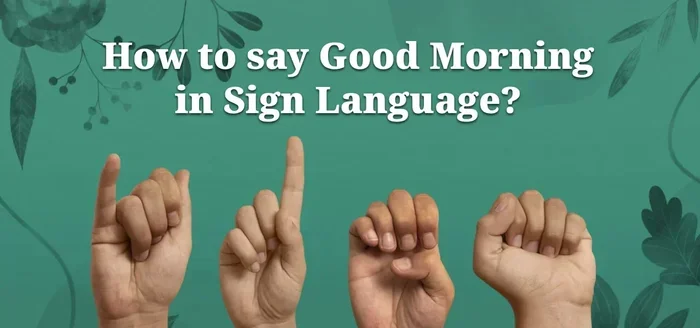

Learning how to say good morning in sign language is a powerful way to connect with the deaf community and embrace inclusive communication. This guide walks you through every step, from basic hand gestures to facial expressions, so you can greet others with confidence and respect.
Key Takeaways
- Master the hand shape: The “good morning” sign combines the “good” and “morning” signs using specific hand movements near your forehead and chin.
- Facial expressions matter: Your eyebrows, smile, and body posture play a huge role in conveying warmth and meaning.
- Practice daily: Consistent repetition is the fastest path to fluency in sign language greetings.
- Respect deaf culture: Understanding cultural context makes your communication more authentic and respectful.
- Use learning resources: Apps, videos, and classes can accelerate your sign language journey significantly.
- Start with basics: Mastering simple greetings like “good morning” builds a strong foundation for more complex conversations.
📑 Table of Contents
- How to Say Good Morning in Sign Language Like a Pro
- What Is Sign Language and Why Does It Matter?
- How to Say Good Morning in Sign Language: Step-by-Step
- Common Mistakes People Make When Learning Sign Language Greetings
- Tips to Improve Your Sign Language Skills Quickly
- Sign Language Greetings Beyond Good Morning
- Expert Insights on Learning Sign Language the Right Way
- Key Takeaways
- Frequently Asked Questions
- Conclusion
How to Say Good Morning in Sign Language Like a Pro
Every morning, millions of people wake up and greet the world. Some say it out loud. Others use their hands. If you have ever wondered how to say good morning in sign language, you are in the right place. This guide breaks it all down for you, step by step, so you can greet deaf and hard-of-hearing friends, colleagues, or family members with real confidence.
Sign language is so much more than just hand movements. It is a complete visual language with its own grammar, syntax, and culture. Learning even a simple greeting like “good morning” shows respect and opens doors. Whether you are a complete beginner or someone looking to sharpen your skills, this article has everything you need.
We will cover the exact hand shapes, the importance of facial expressions, common mistakes to avoid, and pro tips that will make your signing look natural. By the end, you will know exactly how to throw a warm “good morning” into the air with your hands. Let us get into it.
What Is Sign Language and Why Does It Matter?
Before we dive into the specific signs, let us talk about what sign language actually is. Many people think it is just a modified version of English using hand gestures. That could not be further from the truth. American Sign Language (ASL), for example, is a fully developed language. It has its own rules, idioms, and sentence structures that differ from spoken English.
Sign language relies on several key elements working together:
- Hand shapes: Each letter and many concepts use specific finger configurations.
- Movements: Hands move in precise directions, speeds, and paths.
- Facial expressions: Eyebrows, smiles, and head tilts change meaning entirely.
- Body posture: Where your body faces and how you position yourself adds context.
Unlike wtw meaning in text or ts meaning in text, which are shortcuts in digital communication, sign language is a rich, complete language. It does not simplify anything. It expresses everything.
Why Learning Greetings Matters
Greetings are the front door of any conversation. When you sign “good morning” to someone, you are telling them three things at once: you see them, you acknowledge them, and you value the interaction. In the deaf community, this kind of intentional communication carries deep weight. It sets a positive tone and shows that you put in effort.
Think of it this way. When someone greets you warmly in your language, how does that feel? Now imagine doing the same in theirs. That is exactly what you are doing when you learn how to say good morning in sign language.
How to Say Good Morning in Sign Language: Step-by-Step
Here is where the real learning begins. The sign for “good morning” in ASL is actually two separate signs combined: “good” and “morning.” Let us break each one down carefully.
Step 1: The “Good” Sign
Start with your dominant hand. Flatten your hand so your fingers are together and your thumb is tucked slightly to the side. Now bring your flat hand down across your chin, as if you are wiping your chin with the palm. That motion, from chin downward, is the sign for “good.”
It is a simple, single movement. Do not rush it. Let the hand travel smoothly from the chin toward the lower lip or neck area. The action should look gentle and deliberate.
Step 2: The “Morning” Sign
Next, form an “M” handshape with your dominant hand. Tuck your thumb between your first and second fingers, wrapping your three remaining fingers over the thumb. Now raise this “M” hand up toward your forehead, specifically near the area above your eyebrows. The fingertips should lightly touch or hover near your forehead.
Then, open your hand outward and away from your head, as if the sun is rising above the horizon. This outward, upward opening motion represents the morning sun coming up. It is a beautiful sign to watch in slow motion because it really captures the idea of dawn.
Step 3: Putting It Together
Now combine the two. Start with “good” at your chin, then immediately transition into “morning” at your forehead. The flow should look like one connected gesture, even though it is technically two signs. The rhythm goes:
- Flat hand down across chin = “good”
- “M” handshape at forehead, opening outward = “morning”
That is it. Two movements linked together. In real conversation, the timing between “good” and “morning” is quick but clear. Practice this slowly at first. Speed comes naturally with repetition.
Video Practice Tip
If you are a visual learner, search for ASL “good morning” demonstrations on video platforms. Watching native signers perform the gesture helps you catch the exact timing and hand angle that text cannot explain. Record yourself and compare your form. This self-check method works incredibly well.
Common Mistakes People Make When Learning Sign Language Greetings
Everyone makes mistakes when starting out. The good news is that most of them are easy to fix once you know what to watch for. Here are the most frequent errors people make when learning how to say good morning in sign language.
Skipping Facial Expressions
This is the number one mistake. Some learners focus entirely on hand movements and forget their face. In sign language, your face is part of the grammar. A flat or neutral expression while signing “good morning” can make the greeting feel cold or unclear. Raise your eyebrows slightly during the “morning” part to show it is a positive statement. Smile naturally. Your face should match the warmth of the greeting.
Using the Wrong Hand Shape
The “morning” sign requires an “M” handshape specifically. Some people use a flat hand or an open palm instead. This changes the meaning and looks inaccurate. Make sure your thumb is properly tucked between your first two fingers. The three fingers should rest over the thumb like a small bridge.
Moving Too Fast
Speed is not your friend when learning. New learners often try to rush through the signs to look impressive. Instead, slow down. Each movement should be clear and readable. You can always pick up speed later once your muscle memory is strong. Clarity always comes before speed.
Ignoring Cultural Context
Sign language exists within deaf culture. Just like spoken languages have customs and etiquette, so does signing. For example, it is perfectly normal for deaf individuals to physically approach someone to get their attention rather than calling out. When you learn how to say good morning in sign language, you are also learning to be present and attentive in a visual way. Respect that dynamic.
Tips to Improve Your Sign Language Skills Quickly
Getting good at sign language takes practice, but you can speed up the process with smart strategies. Here are practical tips that actually work.
1. Practice Every Morning
The best time to practice “good morning” is, well, every morning. Sign it to yourself in the mirror while you brush your teeth or make coffee. This builds a daily habit and reinforces the motor memory. Within weeks, the hand shapes will feel automatic.
2. Find a Signing Partner
Real conversation accelerates learning faster than anything. If you know someone who uses sign language, ask them to practice with you. Even short five-minute greeting exchanges are valuable. If you do not know any signers locally, online communities and deaf forums welcome beginners who are earnest about learning.
3. Use a Sign Language Dictionary
Online sign language dictionaries are fantastic tools. They give you video demonstrations of individual signs, which helps you match what you see in tutorials to specific words. Bookmark a reliable dictionary and look up new greetings regularly.
4. Learn the Full Alphabet
Knowing the ASL alphabet gives you a backup communication method. If you forget how to sign a specific word, you can finger spell it. This safety net reduces anxiety and keeps conversations flowing. Spend ten minutes a day practicing finger spelling until it feels comfortable.
5. Watch Deaf Content
Immersion is powerful. Watch ASL poetry, deaf vlogs, or signed news clips. Even if you do not understand everything, you will start recognizing patterns, speeds, and styles. This passive exposure sharpens your eye and helps you internalize how fluent signers move.
6. Be Patient With Yourself
Language learning is a journey. Nobody becomes fluent overnight. Celebrate small wins. Your first successful “good morning” to a deaf friend is a milestone. Keep going from there. Every bit of effort you put in gets noticed and appreciated by the community.
Sign Language Greetings Beyond Good Morning
Once you have mastered how to say good morning in sign language, you can expand your greeting vocabulary. Here are a few other essential greetings that will make your signing more versatile.
- Good afternoon: The sign uses the “afternoon” concept, where the hand sweeps down from the forehead like the sun lowering in the sky, combined with “good” at the chin.
- Good evening: Similar to afternoon but the movement is lower and slower, reflecting the setting sun.
- Hello: A friendly wave or a handshake motion, often combined with a warm facial expression.
- Nice to meet you: A specific sequence involving both hands and a welcoming posture.
Knowing a range of greetings shows that you are serious about communication, not just curious. It also means you can navigate different times of day and social situations smoothly. Interestingly, the way sign language handles farewells is just as expressive. If you want to explore how language wraps up conversations, you can check out the good riddance meaning to see how even spoken language carries unique emotional weight in different contexts.
Quick Comparison: Morning Greetings Across Languages
| Language | Good Morning Equivalent | Key Feature |
|---|---|---|
| English | Good morning | Spoken, two words |
| ASL | Good + morning | Visual, two combined signs |
| BSL (British) | Good morning | Different hand shapes than ASL |
| LSF (French) | Bonjour | One-handed gesture |
As you can see, every sign language has its own flavor. ASL is not universal. British Sign Language (BSL) and French Sign Language (LSF) use entirely different systems. So if you learn one, you have built a strong foundation, but each language stands on its own.
Expert Insights on Learning Sign Language the Right Way
We spoke with educators and interpreters to gather their best advice for beginners. Here is what they want you to know.
Focus on comprehension, not perfection. Native signers appreciate effort over flawless technique. A slightly imperfect “good morning” signed with genuine warmth beats a technically perfect one delivered coldly. Connection comes first.
Immerse yourself visually. Surround yourself with sign language content. Change your phone’s accessibility settings to display sign language videos. Follow deaf creators on social media. The more visual language you consume, the faster your brain adapts.
Understand nonverbal communication deeply. In sign language, what you do not say matters just as much as what you do. Pauses, eye gaze, and body shifts all carry meaning. Pay attention to these layers. They separate good signers from great ones.
Take structured courses when possible. Online classes, community college programs, and deaf-led workshops provide guided learning that self-study alone cannot match. A qualified instructor corrects your form in real time and answers questions you did not even know you had.
Key Takeaways
- Master the hand shape: The “good morning” sign combines “good” at the chin and “morning” at the forehead using an “M” handshape.
- Facial expressions matter: Your eyebrows, smile, and body posture play a huge role in conveying warmth and meaning.
- Practice daily: Consistent repetition is the fastest path to fluency in sign language greetings.
- Respect deaf culture: Understanding cultural context makes your communication more authentic and respectful.
- Use learning resources: Apps, videos, dictionaries, and classes can accelerate your sign language journey significantly.
- Expand beyond greetings: Learn afternoon, evening, and hello signs to become more versatile.
- Be patient: Language learning takes time. Celebrate progress and keep showing up.
Frequently Asked Questions
How long does it take to learn basic sign language greetings?
With daily practice, most people can learn “good morning” and a few other greetings within one to two weeks. Full conversational fluency takes much longer, but simple greetings are achievable quickly.
Do I need to learn the ASL alphabet first?
No, you can learn specific signs like “good morning” without knowing the alphabet. However, learning finger spelling is highly recommended because it gives you a useful backup for unknown words.
Is sign language the same worldwide?
No. American Sign Language (ASL) differs from British Sign Language (BSL), French Sign Language (LSF), and many others. Each country has its own sign language with unique grammar and signs.
Can I learn sign language from online videos?
Yes, online videos are a great starting point. However, supplementing with a live instructor or practice partner will improve your accuracy and help you correct mistakes early on.
What is the hardest part of learning how to say good morning in sign language?
For most beginners, the hardest part is remembering to use facial expressions. Hand movements come naturally with repetition, but training your face to convey emotion alongside your hands takes conscious effort.
Is it disrespectful to sign if I am not deaf?
Not at all. Learning sign language as a hearing person is a wonderful act of inclusion and respect. The deaf community generally welcomes and appreciates hearing individuals who make the effort to communicate visually.
Conclusion
Learning how to say good morning in sign language is more than a fun skill. It is a bridge to people, culture, and understanding. Every time you sign that warm greeting, you are showing someone that you see them and you care enough to meet them on their terms.
Start with the basics. Practice the “good” and “morning” signs. Pay attention to your face. Find resources, find partners, and be patient with yourself. The journey from beginner to confident signer is built one greeting at a time.
So tomorrow morning, try it. Sign “good morning” in the mirror. Then sign it to someone real. You will be surprised how much a simple gesture can change a conversation. Now go ahead and give it a try. Your new greeting is waiting for you.



