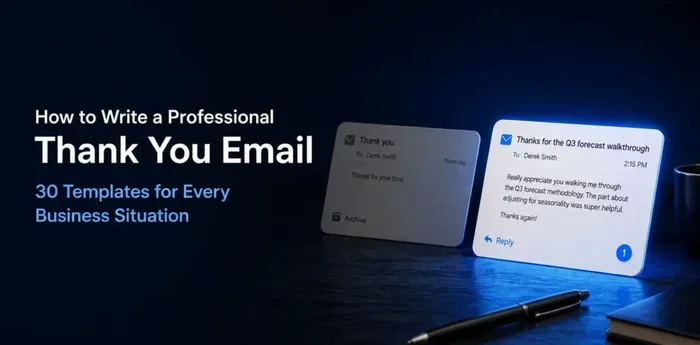

Knowing how to say thank you in email professionally can boost your career and build stronger workplace bonds. A well-crafted thank-you email shows respect, appreciation, and professionalism. This guide covers practical examples, common mistakes, and ready-to-use templates you can start using today.
Sending a thank-you email at work might seem simple. But done right, it can open doors, strengthen friendships with coworkers, and leave a lasting impression on your boss. Whether someone helped you meet a deadline or gave you valuable advice, a thank you email professionally shows you notice and value their effort.
Many people skip this step or write something too short and generic. Others overthink it and end up sounding fake. The good news? A great thank-you email does not need to be long or complicated. You just need the right approach. This guide walks you through everything you need to know about how to say thank you in email professionally at work.
Key Takeaways
- Timing matters: Send your thank-you email within 24 hours for maximum impact.
- Keep it concise: A professional thank-you email should be 3-5 sentences long.
- Personalize every message: Reference specific details to make your gratitude feel genuine.
- Avoid casual language: Skip text abbreviations and keep your tone polished and warm.
- Use templates wisely: Customize templates so they sound natural and not robotic.
- Follow up thoughtfully: A second thank-you can reinforce your appreciation when done right.
📑 Table of Contents
- Why Saying Thank You in Email Matters at Work
- When to Send a Thank-You Email at Work
- How to Say Thank You in Email Professionally: Step-by-Step
- Professional Thank-You Email Examples You Can Use
- Common Mistakes to Avoid When Writing Thank-You Emails
- Quick Tips for Writing a Perfect Thank-You Email
- How Thank-You Emails Differ From Other Workplace Emails
- The Psychology Behind Saying Thank You at Work
- Email Etiquette Tips to Keep in Mind
- Conclusion
Why Saying Thank You in Email Matters at Work
Gratitude is not just a nice gesture. It is a professional skill. When you thank someone through email, you acknowledge their time and effort. This small act builds trust and makes people want to help you again in the future.
Research shows that people who express appreciation at work enjoy better relationships with their teams. A simple thank you email professionally can also make you stand out as someone who values collaboration. In a busy office, these moments of recognition matter more than you might think.
It Strengthens Workplace Relationships
When you thank a colleague, you signal that you see them as a partner. Over time, this builds a culture of mutual respect. People feel valued, and they become more willing to share ideas and support your goals.
It Boosts Your Professional Reputation
A well-written thank-you email shows emotional intelligence. It tells your manager and peers that you are thoughtful and considerate. These are traits that leaders notice when making promotion decisions.
It Keeps Communication Positive
Workplaces can get stressful. A sincere thank-you message can shift the tone of a conversation. It turns a routine interaction into a positive moment that both people remember.
When to Send a Thank-You Email at Work
Knowing when to send a thank-you email is just as important as knowing what to write. Timing can make your message feel more genuine or, if you wait too long, feel like an afterthought.
Right After Receiving Help
The best time to send a thank-you email is as soon as possible. Ideally, within a few hours or by the next business day. If someone went out of their way to help you, do not let the moment pass. A quick thank you email professionally sent the same day shows you are attentive and respectful.
After a Meeting or Interview
Sending a thank-you email after a job interview is standard practice. But it also works well after any important meeting. It shows you were engaged and that you value the other person’s time.
After Receiving a Gift or Recognition
If your team celebrates a work anniversary or gives you an award, a thank-you email is a must. It shows humility and gratitude. Even if the gift is small, the gesture of thanking others matters.
After Someone Mentors You
Mentorship is a gift. When a senior colleague takes time to guide you, a thank-you email acknowledges their investment in your growth. This is a great way to nurture long-term professional relationships.
How to Say Thank You in Email Professionally: Step-by-Step
Writing a professional thank-you email does not require a degree in English. It just needs a clear structure and a genuine tone. Here is a simple step-by-step approach you can follow every time.
Step 1: Write a Clear Subject Line
Your subject line should tell the reader exactly what the email is about. A vague subject line might get ignored. Try something direct and warm.
Good subject line examples:
- Thank You for Your Help Today
- Grateful for Your Support on the Project
- Thank You for the Great Meeting
Avoid subject lines like “Thanks!!!” or “Just Saying Thanks.” These feel too casual for a professional setting. Keep your subject line clean and specific.
Step 2: Start With a Warm Greeting
Open your email with a proper greeting. Use the person’s name and a respectful tone. If you are writing to your boss, “Dear [Name]” works well. For a close colleague, “Hi [Name]” is perfectly fine.
Never start a professional thank-you email with just “Hey.” That is too informal for most workplace settings. Match your greeting to your relationship with the person.
Step 3: Express Your Gratitude Clearly
This is the heart of your email. State exactly what you are thankful for. Be specific. Instead of saying “Thanks for everything,” say something like “Thank you for taking the time to review my report and offering such helpful feedback.”
Specificity makes your message feel real. It shows you were paying attention and that their effort truly mattered to you.
Step 4: Explain the Impact
After expressing gratitude, briefly explain how their help made a difference. This adds depth to your message. For example, “Your advice helped me finish the project ahead of schedule, and the client was very impressed.”
This step turns a simple thank-you into a meaningful exchange. It shows the other person that their contribution had a real result.
Step 5: Close With a Professional Sign-Off
End your email on a warm but professional note. Common closings include:
- Best regards
- With appreciation
- Thank you again
- Warm regards
Avoid overly casual closings like “Cheers” or “Later” unless you have a very informal relationship with the person. Keep your sign-off polished and respectful.
Professional Thank-You Email Examples You Can Use
Theoretical advice is helpful, but seeing real examples makes it easier to write your own. Here are a few templates you can adapt for different situations.
Example 1: Thanking a Colleague for Help
Subject: Thank You for Your Help on the Johnson Project
Hi Sarah,
I wanted to send a quick thank-you email professionally acknowledging your help with the Johnson project this week. Your willingness to jump in and review the data saved us hours of work. The final report was much stronger because of your input.
I really appreciate your support and would love to return the favor anytime. Please let me know if there is anything I can help you with.
Best regards,
Alex
Example 2: Thanking Your Manager for Guidance
Subject: Grateful for Your Mentorship
Dear Mr. Thompson,
I am writing to express my sincere gratitude for the guidance you have provided this quarter. Your advice on client communication has made a real difference in how I handle my accounts. I feel more confident and prepared because of your support.
Thank you for investing your time in my growth. I truly value it.
With appreciation,
Jordan
Example 3: Thanking Someone After an Interview
Subject: Thank You for the Interview Opportunity
Dear Ms. Rivera,
Thank you so much for taking the time to speak with me about the marketing coordinator role. I enjoyed learning more about your team and the exciting projects you have ahead. Our conversation about data-driven campaigns really resonated with me.
I am even more excited about the opportunity to contribute to your team. Please let me know if you need any additional information from me.
Warm regards,
Casey
Example 4: Thanking a Team for a Group Effort
Subject: Thank You, Team — Great Work This Week
Hi everyone,
I wanted to take a moment to thank each of you for the incredible effort this week. The late nights and early mornings paid off, and the client praised our work during the presentation. I am proud to be part of such a dedicated team.
Let us keep this momentum going. Thank you again for everything you do.
Best regards,
Pat
Common Mistakes to Avoid When Writing Thank-You Emails
Even with good intentions, people make mistakes that weaken their thank-you emails. Here are the most common pitfalls and how to avoid them.
Being Too Vague
A generic “Thanks for everything” does not feel personal. Always mention what specifically you are grateful for. This makes your email feel sincere and thoughtful.
Writing Too Much
Keep your thank-you email concise. Aim for 3 to 5 sentences in the body. Long paragraphs can overwhelm the reader and dilute your message. Respect their time by keeping it focused.
Using Too Casual Language
Remember that work emails are professional communication. Avoid slang, excessive exclamation marks, and text abbreviations. While people often use shorthand like wtw meaning in text or ts meaning in text in casual messaging, these have no place in a professional thank-you email. Keep your language polished and clear.
Similarly, if you are setting up a new work email address, choose something professional and clean. Fun or quirky addresses, like those with funny email names, might work for personal accounts but can undermine your credibility in a professional setting.
Sending It Too Late
Delaying your thank-you email too long can make it feel like an obligation rather than a genuine gesture. Try to send it within 24 hours while the interaction is still fresh.
Overdoing the Flattery
Saying “You are the best person I have ever worked with” in every thank-you email feels hollow. Keep your praise realistic and specific. Over-the-top compliments can actually make your message seem less trustworthy.
Quick Tips for Writing a Perfect Thank-You Email
Here are some fast, actionable tips you can use right away:
- Use the person’s name in the greeting and closing to add a personal touch.
- Reference a specific detail from your interaction to show you were paying attention.
- Keep the tone warm but professional. You want to sound genuine, not stiff.
- Proofread before sending. A typo can distract from your message and reduce its impact.
- Send from a clean email address. Avoid addresses that are playful or unprofessional.
- Add a call to action if appropriate, like offering to help in return.
- Use a professional email signature with your name, title, and contact information.
How Thank-You Emails Differ From Other Workplace Emails
Not all emails at work serve the same purpose. A thank-you email has a unique tone and goal compared to other types of workplace messages.
| Email Type | Tone | Goal | Length |
|---|---|---|---|
| Thank-You Email | Warm, appreciative | Show gratitude | Short (3-5 sentences) |
| Status Update Email | Neutral, factual | Share progress | Medium (5-8 sentences) |
| Request Email | Polite, direct | Ask for action | Short to medium |
| Apology Email | Sincere, accountable | Make amends | Medium (4-6 sentences) |
Notice how the thank-you email is the shortest and warmest of the bunch. Its sole purpose is to express gratitude. Keeping it brief and heartfelt is the key to getting it right.
The Psychology Behind Saying Thank You at Work
Why does a simple thank-you email have such a big impact? It comes down to basic human psychology. When someone feels appreciated, their brain releases dopamine, the feel-good chemical. This creates a positive association with you and makes them more likely to help again.
In the workplace, this creates a ripple effect. One person says thank you, and it inspires others to do the same. Over time, this builds a culture of kindness and mutual support. Leaders who regularly express gratitude tend to have more engaged and loyal teams.
So when you take the time to write a thank you email professionally, you are not just being polite. You are actively investing in your workplace relationships and contributing to a healthier work environment.
Email Etiquette Tips to Keep in Mind
Beyond saying thank you, good email etiquette sets the foundation for all your professional communication. Here are a few rules to keep in mind:
- Always use a clear and descriptive subject line.
- Address the recipient by their preferred name and title.
- Keep paragraphs short and easy to scan.
- Avoid writing in all caps, which can feel aggressive.
- Use proper punctuation and grammar.
- Respond to emails in a timely manner, ideally within 24 hours.
- Keep your email signature clean and professional.
These habits might seem small, but they add up. They shape how others perceive you and how comfortable they feel communicating with you. Good email etiquette is a professional skill that serves you throughout your career.
Conclusion
Learning how to say thank you in email professionally is one of the simplest yet most powerful skills you can develop at work. A thoughtful thank-you email strengthens relationships, builds trust, and leaves a positive impression that lasts. By following the steps and examples in this guide, you can write thank-you messages that feel genuine, polished, and impactful.
Remember to keep your emails short, specific, and timely. Avoid casual language and overly generic phrases. And most importantly, write from the heart. People can always tell when your gratitude is real.
Start using these tips today. Send that thank-you email you have been putting off. You will be surprised at how much it strengthens your workplace connections and lifts your professional reputation.
Frequently Asked Questions
How quickly should I send a thank-you email after receiving help?
Send your thank-you email within 24 hours. The sooner you send it, the more genuine it feels. If you wait too long, the message can come across as an obligation rather than a heartfelt gesture.
Can I use a template for my thank-you email?
Yes, templates are a great starting point. But always personalize them before sending. Reference specific details about the interaction so your email feels unique and sincere rather than copy-pasted.
Is it okay to send a thank-you email to my boss?
Absolutely. Thanking your boss for guidance or support is a professional and respectful gesture. Just keep the tone appropriate and avoid being overly familiar. A simple, sincere message goes a long way.
Should I CC other people on my thank-you email?
Only if it makes sense. If the help came from a team effort, a group thank-you email can be appropriate. But for one-on-one help, send the email directly to the person who helped you to keep it personal.
What if I do not know the person well?
Keep your tone respectful and neutral. A simple “Thank you for your time and assistance” works perfectly. You do not need to be overly familiar or casual with someone you do not know well.
Can a thank-you email help me get a job?
Yes, sending a thank-you email after a job interview is standard practice and can set you apart from other candidates. It shows professionalism, attention to detail, and genuine interest in the role.
=== INTERNAL LINKS ===
While professional emails should always maintain a polished tone, it is worth noting that casual text abbreviations like wtw meaning in text and ts meaning in text have no place in workplace communication. Keep your professional emails clean and clear.
When setting up your work email account, choose a professional address. Avoid something that might seem unserious, like those with funny email names. A clean, professional email address reinforces the credibility of your messages.