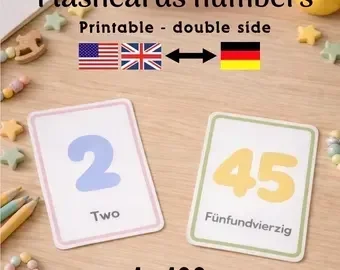

Learning how to say numbers in German is one of the most essential skills for any language learner. This guide walks you through everything from basic digits to large numbers, with clear pronunciation tips and real-world examples. Whether you need German numbers for shopping, telling time, or giving phone numbers, you will find practical advice here.
Numbers are everywhere. You use them when you order coffee, check the time, or give someone your phone number. So learning how to say numbers in German is one of the first things you should do when starting this language.
German numbers might look intimidating at first. But here is a secret: they follow a very logical system. Once you understand the basic patterns, counting in German becomes second nature. This guide breaks everything down into simple, easy-to-follow steps.
We will cover everything from the digits 1 through 20 all the way up to millions. You will also learn how German numbers work in everyday situations like shopping, telling time, and giving addresses. By the end of this guide, you will feel confident using German numbers in real conversations.
So let us dive right in. No confusing jargon, no overwhelming lists. Just clear, practical advice that actually works.
Key Takeaways
- German numbers follow a logical pattern: Once you learn 1-12, the rest build on simple rules.
- Pronunciation matters: German numbers can sound very different from English equivalents.
- Cardinal and ordinal numbers work differently: Know the distinction to avoid confusion.
- Large numbers reverse word order: German puts the smaller unit before the larger one.
- Practice with real-life scenarios: Using numbers in context makes them stick much faster.
- Common mistakes are easy to avoid: Watch out for false friends and tricky spelling rules.
📑 Table of Contents
Understanding German Number Basics
Before we jump into specific numbers, let us talk about how the German number system works. The foundation is simple, and once you grasp it, everything else builds on top.
German uses the same digits we do: 0 through 9. But the words for those digits sound quite different. For example, the number 3 is “drei” in German, and 4 is “vier.” These are the building blocks of the entire system.
Cardinal Numbers vs. Ordinal Numbers
In English, we have two types of numbers. Cardinal numbers tell us quantity, like “one” or “five.” Ordinal numbers tell us position, like “first” or “fifth.” German works the same way.
Cardinal numbers in German include words like eins (one), zwei (two), and drei (three). Ordinal numbers add the suffix “-te” or “-ste.” For instance, “first” becomes “erste” and “third” becomes “dritte.”
Most learners focus on cardinal numbers first. That is the right approach. You need to count, buy things, and tell time before you worry about ordinal forms.
The German Number System Explained
The German counting system is decimal, just like English. That means it is based on groups of ten. But the way numbers are formed has some unique twists.
Here is a quick look at how the system works:
- 1 to 12: These are unique words you must memorize.
- 13 to 19: These add “-zehn” to the base number. For example, 13 is “dreizehn” (three-ten).
- 20 and beyond: The pattern shifts. The ones digit comes first, followed by “und” (and), then the tens digit.
This last point surprises many learners. In German, 23 is not “twenty-three.” It is “dreiundzwanzig,” which literally translates to “three and twenty.” The reversal can feel odd at first, but it follows a consistent rule once you get used to it.
How to Say Numbers 1 to 20 in German
The first 12 numbers are the foundation. You will use them constantly, so memorizing them well is worth the effort.
Numbers 1 Through 12
Here are the basic digits every German learner needs to know:
- 1 – eins
- 2 – zwei
- 3 – drei
- 4 – vier
- 5 – fünf
- 6 – sechs
- 7 – sieben
- 8 – acht
- 9 – neun
- 10 – zehn
- 11 – elf
- 12 – zwölf
Notice that “eins” can also be “ein” depending on the context. When counting alone, you say “eins.” But when modifying a noun, it becomes “ein,” just like the indefinite article “a” or “an” in English.
Numbers 13 Through 20
The teens in German follow a straightforward pattern. You take the base number and add “-zehn” at the end.
- 13 – dreizehn
- 14 – vierzehn
- 15 – fünfzehn
- 16 – sechzehn
- 17 – siebzehn
- 18 – achtzehn
- 19 – neunzehn
- 20 – zwanzig
One thing to watch out for: the spelling changes slightly in some of these. “Sechzehn” drops the “s” from “sechs,” and “siebzehn” drops the “b” from “sieben.” These small shifts are important for correct spelling.
Tens and Larger Numbers in German
Once you know 1 to 20, the rest of the counting system becomes much easier. The tens follow a clear pattern, and larger numbers build on that foundation.
The Tens (20 to 90)
The tens in German are straightforward words you can memorize quickly:
- 20 – zwanzig
- 30 – dreißig
- 40 – vierzig
- 50 – fünfzig
- 60 – sechzig
- 70 – siebzig
- 80 – achtzig
- 90 – neunzig
Notice how “sechzig” and “siebzig” also drop letters from their base forms, just like the teens. This is a consistent pattern in German number spelling.
How to Say Numbers 21 to 99
This is where the German system flips what English speakers expect. In German, you say the ones digit first, then “und” (and), then the tens digit.
For example:
- 21 – einundzwanzig (one and twenty)
- 25 – fünfundzwanzig (five and twenty)
- 37 – siebenunddreißig (seven and thirty)
- 49 – neunundvierzig (nine and forty)
- 99 – neunundneunzig (nine and ninety)
See the pattern? The smaller number always comes first. The word “und” connects it to the tens. Once you internalize this reversal, combining any two-digit number becomes easy.
Hundreds and Thousands
Large numbers in German follow the same logic. You combine the smaller parts with the larger ones.
- 100 – einhundert
- 200 – zweihundert
- 1,000 – eintausend
- 5,000 – fünftausend
- 10,000 – zehntausend
- 100,000 – hunderttausend
- 1,000,000 – eine Million
A key difference from English: German does not use a period or comma the same way for large numbers. Instead of “1,000,000,” Germans write “1.000.000” with periods as thousand separators. This is important to know if you are reading German documents or forms.
How to Say Numbers in German for Daily Life
Knowing the raw numbers is great. But using them in real situations is where the real learning happens. Let us look at how German numbers appear in everyday life.
Telling Time
Germans tell time differently than English speakers. Instead of “half past three,” they say “half to four.” The number you are approaching comes first.
Here are some examples:
- 3:00 – drei Uhr (three o’clock)
- 3:30 – halb vier (half to four)
- 3:15 – viertel nach drei (quarter after three)
- 3:45 – dreiviertel vier (three-quarters to four)
This can confuse beginners at first. But once you understand the logic, it actually makes a lot of sense. The reference point is always the next full hour.
Giving Phone Numbers and Addresses
When you give your phone number in German, you say each digit individually. The same goes for house numbers and zip codes. This is very different from English, where we group numbers in pairs or threes.
For example, the phone number 0176 12345678 would be said digit by digit in German. You might also hear people use the word “Null” for zero and “Komma” for a decimal point.
If you are giving an address, the street number follows the street name. So “Main Street 42” becomes “Mainstraße zweiundvierzig.” Notice the reversed order again for 42.
Shopping and Prices
When you are shopping in Germany, Austria, or Switzerland, you need to know how to say prices. The format is simple: the number followed by the currency.
For example:
- €5.50 – fünf Euro fünfzig
- €12.99 – zwölf Euro neunundneunzig
- €3.75 – drei Euro fünfundsiebzig
Germans say “fünfzig” for 50 cents, not “halber Euro.” This is a common shopping phrase you will use often.
A Quick Note on German Culture and Names
While learning numbers, it is fun to explore other aspects of German culture too. German naming traditions are fascinating and can add depth to your language journey. If you ever want to learn more about funny German names, you will find that even names reflect the rich history and humor of the language. Understanding cultural context makes language learning more enjoyable and meaningful.
Common Mistakes When Learning German Numbers
Every learner makes mistakes with German numbers at some point. Here are the most common ones and how to avoid them.
Forgetting the Word Order Reversal
This is the number one mistake. English speakers naturally say “twenty-three” because that is the order they are used to. But in German, it is “three and twenty” (dreiundzwanzig). The ones digit always comes first in two-digit numbers.
A quick tip: practice saying numbers out loud. Listen to native speakers and repeat after them. Repetition builds the correct pattern into your brain over time.
Mispronouncing Key Words
Some German number words have sounds that do not exist in English. The “v” in “vier” sounds more like an “f.” The “z” in “zwanzig” sounds like “ts.” Getting these sounds right takes practice.
Here is a simple pronunciation guide:
- v in German words sounds like English “f”
- z in German words sounds like English “ts”
- w in German words sounds like English “v”
- ch in German words is a soft, breathy sound
Confusing Cardinal and Ordinal Numbers
Remember that “drei” means three, but “dritte” means third. Mixing these up can lead to confusion, especially when giving directions or dates.
When in doubt, ask yourself whether you are talking about quantity or position. That simple check will guide you to the right form.
Tips and Tricks to Master German Numbers
Mastering German numbers does not have to be boring. There are fun and effective ways to practice that actually stick.
Use Flashcards and Apps
Flashcards are one of the best tools for memorizing German numbers. Apps like Anki or Quizlet let you create custom decks focused on number vocabulary. Review a few minutes each day, and you will see progress fast.
Count Aloud in German
Try counting aloud in German during your daily routine. Count your steps, count items in your grocery cart, or count seconds while waiting. This simple habit reinforces number patterns without any extra study time.
Watch German Videos and Listen to German Audio
Exposure to real German speech is incredibly powerful. Watch German YouTube videos, listen to German podcasts, or try German music. When you hear numbers used naturally, you pick up pronunciation and rhythm much faster.
Practice with a Language Partner
Find a language exchange partner or tutor who speaks German. Ask them to call out numbers and have you respond. Real conversation forces you to think on your feet, which accelerates learning.
Also, when you are texting in German or chatting online, you might come across shorthand and abbreviations. If you ever wonder about what wtw means in text or need to understand common texting abbreviations, knowing how numbers appear in digital communication helps too. German speakers use numbers in text just like everyone else, and understanding these contexts makes you a more fluent communicator.
Learn Number Patterns in Context
Rather than memorizing isolated number lists, learn them in full phrases. For example, practice saying “Ich bin dreißig Jahre alt” (I am thirty years old) instead of just “dreißig.” Context gives numbers meaning and makes them easier to remember.
Similarly, if you come across texting shorthand or abbreviations in German conversations, understanding them adds another layer of fluency. Knowing what ts means in text and other common abbreviations helps you navigate German digital communication with ease. These small details make a big difference in real-world conversations.
Quick Tips for Remembering German Numbers Faster
- Break big numbers into chunks. Learn hundreds first, then add tens and ones.
- Sing or rhyme the numbers. Rhythm helps memory stick.
- Write numbers by hand. Physical writing reinforces learning.
- Use sticky notes. Put German number words on objects around your home.
- Review daily for 10 minutes. Consistency beats long cramming sessions.
Conclusion
Learning how to say numbers in German is a journey that starts with a few simple digits and grows into a confident understanding of an entire number system. From “eins” to “eine Million,” the patterns are logical and repeatable. Once you internalize the basic rules, you can handle almost any number you encounter.
The key is consistent practice. Use numbers in real situations. Count out loud. Order in German. Give prices a try. Every small effort adds up to real fluency over time.
Remember that mistakes are part of the process. Even advanced learners mix up word order sometimes. What matters is that you keep going. Each time you use a German number correctly, you build confidence and momentum.
So start today. Pick one section of this guide and practice it thoroughly. Then move to the next. In just a few weeks, you will be counting, shopping, and telling time in German like a pro. The numbers will feel natural, and you will wonder why you ever hesitated.
German numbers are not just a vocabulary lesson. They are a gateway to deeper conversations, richer cultural understanding, and real communication. Embrace the system, enjoy the patterns, and celebrate every milestone along the way.
Frequently Asked Questions
How do you say 0 in German?
The German word for zero is “Null.” It is pronounced like the English word “null” but with a shorter, crisper “u” sound. You will use “Null” frequently when giving phone numbers, temperatures, and times.
How do you say 100 in German?
The number 100 in German is “hundert.” When used with a specific number, it becomes “einhundert” for 100, “zweihundert” for 200, and so on. The word “hundert” does not change form regardless of the number before it.
What is the hardest German number to pronounce?
Many learners find “siebzehn” (17) and “sechzehn” (16) tricky because they involve dropped letters from the base words. Also, “sechzig” (60) and “siebzig” (70) can be difficult. The best way to master them is repeated listening and speaking practice.
Do German numbers use commas and periods differently?
Yes, they do. In German, a comma is used as the decimal separator, and a period is used as the thousands separator. So “1,234.56” in English becomes “1.234,56” in German. This is an important distinction to remember.
How long does it take to learn German numbers?
Most learners can master numbers 1 to 20 in a few days with daily practice. The full range up to millions may take a few weeks. The key is consistent, short practice sessions rather than long cramming.
Are German numbers used differently in Austria and Switzerland?
Yes, there are slight regional differences. In Switzerland, the French-influenced “septante” is sometimes used for 70 instead of “siebzig.” In Austria, you may hear slightly different pronunciations and informal number expressions. But the core system remains the same across all German-speaking countries.



