
Learning how to say hi and how are you in Italian is the first step to sounding natural in conversations. This guide covers everything from the classic “Ciao” to formal and informal ways to ask someone how they are doing. You will also find pronunciation tips, cultural etiquette, and practical examples to use right away.
Whether you are planning a trip to Rome or just want to impress an Italian friend, learning how to say hi and how are you in Italian is a great place to start. These simple phrases open doors to real conversations and help you connect with people on a deeper level. In this guide, we will walk you through every greeting you need, from the casual “Ciao” to the more formal “Come sta.”
Italian is one of the most beautiful and romantic languages in the world. It rolls off the tongue and sounds musical even when you are just saying hello. The good news is that Italian greetings are easy to learn, and you can start using them today. Let us dive in and explore the many ways to greet someone in Italian.
Key Takeaways
- Start with “Ciao”: It is the most common and versatile Italian greeting for both hi and bye.
- Know the difference between formal and informal: Using “Come sta?” shows respect, while “Come stai?” is for friends.
- Pronunciation matters: Italian words are phonetic, so once you learn the sounds, you can read any word.
- Gestures are key: Italians often use hand gestures when greeting someone, adding warmth to the interaction.
- Time of day changes your greeting: “Buongiorno” is for morning and afternoon, while “Buonasera” is for the evening.
- Practice daily: Using these phrases in real conversations builds confidence fast.
📑 Table of Contents
Common Ways to Say Hi in Italian
The Italian language has several ways to say hello. Each one fits a different mood, time of day, or level of formality. Here are the most popular greetings you will hear and use every day.
The Classic “Ciao”
“Ciao” is the king of Italian greetings. It works for both hello and goodbye, which makes it incredibly versatile. You can use it with friends, family, and even people your age or younger. It is informal, warm, and instantly makes you sound like you know the language.
Here is how to use it:
- Ciao! — Hi! / Bye!
- Ciao, come stai? — Hi, how are you?
- Ciao a tutti! — Hi everyone!
One thing to keep in mind is that you should not use “Ciao” with strangers in formal settings. Save it for casual encounters and people you know well.
Other Casual Greetings
Beyond “Ciao,” there are a few other informal ways to say hi. These work well in relaxed settings like hanging out with friends or chatting with people your age.
- Ehi! — Hey!
- Salve! — Hello! (slightly more polite than Ciao but still casual)
- Che piacere! — Nice to meet you!
These phrases add variety to your conversations. Using different greetings shows that you understand the rhythm of the language. It also makes your Italian sound more natural and less like a textbook.
How to Say “How Are You” in Italian
Once you have said hello, the next step is to ask how someone is doing. Knowing how to say how are you in Italian is essential for any conversation. The phrase you choose depends on whether you are speaking to a friend or a stranger.
Informal: “Come stai?”
“Come stai?” is the informal way to ask “How are you?” Use this with friends, family, peers, and anyone you are close to. It is warm and friendly, and Italians use it all the time in daily life.
Here are some ways to respond:
- Bene, grazie! — Good, thank you!
- Così così. — So so.
- Molto bene! — Very good!
- Non male. — Not bad.
Notice how Italians often say “grazie” (thank you) after answering. This small habit shows politeness and is a key part of Italian conversational etiquette.
Formal: “Come sta?”
When you are speaking to someone older, a stranger, or in a professional setting, use “Come sta?” This is the formal version of “How are you?” and shows respect.
Example:
- Buongiorno, come sta? — Good morning, how are you?
- Come sta, signora? — How are you, ma’am?
The response is the same, but the tone is more respectful. Italians appreciate it when you use the formal form correctly. It shows that you understand their culture.
Pronunciation Tips for Italian Greetings
Italian is a phonetic language, which means words are pronounced exactly as they are written. This makes learning Italian pronunciation much easier than in English. Here are some quick tips:
- Ciao is pronounced “chow” — the “ch” sounds like in “church.”
- Come is pronounced “KOH-meh” — the “o” sounds like in “go.”
- Stai is pronounced “STAH-ee” — keep the “a” open and clear.
- Sta is pronounced “STAH” — short and crisp.
Focus on vowel sounds. Italian vowels are pure and never silent. Once you get the hang of the five basic vowel sounds (a, e, i, o, u), you will be able to pronounce almost any Italian word correctly.
Italian Greetings for Different Times of Day
Italians change their greetings based on the time of day. This is a important part of Italian daily greetings and shows cultural awareness.
Morning and Afternoon: Buongiorno
“Buongiorno” means “Good morning” or “Good afternoon.” Use it from early morning until around 3 or 4 PM. It is appropriate for both formal and informal situations.
Examples:
- Buongiorno! — Good morning/afternoon!
- Buongiorno, signore. — Good morning, sir.
- Buongiorno a tutti! — Good morning/afternoon, everyone!
Evening: Buonasera
“Buonasera” is used from the late afternoon onward. It translates to “Good evening” and is the proper greeting after sunset or when the day winds down.
Examples:
- Buonasera! — Good evening!
- Buonasera, dottore. — Good evening, doctor.
Night: Buonanotte
“Buonanotte” means “Good night.” Use it when saying goodbye at the end of the day or before going to sleep. It is not used as a greeting when you first meet someone.
Quick comparison:
| Time of Day | Greeting | Meaning |
|---|---|---|
| Morning to early afternoon | Buongiorno | Good morning / Good afternoon |
| Late afternoon to evening | Buonasera | Good evening |
| Before sleep | Buonanotte | Good night |
| Any time (informal) | Ciao | Hi / Bye |
Cultural Tips for Greeting People in Italy
Italians take greetings seriously. They are not just words — they carry meaning, warmth, and cultural significance. Understanding these nuances will help you connect better when you visit Italy or speak with Italian speakers.
Body Language and Gestures
Italians are expressive people. When greeting someone, they often use hand gestures and facial expressions. A simple wave or a light touch on the arm can make your greeting feel more genuine. Here are some gestures you might see:
- Hand over heart: A sign of sincerity and warmth.
- Two kisses on the cheeks: Common among friends and family, especially women.
- A firm but gentle handshake: Used in formal or professional settings.
These gestures make Italian greetings feel alive and personal. Do not be surprised if someone greets you with a kiss on both cheeks even on a first meeting in casual settings.
Formal vs. Informal: When to Use What
Choosing between formal and informal greetings depends on the situation. Here is a simple guide:
- Use formal greetings (Come sta, Buongiorno) with strangers, older people, teachers, doctors, and in business settings.
- Use informal greetings (Ciao, Come stai) with friends, family, peers, and children.
- When in doubt, start with the formal version and let the other person guide you to a more casual tone.
This approach shows respect and social awareness. Italians will appreciate your effort, and they will often switch to informal language once they feel comfortable.
Greeting in Text Messages
In the digital age, greetings have moved to text messages too. When you text an Italian friend, you might use casual abbreviations. For instance, you might see what does wtw mean in text pop up in Italian texting culture, or you might come across what does ts mean in text as well. These abbreviations are part of modern digital communication and show how language evolves across cultures and platforms.
However, for face-to-face or email communication, stick to the standard greetings. They are always appropriate and never go out of style.
Quick Reference: Essential Italian Greetings
Here is a quick cheat sheet of the most important Italian greetings. Bookmark this or save it on your phone for easy reference.
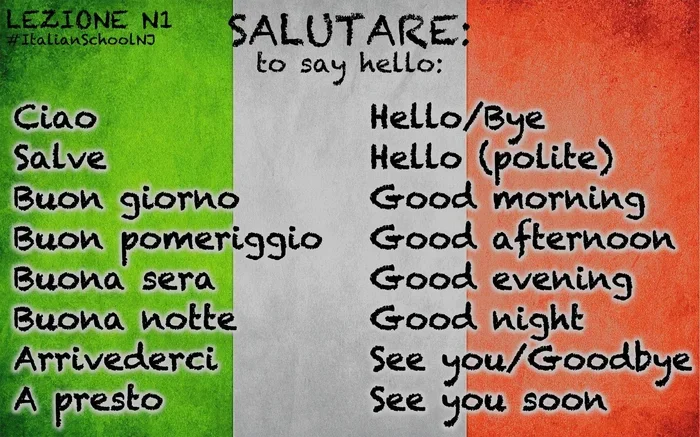
- Ciao — Hi / Bye (informal)
- Salve — Hello (polite, casual)
- Buongiorno — Good morning / Good afternoon
- Buonasera — Good evening
- Buonanotte — Good night
- Come stai? — How are you? (informal)
- Come sta? — How are you? (formal)
- Bene, grazie! — Good, thank you!
- Eccomi! — Here I am!
- Piacere! — Nice to meet you!
Keep this list handy. The more you practice, the more natural these phrases will become. Try saying a few out loud every morning to build the habit.
Common Mistakes to Avoid
Even with the best intentions, learners sometimes make mistakes with Italian greetings. Here are a few to watch out for:
- Using “Ciao” in formal settings: This can come across as too casual or even disrespectful in professional environments.
- Confusing “Come stai?” and “Come sta?”: Using the informal form with a stranger or elder can feel too familiar.
- Forgetting “grazie”: Always say thank you after someone asks how you are. It is a basic courtesy in Italian culture.
- Pronouncing vowels incorrectly: Italian vowels are clean and short. Avoid adding extra sounds or dragging them out.
- Ignoring gestures: Italians communicate with their whole body. A greeting without gestures can feel flat or cold.
Avoiding these mistakes will make your Italian sound more polished and respectful. You will also feel more confident in real conversations.
Expert Tips for Fast Progress
Want to improve your Italian greetings even faster? Here are some tips from language learners and teachers:
- Practice with a partner: Find a language exchange buddy or use apps to practice greeting someone in Italian.
- Watch Italian shows: Pay attention to how characters greet each other in Italian movies and TV series.
- Listen to Italian music: Songs are a fun way to absorb pronunciation and natural phrasing.
- Use flashcards: Write each greeting on one side and the meaning on the other. Review them daily.
- Travel if you can: Nothing beats real-world practice. Even a short trip to Italy can boost your skills dramatically.
The key is consistency. Even five minutes of practice a day adds up over time. Soon, greeting someone in Italian will feel automatic and effortless.
Final Thoughts
Learning how to say hi and how are you in Italian is more than just memorizing words. It is about understanding a culture that values warmth, respect, and genuine connection. Every greeting you learn brings you one step closer to meaningful conversations with Italian speakers around the world.
Start with “Ciao.” Add “Come stai?” and “Come sta?” to your toolkit. Practice the pronunciation. Pay attention to the cultural context. And most importantly, have fun with it. Language learning is a journey, and every “Buongiorno” you say is a step forward.
So go ahead, try out these phrases today. You will be surprised at how quickly they become second nature. Buona fortuna, and happy greeting!
Frequently Asked Questions
What is the easiest Italian greeting to learn?
“Ciao” is the easiest and most widely used Italian greeting. It works for both hello and goodbye, making it the perfect starting point for beginners. You can use it with friends and people your age in casual settings.
When should I use “Come sta” instead of “Come stai”?
Use “Come sta?” when speaking to someone older, a stranger, or in a professional setting. It shows respect and politeness. Use “Come stai?” with friends, family, and peers. The difference is all about formality and the relationship between the speakers.
Is Italian hard to pronounce?
Not at all! Italian is one of the most phonetic languages, meaning words are pronounced exactly as they are written. Once you learn the basic vowel and consonant sounds, you can pronounce almost any Italian word correctly. Practice a little each day and you will improve fast.
Do Italians use hand gestures when greeting someone?
Yes, they do. Hand gestures are a natural part of Italian communication. You might see people use hand movements over their heart, wave warmly, or even exchange cheek kisses. These gestures add warmth and expressiveness to greetings that words alone cannot convey.
Can I use “Buongiorno” in the evening?
No, “Buongiorno” is for morning and early afternoon only. Switch to “Buonasera” once it gets to the late afternoon or evening. Using the right time-based greeting shows cultural awareness and respect for Italian customs.
How can I practice Italian greetings every day?
Try saying your greetings out loud each morning, use language exchange apps, watch Italian shows, or listen to Italian music. The more you expose yourself to the language, the faster these phrases will stick. Even a few minutes of daily practice makes a big difference over time.
=== CONCLUSION ===
Learning how to say hi and how are you in Italian opens the door to rich, meaningful conversations and deeper connections with Italian speakers. From the versatile “Ciao” to the formal “Come sta,” each greeting carries its own place and purpose in Italian culture. Use the phrases, tips, and cultural insights from this guide to sound more natural and confident in any Italian-speaking situation.
Remember to practice regularly, pay attention to pronunciation, and respect the formality level of each interaction. With these tools in hand, you are well on your way to mastering Italian greetings and making a great impression every time you say hello. Start practicing today, and let your Italian journey begin with a simple but powerful “Ciao!”