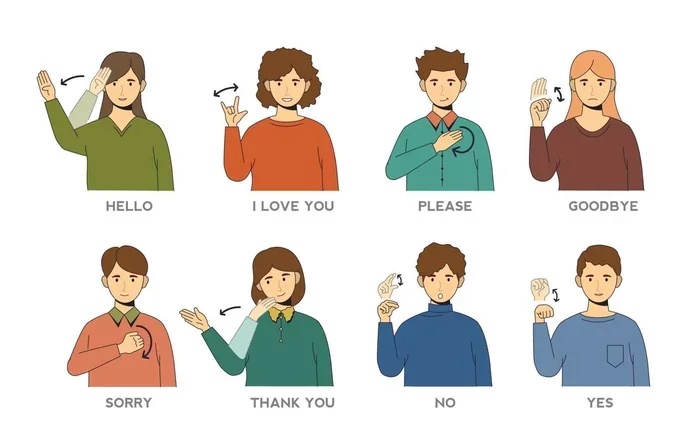

Learning how to say hi my name is in sign language is easier than you think. This step-by-step guide walks you through the basic hand movements, finger spelling, and facial expressions used in American Sign Language. Whether you are meeting someone who is deaf or just want to expand your communication skills, this tutorial covers everything you need to get started.
Have you ever wanted to learn how to say hi my name is in sign language but did not know where to start? You are not alone. Thousands of people search for beginner sign language tutorials every day. The good news is that American Sign Language, or ASL, has simple and beautiful gestures for basic greetings. You do not need any prior experience. All you need is your hands, your face, and a little patience.
Sign language is not just a set of hand movements. It is a full nonverbal communication system that includes facial expressions, body language, and spatial awareness. When you learn how to introduce yourself in ASL, you open a door to a rich and vibrant community. This guide breaks everything down into easy steps. By the end, you will feel confident greeting someone and sharing your name in sign language.
Key Takeaways
- Basic greeting signs: You will learn the exact hand shapes and movements for “hi” and “my name is” in ASL.
- Finger spelling matters: Spelling out your name is a core skill that every sign language learner needs.
- Facial expressions add meaning: Your face helps convey emotion and grammar in sign language.
- Practice makes perfect: Consistent daily practice builds muscle memory and confidence.
- Cultural awareness is key: Understanding deaf culture helps you communicate more respectfully.
- Digital tools help: Apps and videos make learning sign language accessible from anywhere.
📑 Table of Contents
- Why Learn How to Say Hi My Name Is in Sign Language?
- Understanding the Basics of ASL
- Step-by-Step Guide: How to Sign “Hi My Name Is”
- Facial Expressions and Body Language in Sign Language
- Tools and Resources to Help You Learn
- Tips for Remembering and Retaining What You Learn
- Common Mistakes to Avoid When Signing “Hi My Name Is”
- Conclusion
Why Learn How to Say Hi My Name Is in Sign Language?
There are many reasons people want to learn basic sign language greetings. Some have deaf friends or family members. Others are studying ASL for career reasons. And some simply love learning new communication skills. No matter your reason, starting with a simple greeting is the best first step.
When you sign “hi” and “my name is,” you show respect for the deaf community. You also make someone feel welcomed and included. Even a small effort like learning a few signs can build meaningful connections. Plus, it is genuinely fun to learn a new way to express yourself.
It Builds Real Connections
Imagine meeting someone who communicates mainly through sign language. If you can greet them and share your name, the ice breaks right away. People appreciate when others make the effort. Basic ASL greetings show that you care about their way of communicating.
It Boosts Your Brain Too
Learning any new language strengthens your brain. Sign language uses different parts of your brain than spoken language does. It improves memory, hand-eye coordination, and even your ability to read body language. So when you practice how to say hi my name is in sign language, you are also giving your brain a great workout.
Understanding the Basics of ASL
Before you dive into the specific signs, it helps to understand a few basics about American Sign Language. ASL is its own complete language. It is not just English translated into hand gestures. It has its own grammar, sentence structure, and rules. This is important to know because it shapes how you express yourself.
One key difference is that ASL relies heavily on facial expressions. In spoken English, your tone of voice adds emotion. In ASL, your face does that job. A smile, a raised eyebrow, or a furrowed brow all change the meaning of your signs. This might feel strange at first, but it becomes natural with practice.
The Role of Finger Spelling
Finger spelling, also called ASL fingerspelling, is when you use hand shapes to spell out each letter of a word. This is how you sign your name if you do not have a specific name sign yet. The ASL alphabet uses 26 hand shapes, one for each letter of the English alphabet. Learning this alphabet is essential for introducing yourself in sign language.
Here are a few tips for finger spelling:
- Keep your hand steady and at shoulder level.
- Move your hand slightly from side to side as you spell.
- Do not bounce each letter. Smooth movements look better and are easier to read.
- Practice slow at first. Speed comes naturally over time.
How Names Work in Sign Language
In the deaf community, many people have a name sign. This is a unique gesture that represents a person. Name signs are often given by deaf individuals themselves. They might use the first letter of your name combined with a movement that describes something about you. For example, someone who loves music might have a name sign that involves a musical motion.
If you do not have a name sign, you simply finger spell your full name. This is perfectly fine and very common. When you are starting out, finger spelling your name is the go-to method for how to say hi my name is in sign language.
Step-by-Step Guide: How to Sign “Hi My Name Is”
Now let us get into the fun part. Here is a detailed, step-by-step breakdown of signing “hi my name is” in ASL. Follow along slowly and repeat each step several times.
Step 1: Signing “Hi”
The sign for “hi” is simple and friendly. Here is how to do it:
- Open your hand so all your fingers are together.
- Lift your hand up to about shoulder height.
- Brush your fingertips lightly against your forehead.
- Move your hand outward, away from your body, slightly.
- Smile while doing this. It shows warmth and friendliness.
That is it! One quick, gentle motion. The sign looks like you are giving a little wave from your forehead. It is one of the first signs most beginners learn. Practice it until it feels natural and smooth.
Step 2: Signing “My”
The sign for “my” uses a flat hand shape. Here is what to do:
- Extend your dominant hand with all fingers together and flat.
- Place your flat hand on your chest, right over your heart.
- Hold it there for a brief moment.
This sign is very intuitive. You are literally pointing to yourself. When you combine “my” with “name,” it tells the other person you are talking about yourself. Practice saying “my” while touching your chest a few times to build muscle memory.
Step 3: Signing “Name”
The sign for “name” involves two hand movements. Here is the breakdown:
- Hold both hands out in front of you, palms facing up.
- Extend the index and middle fingers on both hands.
- Touch the tips of your two fingers on your right hand to the tips of the two fingers on your left hand.
- Then, pull your hands apart slightly and repeat the motion.
The movement looks like you are gently tapping two fingers together twice. It is a crisp, clear motion. Many people find this one of the easiest signs to remember. Once you get the rhythm down, it flows naturally.
Step 4: Putting It All Together
Now combine the three parts into one smooth sequence:
- Sign “hi” first. Brush your hand from your forehead outward.
- Pause briefly and make eye contact.
- Sign “my” by placing your flat hand on your chest.
- Sign “name” with the two-finger tapping motion.
- Then finger spell your name, letter by letter.
The full sequence looks like this: hi → my → name → finger spell your name. At first, it might feel a bit choppy. That is totally normal. Keep practicing, and the flow will improve. Within a few days, the whole sequence will start to feel smooth and automatic.
Quick Practice Routine
Here is a simple routine to help you practice every day:
- Morning (2 minutes): Sign “hi my name is” three times in front of a mirror.
- Afternoon (3 minutes): Practice finger spelling your name five times slowly.
- Evening (2 minutes): Sign the full greeting to yourself before bed.
Consistency beats long sessions. Five minutes a day works better than one long practice once a week. Your hands need time to build the muscle memory for how to say hi my name is in sign language without thinking.
Facial Expressions and Body Language in Sign Language
One of the most overlooked parts of learning sign language is facial expression. Your face is not just a passive part of the conversation. It is an active part of the grammar. In ASL, your eyebrows, mouth, and even your body posture carry meaning.
For a simple greeting like “hi my name is,” you want a warm, friendly expression. A genuine smile goes a long way. Your eyebrows should be relaxed, not raised or furrowed. Keep your body facing the person you are signing to. Lean in slightly to show interest.
As you advance, you will learn that facial expressions change depending on the sentence type. Questions, statements, and exclamations all look different on your face. But for now, focus on looking approachable and friendly. That alone makes a huge difference in how your greeting lands.
Common Mistakes Beginners Make with Facial Expressions
Here are a few mistakes to watch out for:
- Looking down while signing: This can make you seem unsure or disinterested. Keep your eyes on the person.
- Forgetting to smile: A greeting should feel warm. Even a slight smile helps.
- Overdoing expressions: You do not need to be dramatic. Natural and subtle works best.
- Ignoring body language: Your shoulders and posture send signals too. Stay relaxed and open.
Tools and Resources to Help You Learn
Learning on your own is great, but having the right tools makes a big difference. Fortunately, there are many free and affordable resources available today. You can practice how to say hi my name is in sign language using videos, apps, and online communities.
Here are some of the best ways to improve your skills:
- YouTube tutorials: Search for ASL beginner channels. Watching real signers helps you pick up speed and accuracy.
- ASL apps: Apps like SignSchool and ASL Dictionary offer interactive lessons and quizzes.
- Online courses: Platforms like Skillshare and Udemy have structured ASL courses for all levels.
- Deaf community groups: Meeting deaf individuals in person or online gives you real practice and cultural insight.
Some people also find it helpful to practice with a friend who already knows sign language. Even if they are just learning too, having a practice partner keeps you motivated. You can quiz each other on finger spelling and take turns signing greetings.
Why Digital Communication Is Different
In today’s world, many people communicate through text and abbreviations. For example, you might see wtw meaning in text or other shorthand when chatting online. These quick text shortcuts serve a purpose in digital spaces. But sign language is a richer, more personal form of communication. It carries tone, emotion, and nuance that text simply cannot replicate. When you learn ASL, you gain access to a deeper and more expressive way of connecting with others.
Similarly, some people search for the ts meaning in text or other common abbreviations. While these are useful in their own context, they are very different from the visual and spatial nature of sign language. Understanding this difference helps you appreciate what makes ASL unique and powerful.
It is also worth noting that some phrases carry layered meanings depending on context. For instance, the phrase ignorance is bliss meaning shows how the same words can be interpreted differently based on situation and intent. Sign language captures these subtle differences through facial grammar and context, making it an incredibly nuanced communication system.
Tips for Remembering and Retaining What You Learn
Memory is a big part of learning any new skill. Here are some proven tips to help you remember your signs and keep improving:
Use Repetition, But Make It Fun
Repeating the same sign over and over can feel boring. Mix it up! Sign your greeting to different people. Sign it while walking. Sign it while looking in the mirror. Variety keeps your brain engaged and helps you retain information longer.
Create Visual Associations
Think of a story or image for each sign. For “hi,” picture yourself waving hello from your forehead. For “name,” imagine two fingers tapping like a typewriter. These mental images make signs easier to recall when you need them.
Track Your Progress
Keep a simple journal or log of what you practiced each day. Note which signs felt easy and which ones felt tricky. Over time, you will see your progress clearly. This also helps you identify areas that need more attention. Tracking your journey makes learning feel rewarding and keeps you going.
Be Patient With Yourself
Nobody becomes fluent overnight. Some days your signs will feel smooth. Other days they will feel clumsy. Both are normal. The key is to keep showing up and practicing. Every session, even a short one, moves you forward on your sign language learning journey.
Common Mistakes to Avoid When Signing “Hi My Name Is”
Even with the best intentions, beginners sometimes make avoidable errors. Here are the most common mistakes and how to fix them:
- Signing too fast: Speed is not the goal. Clarity is. Slow down until you get each sign right.
- Using the wrong hand shape: Each sign has a specific hand shape. Check your form against a reliable video source.
- Forgetting to smile: A greeting without warmth can feel cold. Always pair your signs with a friendly expression.
- Ignoring eye contact: Looking away breaks the connection. Maintain gentle eye contact throughout the greeting.
- Practicing only once: One practice session does not build memory. Short daily practice is far more effective.
Avoiding these mistakes will save you from developing bad habits early on. If you notice yourself making one of these errors, simply pause, correct your form, and try again. Every correction is a step forward.
Conclusion
Learning how to say hi my name is in sign language is a rewarding and meaningful skill. You started by understanding the basics of ASL and why greetings matter. Then you walked through each step, from signing “hi” to finger spelling your name. You explored facial expressions, practiced daily routines, and learned about helpful tools and resources.
Remember, sign language is more than just hand movements. It is a way of connecting with people on a deeper level. Every time you sign a greeting, you are showing respect and building bridges. Keep practicing, stay patient, and enjoy the journey. The more you use these signs in real conversations, the more natural they will become. You have everything you need to start. Go ahead, give it a try, and share your name in sign language today!
Frequently Asked Questions
Is sign language the same in every country?
No, sign language varies by country and region. American Sign Language is used primarily in the United States and parts of Canada. Other countries have their own sign languages, such as British Sign Language or Australian Sign Language. Each has its own grammar and vocabulary.
How long does it take to learn basic sign language greetings?
Most people can learn a simple greeting like “hi my name is” within a few days of practice. Daily sessions of five to ten minutes work best. Retention improves when you practice consistently rather than in long, infrequent sessions.
Do I need to be fluent in ASL to introduce myself?
Not at all. Introducing yourself with a basic greeting is one of the first things you learn in ASL. You do not need to be fluent to make a great first impression. Even a simple “hi my name is” goes a long way in connecting with someone.
Can children learn how to say hi my name is in sign language easily?
Yes, children often pick up sign language quickly. Their brains are highly adaptable, and they enjoy learning through movement and play. Many parents teach their kids basic signs from a very young age. It is a wonderful skill for people of all ages.
What if I make a mistake while signing?
Mistakes are a natural part of learning. Deaf individuals are generally very patient and appreciative when hearing people try to communicate in sign language. If you make an error, simply correct yourself and keep going. The effort matters more than perfection.
Are there online communities where I can practice sign language greetings?
Yes, there are many online communities and social media groups dedicated to ASL practice. Platforms like Reddit, Facebook, and Discord have active deaf and signing communities. Joining these groups gives you real-world practice and valuable feedback from native signers.



