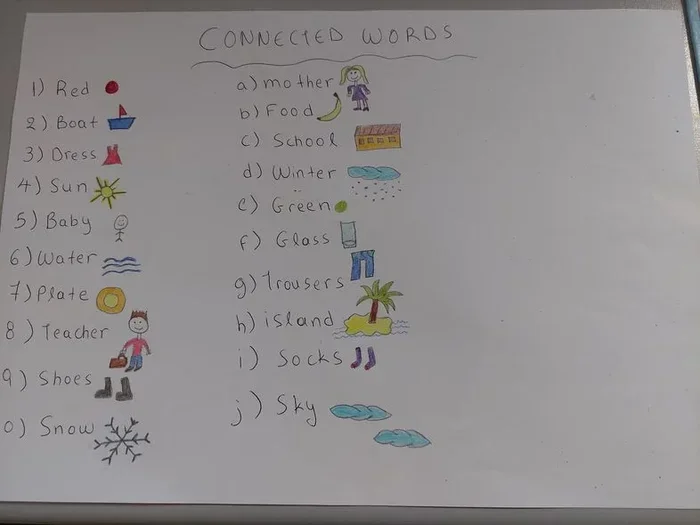

The cohesive meaning in writing refers to how well your ideas connect and flow together to create clear, readable content. When your writing is cohesive, readers can follow your thoughts without getting lost or confused. Strong cohesive writing uses logical transitions, consistent references, and unified paragraphs to keep your message tight and effective. This guide breaks down everything you need to know about cohesive meaning, from basic concepts to practical tips you can use right away.
Key Takeaways
- Cohesive meaning is about how well your ideas connect and flow in writing.
- Cohesive writing improves reader engagement, clarity, and overall communication.
- Cohesive devices like conjunctions, pronouns, and transitions hold your text together.
- Common mistakes like inconsistent references and poor paragraph unity break cohesion.
- Practical techniques like outlining and reading aloud can boost your writing skills.
- Cohesion matters in emails, essays, blogs, and any form of content writing.
📑 Table of Contents
What Does Cohesive Mean in Writing?
So, what is the cohesive meaning when we talk about writing? Simply put, cohesive writing means your ideas connect smoothly from one sentence to the next. Every paragraph supports the main point, and the reader can follow your train of thought without stumbling.
Think of it like a chain. Each link represents a sentence or idea. When the links connect properly, the chain holds strong. When they don’t, the chain falls apart. That is exactly what happens in writing when cohesion is missing.
The cohesive meaning goes beyond just grammar. It is about how your words, sentences, and paragraphs work together to deliver a clear message. Good writing is not just about correct spelling or fancy vocabulary. It is about making your content easy to read and understand.
When you write with cohesion, you create a natural text flow. Your reader moves effortlessly from one idea to the next. This is the foundation of effective communication in any context, whether you are writing a blog post, an email, or an academic paper.
The Core Elements of Cohesion
To truly understand cohesive meaning, you need to look at the building blocks. Cohesion in writing comes from several key elements working together:
- Referential ties — These are words that refer back to something earlier in the text, like pronouns (it, they, this).
- Lexical ties — These use repeated or related words to connect ideas across sentences.
- Conjunctions — Words like and, but, however, and therefore link thoughts logically.
- Logical sequencing — Your ideas follow a clear, understandable order.
When all these elements work together, your paragraph unity strengthens. Each paragraph has one main idea, and everything inside it supports that idea. This is what makes connected writing feel natural and effortless.
Why Cohesive Writing Matters
You might wonder why cohesive meaning deserves so much attention. The answer is simple: it directly impacts how your message lands with the reader. Here is why it matters so much.
First, writing clarity depends on cohesion. When your ideas are connected logically, the reader does not have to guess what you mean. They simply follow your line of thought. This reduces confusion and makes your content more persuasive.
Second, cohesion boosts reader engagement. People skim content online. If your writing jumps around randomly, they will leave. But when your text flow is smooth and predictable, readers stay longer. They trust your voice and your message.
Third, strong writing skills rely on cohesion. Whether you are a student, a marketer, or a business professional, your ability to connect ideas clearly sets you apart. Employers and teachers alike value writers who can communicate with discourse coherence.
The Cost of Poor Cohesion
Now let us look at the other side. When your writing lacks cohesion, what happens? The reader gets lost. They re-read sentences. They misunderstand your point. In some cases, they just give up and move on.
Poor cohesion also makes your content look unprofessional. Even if your ideas are brilliant, scattered writing dilutes their impact. Your content organization falls apart, and your writing clarity suffers. The result is a piece of writing that fails to achieve its purpose.
This is exactly why understanding cohesive meaning is so important. It is not just an academic concept. It is a practical skill that improves every piece of writing you produce.
Types of Cohesive Devices
Now let us get into the nuts and bolts. Cohesive devices are the tools you use to connect ideas in your writing. They are the glue that holds your text together. There are several types, and each plays a unique role in creating cohesive writing.
Grammatical Cohesion
Grammatical cohesion relies on the structure of your sentences. It includes pronouns, determiners, and conjunctions that create links between ideas. For example, when you write “The report was late. It needed more data,” the word “it” creates a grammatical tie between the two sentences.
This type of cohesion also includes ellipsis, where you leave out a word that the reader can infer. For instance, “She likes coffee, and he does too” — the word “likes” is implied in the second clause. These small structural choices have a big impact on text flow.
Lexical Cohesion
Lexical cohesion is all about word choice. It uses repeated words, synonyms, and related terms to create connections between sentences. For example, if you write about “climate change” in one sentence and “global warming” in the next, you are building lexical ties.
This form of referential cohesion helps the reader see how ideas relate to each other. It gives your writing a sense of unity and purpose. Good lexical cohesion makes your content feel organized and intentional.
Logical and Sequential Cohesion
Then there is the way you organize your ideas. Logical transitions like “first,” “next,” “finally,” and “on the other hand” guide the reader through your argument. They signal the relationship between ideas — whether you are adding, contrasting, or concluding.
Conjunction usage plays a huge role here. Words like “because,” “although,” “therefore,” and “meanwhile” show the reader how one idea connects to the next. Mastering these small words is one of the easiest ways to improve your writing clarity.
How to Make Your Writing More Cohesive
Now for the part you have been waiting for — how to actually improve your cohesive writing. The good news is that cohesion is a learnable skill. With a few practical strategies, you can transform your writing from scattered to structured.
Start with a Clear Outline
Before you write a single sentence, map out your main ideas. An outline gives your content organization a solid framework. It helps you see how each point connects to the next. When you write from an outline, your idea connection becomes natural and logical.
You do not need a complex outline. Even a simple list of main points works. The key is to know your starting point, your key arguments, and your conclusion before you begin.
Use Transition Words Strategically
Transition words are your best friends when it comes to logical transitions. They signal the relationship between ideas and help the reader follow your discourse coherence. Here are some common ones to keep in your toolkit:
- Addition: also, furthermore, in addition, moreover
- Contrast: however, on the other hand, yet, although
- Cause and effect: therefore, as a result, consequently, because
- Sequence: first, next, then, finally, meanwhile
- Example: for example, for instance, specifically
Use these words to link your sentences and paragraphs. But do not overdo it. A little goes a long way in creating smooth text flow without making your writing feel mechanical.
Repeat Key Words and Concepts
One of the simplest ways to build lexical cohesion is to repeat important words or phrases. This might sound repetitive, but it actually helps the reader stay focused on your main point. It anchors the cohesive meaning of your writing.
You can also use synonyms to avoid sounding too repetitive. If you write about “remote work” several times, try mixing in “working from home” or “telecommuting.” This keeps your writing fresh while maintaining strong idea connection.
Keep Paragraphs Focused
Each paragraph should have one clear main idea. Everything in that paragraph should support that idea. This is the essence of paragraph unity. When you stay on topic within each paragraph, your overall writing coherence improves dramatically.
A good rule of thumb is to start each paragraph with a topic sentence. Then add supporting details, examples, or evidence. Finally, wrap up with a sentence that ties back to your main point. This structure creates natural cohesive ties within and between paragraphs.
Read Your Work Aloud
This is one of the best writing tips out there. When you read your writing aloud, you can hear where the flow breaks. Awkward jumps, sudden topic changes, and confusing references all become obvious when you hear them out loud.
Reading aloud also helps you check your sentence structure. If a sentence feels too long or tangled, it probably is. Break it up. Simplify it. Make it easier to follow. This simple habit can dramatically improve your cohesive writing.
Use Pronouns Carefully
Pronouns like “it,” “they,” “this,” and “that” are powerful cohesive devices. They let you refer back to something without repeating the same noun. But they can also cause confusion if the antecedent is unclear.
Make sure the reader always knows what your pronoun refers to. For example, “The team finished the project. They celebrated together” works perfectly. But “The team finished the project. It was great” is vague — what was great, the project or the finishing?
Being intentional with your pronoun use strengthens grammatical cohesion and keeps your writing clear and precise.
Common Mistakes That Break Cohesion
Even experienced writers sometimes make mistakes that hurt their cohesive meaning. Knowing what to avoid is just as important as knowing what to do. Here are the most common pitfalls.
Jumping Between Topics
Nothing kills cohesion faster than sudden topic shifts. If you are writing about one thing and then jump to something completely unrelated, the reader gets confused. This breaks paragraph unity and weakens your overall content organization.
To avoid this, stick to one main idea per paragraph. If you need to introduce a new topic, use a clear transition or start a new paragraph. This keeps your writing clarity intact and your reader engaged.
Overusing Passive Voice
Passive voice can make your writing feel flat and disconnected. It often hides the doer of the action, which weakens idea connection. Compare “The report was written by the team” with “The team wrote the report.” The active version is clearer and more cohesive.
This does not mean you should never use passive voice. Sometimes it is appropriate. But as a general rule, favor active voice for stronger connected writing and better reader engagement.
Inconsistent Point of View
Switching between first person, second person, and third person within the same piece of writing creates confusion. It breaks the discourse coherence and makes your writing feel disjointed. Pick a consistent point of view and stick with it.
Skipping the Big Picture
Sometimes writers get so caught up in individual sentences that they forget the bigger picture. Each sentence might be fine on its own, but the overall writing coherence suffers. Always keep your main message in mind as you write.
Ask yourself after each paragraph: does this support my main point? If not, revise or remove it. This simple check preserves the cohesive meaning of your entire piece.
Cohesive Writing in Different Contexts
The cohesive meaning of writing applies across many different contexts. Whether you are crafting a casual email or a formal research paper, cohesion plays a vital role in how your message is received.
Cohesion in Blog Posts and Articles
Online content lives and dies by its text flow. Readers scan blog posts quickly. If your writing lacks cohesion, they will bounce. Use subheadings, short paragraphs, and clear transitions to keep readers on the page. Strong cohesive writing keeps your audience engaged and encourages them to read to the end.
Cohesion in Academic Writing
In academic writing, discourse coherence is especially important. Your arguments need to build logically from one point to the next. Grammatical cohesion and lexical cohesion help you present complex ideas in a way that is easy to follow. Professors and reviewers notice strong cohesion right away.
Cohesion in Business Communication
Emails, reports, and proposals all benefit from connected writing. In business, clarity is king. If your message is scattered, it can lead to misunderstandings and mistakes. Cohesive writing ensures your point comes across quickly and effectively. It shows professionalism and strong writing skills.
Cohesion in Creative Writing
Even creative writing relies on cohesion. Whether you are writing a novel, a short story, or a poem, your ideas need to connect in a way that feels natural. Cohesion in creative writing does not mean rigid structure. It means guiding your reader through the story or argument with purpose and intention.
Quick Tips to Boost Cohesion Today
Ready to put what you have learned into practice? Here are some quick, actionable tips you can use right away to improve your cohesive meaning in any piece of writing:
- Read your work backward. Start from the last sentence and work your way up. This helps you spot disconnected ideas that you might miss reading forward.
- Highlight your transitions. Go through your writing and highlight every transition word. Make sure each one accurately reflects the relationship between ideas.
- Check your pronouns. Circle every pronoun and make sure the reader knows exactly what it refers to.
- Use the one-idea rule. Each paragraph should focus on one main idea. If you find two ideas fighting for space, split them into separate paragraphs.
- Get a second pair of eyes. Have someone else read your work. Fresh eyes can spot gaps in text flow that you might have missed.
These small changes can make a big difference in your writing clarity and overall cohesive writing. Try them with your next piece and see the results for yourself.
Conclusion
The cohesive meaning in writing is all about connection. It is about making sure your ideas flow naturally from one to the next, creating a seamless reading experience. When you write with cohesion, your message becomes clearer, your reader stays engaged, and your content achieves its purpose.
Cohesion is not something you are born with. It is a writing skill you can develop with practice and awareness. By understanding cohesive devices, avoiding common mistakes, and applying the tips in this guide, you can transform the way you write.
Start today. Apply what you have learned to your next piece of writing. Pay attention to logical transitions, check your paragraph unity, and focus on content organization. Over time, cohesive writing will become second nature. And your readers will thank you for it.
Remember, the goal of connected writing is not perfection. It is about making your ideas easy to follow and your message easy to understand. That is the real power of cohesive meaning — it turns good writing into great writing.
Frequently Asked Questions
What is the cohesive meaning in simple terms?
Cohesive meaning in simple terms refers to how well your ideas connect and flow together in writing. When your sentences and paragraphs are logically linked, your writing feels unified and easy to follow. It is the difference between a piece that reads smoothly and one that feels scattered and confusing.
What are the main types of cohesive devices?
The main types of cohesive devices include grammatical cohesion (pronouns, conjunctions, ellipsis), lexical cohesion (repeated words, synonyms), and logical transitions (words like however, therefore, and first). Together, these cohesive ties create a smooth text flow and strengthen your writing coherence.
How is cohesion different from coherence in writing?
While the terms are often used together, cohesion refers to the surface-level connections in your writing, like pronouns and transition words. Coherence refers to the deeper logical structure of your ideas. Both work together to create discourse coherence and make your writing clear and effective.
Can cohesive writing be improved with practice?
Absolutely. Cohesion is a learnable writing skill. By practicing techniques like outlining, using transition words intentionally, reading your work aloud, and checking your pronoun references, you can steadily improve your cohesive writing. The more you practice, the more natural it becomes.
Why does my writing feel choppy even when my grammar is correct?
This is a common issue that usually comes down to weak idea connection between sentences. Even with perfect grammar, your writing can feel choppy if you lack logical transitions, switch topics too quickly, or fail to use pronouns and repeated words to link ideas. Focus on cohesive devices to smooth out your text flow.
Does cohesive writing matter for everyday emails and messages?
Yes, it absolutely matters. In everyday communication, writing clarity saves time and prevents misunderstandings. A well-structured email with clear paragraph unity and logical flow gets better results than a scattered message. Strong connected writing improves your professional communication and makes you look more polished and competent.



