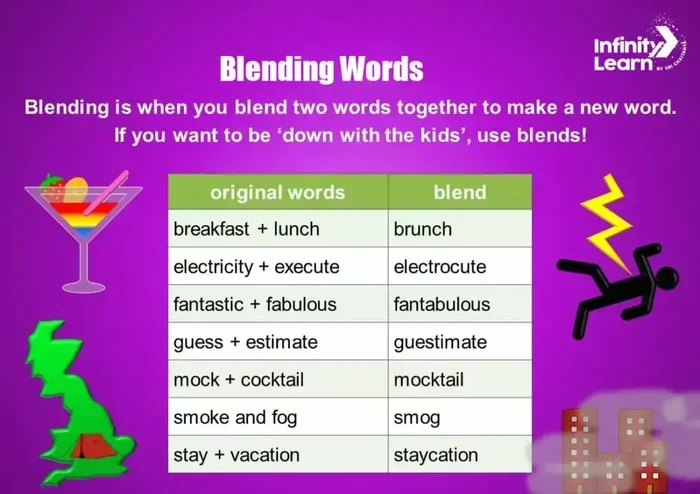

A portmanteau is a word formed by blending two or more words together, combining their sounds and meanings into one new term. The word “portmanteau” itself comes from a suitcase that opens into two compartments. Understanding this concept helps you see how the English language evolves through creative word blending and linguistic innovation.
Have you ever stopped to think about where weird words come from? Some words seem to pop out of nowhere. They combine two ideas into one neat little package. That is exactly what a portmanteau does. A portmanteau is a word formed by blending two or more words together. It merges their sounds and their meanings into something entirely new.
You use portmanteau words every single day. Words like brunch, smog, and motel are all examples. They are everywhere in the English language. But what makes them so special? And why should you care about word blending? Let us dive in and explore the fascinating world of portmanteau meaning together.
The term itself is a portmanteau. It comes from the French words “porter” (to carry) and “manteau” (a cloak). Long ago, a portmanteau was a suitcase that opened into two compartments. Over time, people started using the word to describe words that “carry” two meanings inside them. Today, portmanteau words are a big part of how we create new vocabulary. They show how creative and flexible the English language really is.
Key Takeaways
- Portmanteau meaning: A word created by merging two words, blending both their sounds and meanings into a single new term.
- Origin of the word: The term “portmanteau” itself is a blend of “port” and “manteau,” originally describing a type of suitcase.
- Famous examples: Words like brunch, smog, motel, and spork are all portmanteau words used daily.
- Lewis Carroll popularized it: He coined many portmanteau words in “Through the Looking-Glass,” including chortle and galumph.
- Why it matters: Portmanteau words show how language evolves, adapts, and stays creative over time.
- They boost vocabulary: Learning portmanteau words helps you decode unfamiliar terms and expand your word power.
- Modern usage is everywhere: Tech, food, pop culture, and science all rely on portmanteau words today.
📑 Table of Contents
- What Does Portmanteau Mean Exactly?
- A Brief History of the Portmanteau Word
- Famous Portmanteau Examples You Use Every Day
- How Portmanteau Words Are Formed
- Why Portmanteau Words Matter in Modern Language
- The Science Behind Portmanteau Words
- Portmanteau Words in Pop Culture and Technology
- How to Spot a Portmanteau in the Wild
- Why Understanding Portmanteau Meaning Makes You a Better Communicator
- Conclusion
What Does Portmanteau Mean Exactly?
Let us start with the basics. The portmanteau meaning is simple but clever. A portmanteau word takes parts of two different words and smashes them together. The result is a brand-new word with a blended meaning. It is different from a compound word like “toothbrush.” A compound word keeps both words whole. A blended word cuts and merges them.
Think of it like a suitcase with two compartments. Each compartment holds something different. When you open it, both things come out together. That is exactly how a portmanteau works. Two words go in. One new word comes out.
Portmanteau vs Compound Word
People often confuse portmanteau words with compound words. They are not the same. A compound word joins two full words. For example, “sunflower” is a compound word. “Sun” stays sun. “Flower” stays flower. But a portmanteau chops and blends. Take “smog” for example. It blends “smoke” and “fog.” Neither original word stays whole.
Here is a quick look at the difference:
- Compound word: Two complete words joined together. Example: butterfly (butter + fly).
- Portmanteau word: Parts of two words blended into one. Example: brunch (breakfast + lunch).
This distinction matters in linguistics. It helps us understand how word formation works. It also shows how creative speakers and writers can be with language.
A Brief History of the Portmanteau Word
The history of portmanteau words is surprisingly old. The concept has been around for centuries. But the term “portmanteau” as a linguistic tool gained fame in the 1800s. Lewis Carroll was the big name that put it on the map.
Lewis Carroll and the Birth of Blended Words
Lewis Carroll is famous for his nonsense words. In “Through the Looking-Glass,” he created words that blended two meanings perfectly. He even used the word “portmanteau” in the poem “Jabberwocky.” He described “frumious” as a portmanteau of “fuming” and “furious.” That single mention made the concept famous.
Carroll did not just make up random sounds. He crafted each word with care. He blended sounds in a way that felt natural. His portmanteau words still appear in modern dictionaries. Words like “chortle” (chuckle + snort) and “galumph” (gallop + triumph) are still used today. This shows how powerful word blending can be.
How Portmanteau Words Evolved Over Time
After Carroll, portmanteau words kept growing. Writers, scientists, and everyday people all started creating them. In the 1900s, new words appeared faster than ever. Technology and culture gave people fresh ideas to blend. Today, neologisms (newly coined words) are created all the time. Many of them are blended words.
The English language loves this trick. It allows speakers to invent words that fit new ideas. When something does not have a name yet, a portmanteau often fills the gap. It is one of the most fun and efficient ways to expand our vocabulary.
Famous Portmanteau Examples You Use Every Day
You probably use portmanteau words without even realizing it. They are so common that they feel like regular words. But each one has an interesting origin story. Let us look at some of the most famous examples.
Brunch
The word “brunch” is one of the most beloved portmanteau words. It comes from breakfast and lunch. People started using it in the late 1800s. The idea was simple. Why choose between breakfast and lunch when you could have both? The word stuck. Today, “brunch” is a huge part of food culture. You see it on menus everywhere.
Smog
“Smog” is a perfect example of practical word blending. It combines smoke and fog. The word appeared in the early 1900s to describe polluted air in cities. Before “smog” existed, people had no single word for that thick, hazy air. The portmanteau gave us a quick and clear way to name a real problem. It is still used in discussions about air quality today.
Motel
“Motel” is another classic blended word. It merges motor and hotel. The word appeared in the 1920s when car travel became popular. People needed places to stay along highways. The name “motel” perfectly described these motor hotels. It spread quickly and is now used worldwide.
Spork
The “spork” combines spoon and fork. It is the ultimate multi-purpose eating tool. You find sporks in lunchboxes, camping gear, and even fast food. This portmanteau shows how language adapts to everyday needs. When something serves two purposes, a blended word often follows.
Infotainment
“Infotainment” blends information and entertainment. It describes content that is both educational and fun. News shows, websites, and apps use this term all the time. It is a great example of how portmanteau words capture modern concepts. When two ideas overlap, a single blended word can express both.
| Portmanteau Word | Blended Words | Meaning |
|---|---|---|
| Brunch | Breakfast + Lunch | A meal eaten late morning |
| Smog | Smoke + Fog | Air pollution haze |
| Motel | Motor + Hotel | A roadside hotel for motorists |
| Spork | Spoon + Fork | A combined eating utensil |
| Infotainment | Information + Entertainment | Educational yet entertaining content |
| Chortle | Chuckle + Snort | A laugh combining joy and amusement |
| Gerrymander | Elbridge Gerry + Salamander | Manipulating district boundaries |
| Mockumentary | Mock + Documentary | A fake documentary for comedy |
How Portmanteau Words Are Formed
Creating a portmanteau is part science, part art. There are some common patterns. Understanding them helps you spot and even create your own blended words. Let us break down the process.
The Basic Formula
Most portmanteau words follow a simple formula. You take the beginning of one word and the end of another. Then you blend them together. Sometimes you take the middle of both words. There is no single rule. But the result always feels natural.
Here are the most common ways word blending works:
- Beginning + End: Brunch (br- from breakfast + -unch from lunch)
- Beginning + Beginning: Infotainment (info from information + -tainment from entertainment)
- End + Beginning: Motel (-otel from hotel + mot- from motor)
- End + End: This is rarer but still happens in some neologisms
Tips for Creating Your Own Portmanteau Words
Want to try making your own portmanteau? Here are some tips that actually work:
- Start with two related ideas. The words should share a connection. For example, “breakfast” and “lunch” both describe meals.
- Look for shared sounds. Find overlapping letters or syllables. This makes the blend feel smooth.
- Keep it short. The best blended words are easy to say and remember.
- Test it out loud. Say the new word a few times. If it rolls off the tongue, you are on the right track.
- Check if it fills a gap. A great portmanteau names something that does not have a word yet.
Common Mistakes When Forming Portmanteau Words
Not every blend works. Here are some pitfalls to avoid:
- Making it too long. A portmanteau should be concise. If your new word has five syllables, it might be hard to use.
- Forcing the blend. If the sounds do not fit naturally, the word will feel awkward.
- Losing the meaning. A good word blending keeps hints of both original meanings. If the connection is lost, people will not understand it.
- Ignoring pronunciation. The word needs to sound good. Clunky blends do not catch on.
Why Portmanteau Words Matter in Modern Language
Portmanteau words are not just fun word games. They serve a real purpose in how we communicate. They reflect how language changes and grows.
They Fill Vocabulary Gaps
Language is always evolving. New ideas and technologies appear constantly. Sometimes there is no existing word to describe them. A portmanteau bridges that gap quickly. Instead of creating a long explanation, speakers blend two familiar words. The new word instantly communicates the concept.
Think about how fast technology changes. New gadgets, apps, and concepts emerge every year. Portmanteau words help us name these innovations without starting from scratch. They give us a shortcut in word formation.
They Reflect Culture
The words a society creates tell you a lot about that society. Portmanteau words often emerge from cultural trends. “Staycation” (stay + vacation) became popular when people started vacationing at home. “Binge-watch” (binge + watch) appeared when streaming services changed how we watch TV. These words capture cultural shifts in just two syllables.
This is why portmanteau meaning matters beyond just linguistics. It shows how people think, what they value, and how they adapt. Each new blended word is a tiny snapshot of its time.
They Make Language More Playful
Let us not forget the fun side. Word blending adds playfulness to language. It encourages creativity. Writers use portmanteau words in stories, poems, and songs. Advertisers use them in brand names and slogans. They grab attention and stick in memory.
Even in everyday conversation, a clever portmanteau can make you smile. It shows wit and linguistic awareness. That is why wordplay remains one of the most beloved aspects of the English language.
The Science Behind Portmanteau Words
There is actual science behind portmanteau words. Linguists study how and why they work. They look at the structure of language and how our brains process blended terms.
Morphology and Word Formation
In linguistics, the study of word structure is called morphology. Portmanteau words are a fascinating area of morphological study. They show how morphemes (the smallest units of meaning) can be rearranged. When two words blend, their morphemes merge. The result is a new unit with its own meaning.
Researchers study which blends become popular and which do not. They look at factors like sound patterns, meaning clarity, and cultural relevance. This research helps us understand the mechanics of language evolution.
The Psychology of Portmanteau Words
Our brains love patterns. When we hear a portmanteau, we naturally break it back into its source words. This mental process is satisfying. It gives us a small “aha” moment of understanding. That is why blended words are so memorable.
Studies in cognitive psychology show that creative wordplay boosts engagement. People pay more attention to language that surprises them. A well-crafted portmanteau does exactly that. It grabs attention and makes a lasting impression.
Portmanteau Words in Pop Culture and Technology
Today, portmanteau words are everywhere in pop culture and technology. They help brands stand out. They help us talk about new trends. Let us explore how they show up in these areas.
Brand Names and Marketing
Companies love portmanteau words for product names. They are catchy and memorable. Think about brands like Spotify (spot + identify). Or the classic “Microsoft” (microcomputer + software). These names blend two concepts into one powerful brand. They stick in your mind because they are familiar yet fresh.
Social Media and Internet Culture
The internet is a breeding ground for new blended words. Terms like “frenemy” (friend + enemy) and “staycation” spread like wildfire online. Memes, tweets, and hashtags all use word blending to create shorthand for complex ideas. Social media moves fast. Portmanteau words keep up with that speed.
Science and Medicine
Even science uses portmanteau words. In medicine, terms like “chimeric” (from the chimera) describe blended concepts. In genetics, scientists blend gene names to describe new discoveries. These portmanteau words help experts communicate complex ideas quickly and clearly.
How to Spot a Portmanteau in the Wild
Now that you know what a portmanteau is, you will start seeing them everywhere. Here are some tips for spotting them in everyday life.
- Listen for familiar sounds. If a word sounds like two other words mashed together, it probably is a portmanteau.
- Check the meaning. Does the word combine the meanings of two concepts? If yes, it is likely a blended word.
- Look for recent coinages. New neologisms often start as portmanteau words before gaining mainstream use.
- Read widely. Books, articles, and online content are full of word blending examples.
Quick tip: Keep a notebook of interesting words you hear. When you find a portmanteau, write down its two source words. Over time, you will build a sharp eye for wordplay and linguistic creativity.
Why Understanding Portmanteau Meaning Makes You a Better Communicator
Learning about portmanteau meaning does more than impress your friends. It actually makes you a better communicator. Here is how.
- It expands your vocabulary. Every new portmanteau word you learn adds a tool to your communication toolkit.
- It improves your decoding skills. When you encounter an unfamiliar word, you can break it into parts. This is especially helpful with blended words.
- It boosts your creativity. Understanding how words are formed helps you invent new terms when needed.
- It deepens your appreciation of language. You start seeing the English language as a living, breathing system that adapts and grows.
The beauty of a portmanteau is that it captures two ideas in one word. It is efficient. It is creative. And it shows how flexible human language truly is. Whether you are a writer, a student, or just a curious person, knowing the portmanteau meaning opens up a new way of thinking about words.
Conclusion
The portmanteau meaning is simple but powerful. It is the art of blending two words into one new term that carries both their sounds and meanings. From Lewis Carroll’s whimsical creations to modern brand names and internet slang, portmanteau words shape how we communicate every day.
These blended words fill gaps in our vocabulary, reflect cultural shifts, and make language more playful. They show that the English language is not static. It is alive, creative, and always evolving. Next time you say “brunch” or “smog,” take a moment to appreciate the cleverness behind that single word. Understanding portmanteau meaning gives you a deeper connection to the words you use and the language you love.
So go ahead. Start spotting portmanteau words in your daily life. Create your own blends. Share them with friends. Language is a playground, and word blending is one of the best ways to play.
Frequently Asked Questions
What is the simplest way to define portmanteau meaning?
A portmanteau is a word created by blending parts of two different words into one new word. The new word combines the sounds and meanings of both original words. “Brunch” from breakfast and lunch is the most common example.
How is a portmanteau different from a compound word?
A compound word keeps both original words intact and joins them together, like “sunflower.” A portmanteau cuts and merges parts of two words, creating something entirely new, like “smog” from smoke and fog. The key difference is that portmanteau words reshape the original words.
Who coined the term portmanteau in linguistics?
Lewis Carroll is credited with popularizing the term in linguistics. In his poem “Jabberwocky” from “Through the Looking-Glass,” he described “frumious” as a portmanteau of “fuming” and “furious.” His work brought widespread attention to word blending.
Are portmanteau words only used in English?
No, portmanteau words exist in many languages. French, German, Spanish, and Japanese all use blended words. However, English is especially known for its love of portmanteau words. The flexible structure of English makes word blending particularly common and creative.
Can anyone create a new portmanteau word?
Absolutely. Anyone can create a new portmanteau word by blending two related words together. The best blends are short, easy to pronounce, and fill a gap in the vocabulary. Some coined words become popular and even enter dictionaries over time.
Why do portmanteau words become so popular so quickly?
Portmanteau words spread fast because they are easy to remember and instantly meaningful. They combine two familiar concepts into one word, which makes them intuitive. When a blended word fills a real need or captures a cultural trend, it gains traction quickly.
=== CONCLUSION ===
Portmanteau meaning opens up a whole new way of looking at words. What seems like a simple blending trick is actually a powerful tool for communication. From Lewis Carroll to modern internet slang, portmanteau words have shaped how we express ideas. They fill gaps, spark creativity, and keep language fresh.
Now that you understand how word blending works, you will never read or hear a word the same way again. Keep exploring, keep creating, and let the magic of portmanteau words inspire your own language journey.