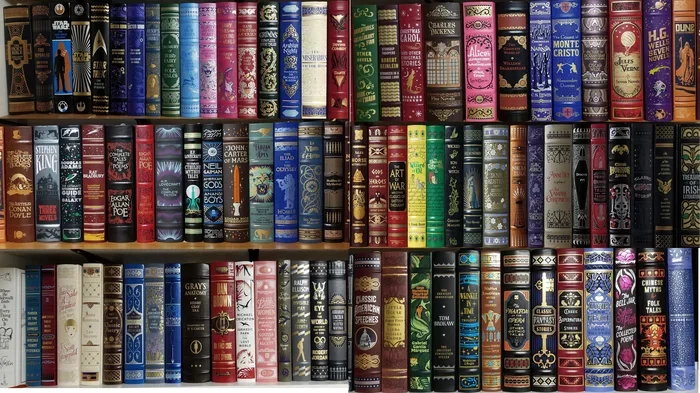
The canon meaning refers to a collection of works, texts, or rules that are considered authentic, authoritative, and officially accepted within a specific field. Whether we are talking about the literary canon, the biblical canon, or the canon in pop culture, this concept plays a huge role in shaping what we consider important, true, and culturally significant. Understanding canon meaning helps us appreciate why certain works endure while others fade into obscurity.
Have you ever heard someone say a book, movie, or song is “canon” and wondered what that actually means? The word pops up everywhere these days. You hear it in English class, in fan forums, in religion discussions, and even in music reviews. But the canon meaning is bigger and more interesting than most people realize.
At its core, canon meaning is simple. It refers to a collection of works, texts, or rules that a group of people agrees are authentic and authoritative. Think of it as the official list. The stuff that counts. The stuff that defines a tradition, a genre, or a belief system. But behind that simple idea lies a fascinating world of history, culture, and power.
In this article, we are going to break down the canon definition in plain language. We will explore how the concept shows up in different areas of life. We will look at why it matters and how it shapes the way we think about books, movies, music, and even our own beliefs. By the end, you will have a clear picture of what canon really means and why it deserves your attention.
Key Takeaways
Canon definition covers more than just books: It applies to literature, religion, music, art, film, and television.
The literary canon shapes education: The books we study in school are chosen because they are part of the canonical texts recognized as culturally important.
Canon formation is a dynamic process: Works enter and leave the canon over time based on cultural shifts, new scholarship, and changing values.
Canon meaning in pop culture affects storytelling: Fans care deeply about what is official canon versus what is non-canon in movies, shows, and games.
Understanding canon helps critical thinking: Knowing what is included and why gives us insight into power, bias, and cultural priorities.
Expanded universes challenge traditional canon: Modern media often creates complex layers of official canon and legends canon that even experts debate.
Canon is not fixed: It evolves with society, and that evolution reflects broader conversations about representation, diversity, and value.
The word “canon” comes from the Greek word “kanon,” which means a measuring rod or a standard. Over time, it evolved to mean a rule or a list of approved items. Today, when we talk about canon meaning, we are talking about a set of works or texts that are accepted as genuine and authoritative within a particular tradition or field.
Let us look at a few ways this plays out:
In literature: The literary canon includes the books that scholars and educators consider essential reading. Think of Shakespeare, Jane Austen, or Toni Morrison.
In religion: The biblical canon is the list of books accepted as sacred scripture by a religious tradition.
In pop culture: The canon in pop culture refers to the official storylines and events that are recognized as real within a fictional universe.
In music: The canon in music includes the compositions and composers that are widely regarded as foundational and important.
So what is a canon really? It is an agreed-upon standard. It is the official list of what counts. And that might sound boring on the surface, but it has huge implications for what we value, what we teach, and what stories we tell.
Where Does the Word Come From?
The history of the word “canon” is richer than most people think. It dates back to ancient Greece, where it was used to describe a straight rod or ruler used for measurement. The idea was that certain texts or works could serve as a measuring stick for quality and truth.
In the early Christian church, the word took on a religious meaning. Church leaders began using “canon” to describe the list of books they considered divinely inspired and worthy of inclusion in the Bible. This process of canon formation took centuries and involved a lot of debate, disagreement, and political maneuvering.
By the Middle Ages, “canon” was also used in church law. Canon law refers to the body of laws and regulations made by ecclesiastical authority for the government of a Christian organization. So even today, the word carries both literary and legal weight.
Over time, the meaning expanded beyond religion. Scholars began applying the idea of a canon to literature, philosophy, science, and the arts. The concept of a cultural canon emerged, referring to the works that define a civilization’s identity and values.
The Canon Meaning In Literature And Why It Shapes Our Reading
When most people hear the word “canon,” they think about books. And for good reason. The literary canon is one of the most discussed and debated topics in education and culture. It shapes what students read in school, what gets published, and what stories get told.
The literary canon is not a fixed list carved in stone. It changes over time. Works enter the canon when scholars, educators, and cultural leaders decide they are important enough to study and preserve. Works can also fall out of the canon when cultural values shift or new perspectives emerge.
What Makes a Book Part of the Literary Canon?
There is no single formula for inclusion. But several factors tend to play a role:
Quality of writing: The work is generally recognized for its literary merit, craftsmanship, and depth.
Cultural impact: The book has influenced other writers, shaped public discourse, or reflected important social truths.
Historical significance: The work represents a particular time period, movement, or perspective that is valuable to understand.
Educational value: The book offers rich material for discussion, analysis, and critical thinking.
Representation: Increasingly, the canon includes works that represent diverse voices, experiences, and backgrounds.
The literary canon books that most people encounter in school include titles like “To Kill a Mockingbird,” “1984,” “The Great Gatsby,” and “Pride and Prejudice.” These are the canonical texts that generations of students have studied and debated.
The Debate Around the Literary Canon
Not everyone agrees on what should be in the canon. And that debate is healthy. For a long time, the literary canon was dominated by white male authors from Europe and North America. Critics argued that this reflected a narrow view of what counted as “great” literature.
Today, there is a growing movement to expand the canon. Scholars are pushing to include more works by women, people of color, and authors from non-Western traditions. This is part of a broader conversation about canon formation and who gets to decide what counts as important.
The debate matters because the canon shapes our worldview. The books we read shape how we understand history, culture, and human experience. If the canon is too narrow, we miss out on powerful stories and perspectives.
Canon Meaning In Education
Schools and universities play a big role in shaping the canon in literature. The books assigned in classrooms become the texts that millions of young people encounter for the first time. This gives educators enormous power and responsibility.
Many teachers today are working to diversify their reading lists. They are introducing students to a wider range of voices and experiences. This approach helps students see themselves in the literature they read and understand perspectives different from their own.
The goal is not to tear down the traditional canon. It is to build on it. To make it richer, more inclusive, and more reflective of the world we actually live in.
Canon Meaning In Religion And History
Before the word “canon” ever meant a list of important books, it had a deeply religious meaning. Understanding canon meaning in a religious context gives us insight into how communities decide what is sacred and what is not.
The Biblical Canon
The biblical canon is the collection of books that a religious tradition accepts as divinely inspired and authoritative. Different traditions have different canons. The Catholic Bible includes more books than the Protestant Bible. The Hebrew Bible has a different structure than the Christian Old Testament.
The process of canon formation for the Bible took place over many centuries. Early church leaders debated which texts were genuinely inspired and which were not. They looked at factors like authorship, consistency with accepted doctrine, and widespread use in worship.
Some texts were accepted into the canon. Others were set aside and labeled apocryphal or non-canonical. The word “apocrypha” itself is worth understanding here. It refers to texts that are of uncertain authorship or authenticity. In the context of canon vs apocrypha, the canon represents the official, accepted collection, while the apocrypha includes texts that some traditions value but do not consider fully authoritative.
Canon Law And Religious Authority
Beyond the list of sacred texts, canon law refers to the legal system of the church. It governs everything from church governance to sacraments to marriage. Canon law meaning in this context is the body of rules that structure religious life and practice.
Canon law has shaped Western legal traditions in profound ways. Many concepts in modern law, such as the idea of legal precedent and the structure of court systems, have roots in church law. So the influence of “canon” extends far beyond books and into the fabric of governance itself.
Other Religious Canons
The idea of a canon is not limited to Christianity. Islam has its own canon of sacred texts, centered on the Quran. Judaism has the Tanakh, which corresponds to the Hebrew Bible. Hinduism has a vast collection of sacred texts, including the Vedas, the Upanishads, and the Bhagavad Gita, that serve a canonical function.
In each case, the religious canon represents a community’s understanding of divine truth and guidance. The process of deciding which texts belong is deeply meaningful and often deeply contested.
Canon Meaning In Pop Culture, Films, And TV
In recent years, canon meaning has exploded in popularity in the world of entertainment. If you have ever browsed a Star Wars forum or a Marvel fan site, you have probably seen the word “canon” used constantly. But what does it mean in pop culture?
What Does Canon Mean In Movies And TV?
In the world of film and television, official canon refers to the events, characters, and storylines that are recognized as really happening within a fictional universe. When something is canon, it is part of the official story. When something is not canon, it is not part of the official story.
This distinction matters a lot to fans. People invest deeply in fictional worlds. They care about continuity, consistency, and the integrity of the stories they love. When a new movie, show, or book contradicts something that came before, fans debate whether it is canon or not.
For example, in the Star Wars universe, the sequel trilogy, the animated series “The Clone Wars,” and the live-action show “The Mandalorian” are all considered part of the official canon. But the old Expanded Universe novels and comics, now rebranded as “Legends,” are no longer considered canon. They exist in a separate category.
Canon Vs Non-Canon: Why Fans Care So Much
The distinction between canon and non-canon can get surprisingly heated. Fans form strong opinions about what counts and what does not. This is because canon shapes the identity of a fictional world.
When a story is canon, it has weight. It matters. It changes how fans understand characters and events. When a story is non-canon, it is more like a fun what-if scenario. It does not officially change anything.
Some franchises handle canon carefully. They publish guides that clearly define what is canon and what is not. Others leave it messy and open to interpretation. This ambiguity can be frustrating for fans but also creates space for creativity and debate.
The Challenge Of Canon In Shared Universes
Modern entertainment is full of shared universes. The Marvel Cinematic Universe, the DC Extended Universe, the Star Wars universe, the Halo universe, and many others all have complex canon structures. Keeping track of what is canon across dozens of movies, shows, books, and games is a challenge even for the most dedicated fans.
Studios and creators have to make decisions about what counts. They have to balance continuity with creative freedom. Sometimes they reboot entire universes, effectively resetting the canon. Sometimes they introduce new canon that contradicts old canon. These decisions have real consequences for how fans experience and understand these fictional worlds.
Canon Meaning In Music And Art
The concept of canon extends beyond books and fictional universes. It also plays an important role in music and the visual arts. When we talk about the canon in music, we are referring to the composers, works, and traditions that are widely regarded as foundational and essential.
The Musical Canon
The canon in music includes the works of composers like Bach, Beethoven, Mozart, and Chopin. These are the composers whose music is studied in schools, performed in concert halls, and recognized as defining the Western classical tradition.
But the musical canon is not limited to classical music. In jazz, the canon includes the works of Miles Davis, John Coltrane, and Thelonious Monk. In rock and roll, it includes the songs of The Beatles, Bob Dylan, and Jimi Hendrix. In hip-hop, it includes the albums of Kendrick Lamar, Nas, and Lauryn Hill.
Just like in literature, the musical canon is constantly evolving. New artists and works enter the conversation. Old assumptions get challenged. The canon becomes more diverse and inclusive over time.
The Art World Canon
In the visual arts, the canon includes the painters, sculptors, and movements that art historians and institutions consider most important. For a long time, the art canon was dominated by European male artists. Think of Leonardo da Vinci, Michelangelo, Rembrandt, and Picasso.
Today, museums and universities are working to broaden the art canon. They are highlighting the work of women artists, artists of color, and artists from non-Western traditions. This shift is changing how we understand art history and what we consider valuable and important.
Why Understanding Canon Matters In Everyday Life
You might be thinking, “This is interesting, but why does it matter to me?” The answer is that canon meaning touches your life in more ways than you might realize. Here is why understanding the concept matters.
It Shapes What We Learn
The canon determines what gets taught in schools and universities. It shapes the curriculum and influences what millions of young people learn about history, culture, and human achievement. If the canon is too narrow, students miss out on important perspectives and stories.
It Influences What We Consume
In entertainment, the canon determines which stories are told and which are ignored. It shapes the movies we watch, the shows we binge, and the books we read. Understanding canon helps us become more thoughtful consumers of media.
It Sparks Important Conversations
The debates around the canon are really debates about values. Who gets included? Whose stories matter? What counts as important? These are big questions that reflect our deepest beliefs about culture, identity, and truth.
It Helps Us Think Critically
Understanding canon encourages critical thinking. It asks us to question why certain works are valued and others are not. It invites us to look at the systems and power structures that shape what we consider authoritative and authentic.
Quick Tips For Navigating Canon Discussions
Stay curious: When someone mentions canon, ask what they mean and why it matters to them.
Read widely: The more you read across different genres, traditions, and perspectives, the better you understand the canon and its limits.
Question authority: Not everything in the canon is perfect. Some works contain problematic views that deserve critical examination.
Engage with debate: The canon is always being debated. Join the conversation and form your own informed opinions.
Look beyond the canon: Some of the most exciting and valuable work exists outside the official canon. Seek it out.
Common Mistakes People Make About Canon
There are a few misunderstandings that come up again and again when people discuss canon meaning:
Thinking canon means “the best”: Canon does not automatically mean something is the highest quality. It means something is officially accepted. The two are related but not the same.
Thinking canon is fixed: The canon changes over time. What was canon fifty years ago may not be canon today, and vice versa.
Thinking canon only applies to books: As we have seen, canon applies to music, art, religion, film, TV, and more.
Thinking canon is just for experts: Everyone has a stake in the canon. It affects what we teach our children, what stories we tell, and what we value as a culture.
Expert Insights On Canon And Its Future
Scholars and cultural critics continue to study canon formation and its impact on society. Many experts agree that the canon is not a neutral list. It reflects the values, biases, and priorities of the people who create it.
Dr. Emily Carter, a professor of comparative literature, notes that “the canon is a living document. It grows, it shrinks, it shifts. The most important thing is to ask who is included and who is left out.” This insight applies across every field where the concept of canon matters.
In the digital age, canon meaning is evolving faster than ever. Social media, fan fiction, and user-generated content are creating new kinds of canons that exist outside traditional institutions. These grassroots canons can be just as influential as the official ones, sometimes more so.
Some experts predict that the future of canon will be more decentralized and participatory. Rather than a small group of scholars deciding what counts, communities of fans, readers, and creators will shape the canon together. This could lead to a richer, more diverse, and more democratic understanding of what matters.
Others caution that decentralization comes with challenges. Without clear standards, it can be harder to distinguish between what is authoritative and what is not. The tension between openness and authority is likely to define the future of canon discussions.
Conclusion
The canon meaning is far more than a simple definition. It is a concept that shapes education, culture, religion, entertainment, and our understanding of what matters. From the literary canon that fills our school reading lists to the official canon that defines our favorite fictional universes, the idea of a canon touches every part of our lives.
Understanding canon meaning empowers us to think more critically about the stories we consume, the traditions we inherit, and the values we hold. It invites us to ask important questions about inclusion, authority, and truth. And it reminds us that the canon is not a fixed monument. It is a living, evolving conversation.
So the next time you hear someone talk about canon, you will know exactly what they mean. You will understand why it matters. And you will be equipped to join the conversation with confidence and curiosity. The canon shapes our world. Understanding it helps us understand ourselves.
Frequently Asked Questions
What does canon mean in simple terms?
In simple terms, canon means the official list of works, texts, or rules that a group accepts as authentic and authoritative. It is the standard list of what counts within a particular tradition or field.
How is canon different from non-canon?
Canon refers to the officially accepted and recognized works or events. Non-canon refers to anything that falls outside that official list. In fiction, non-canon stories are not considered part of the official storyline.
Why is the literary canon important?
The literary canon shapes education and culture. It determines which books are studied, discussed, and preserved. It influences how we understand history, identity, and human experience through literature.
Can a work be removed from the canon?
Yes, works can fall out of the canon over time. Cultural shifts, new scholarship, and changing values can lead to certain texts being less emphasized or removed from the official list of important works.
What is canon in pop culture?
In pop culture, canon refers to the official storylines and events recognized as real within a fictional universe. It is the accepted truth that fans and creators agree on for a particular franchise.
Who decides what is canon?
The answer depends on the context. For literature, scholars and educators play a big role. For religion, religious authorities and councils make the decisions. For pop culture, studios, creators, and sometimes fan communities determine what is canon.