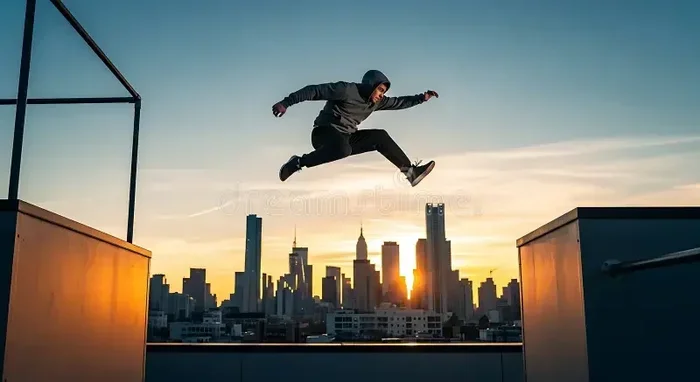

The parkour meaning is a physical discipline focused on moving through any environment using only your body. It originated in France in the 1980s and was developed by a group of young athletes who wanted to move efficiently and freely. Today, parkour is practiced worldwide as a sport, art form, and lifestyle that builds strength, confidence, and creativity.
Have you ever watched someone leap over walls, vault fences, and flip through city streets like gravity is just a suggestion? That is parkour. But what does parkour meaning really hold? More than just a cool sport you see on social media, parkour is a full-body discipline, a way of thinking, and a movement culture that has grown from the streets of France to every corner of the globe.
In this article, we will break down the parkour meaning in simple terms. We will explore where it came from, how it works, and why so many people around the world have fallen in love with it. Whether you are a curious beginner or just someone who watches clips online and thinks, “I want to try that,” this guide has you covered.
The word parkour itself comes from the French phrase “parcourir,” which means to move through or traverse. At its core, the parkour meaning is about getting from one point to another as efficiently as possible, using only your body. No equipment. No bikes. No ropes. Just you and the environment around you.
But there is so much more beneath the surface. Parkour is not just about jumping and climbing. It is about discipline, mental focus, and pushing your limits in a safe and controlled way. Let us dive deeper into everything this incredible movement art has to offer.
Key Takeaways
- Parkour meaning: A movement discipline focused on overcoming obstacles using efficient, fluid body motion.
- French origins: The sport was born in France in the 1980s, shaped by David Belle, Raymond Belle, and the Yamakasi group.
- Core philosophy: Parkour is about efficiency, self-improvement, and adapting to your environment.
- Traceurs vs. freerunners: Parkour emphasizes efficiency, while freerunning adds creative and acrobatic elements.
- Health benefits: Regular practice builds strength, agility, mental resilience, and body control.
- Getting started: Beginners should focus on basic movements, safety, and progressive skill building.
- Community culture: Parkour has a strong global community that values respect, creativity, and mutual support.
📑 Table of Contents
The Origins of Parkour
The story of parkour starts in France, and it is a fascinating one. To truly understand the parkour meaning, you need to know where it came from and who shaped it into what it is today.
The Early Influences
The roots of parkour trace back to the 1980s in Lisses, a suburb south of Paris, France. A group of young men grew up watching their fathers and uncles move through the world with incredible physical ability. One of the most important figures was Raymond Belle, a French firefighter and military veteran known for his extraordinary agility and strength.
Raymond passed his love of movement down to his son, David Belle. David Belle is widely considered the father of parkour. He took his father’s ideas and blended them with his own vision of what movement could be. He wanted a training method that prepared him for any physical challenge life might throw at him.
David Belle, along with a small group of friends, formed a collective known as the Yamakasi. The name comes from a Lingala word meaning “strong in spirit.” This group of athletes experimented with movement every day. They jumped over obstacles, climbed walls, and trained their bodies to do things most people thought were impossible.
From the Streets to the World
By the late 1990s and early 2000s, the parkour meaning started spreading beyond France. A key moment came when David Belle and his friends were featured in French films and television shows. One of the most famous early appearances was in the 2001 film “Yamakasi,” which introduced the world to this incredible discipline.
Soon after, British athletes Sébastien Foucan and Johann Vigroux brought parkour to the UK. Foucan later became known for developing a related discipline called freerunning. While some people use the terms interchangeably, there is an important distinction between the two, which we will cover later.
The rise of YouTube in the mid-2000s changed everything. Parkour videos went viral. Suddenly, people in Tokyo, New York, São Paulo, and Sydney were practicing the same movements. The parkour meaning evolved from a French movement practice into a global phenomenon.
The Role of Military and Emergency Training
Interestingly, parkour has strong ties to military training. Raymond Belle was a firefighter, and many of the early Yamakasi members had military backgrounds. The idea of moving quickly and efficiently through any terrain was highly valued in military and emergency response contexts.
Today, elements of parkour training are used by military forces, police units, and rescue teams around the world. The ability to navigate obstacles under pressure is a valuable skill in many professional fields. This connection adds another layer to the parkour meaning, showing that it is not just a sport but also a practical life skill.
What Does Parkour Actually Mean?
Now that we have covered the history, let us get to the heart of the matter. What does parkour meaning really mean when you break it down?
The Core Definition
At its simplest, parkour is the art of moving from one point to another as efficiently as possible. You use running, jumping, climbing, vaulting, and swinging to overcome obstacles in your path. The goal is smooth, fluid motion with no wasted energy.
Every movement in parkour has a purpose. There is no showboating for the sake of it (that is where freerunning comes in). The parkour meaning centers on practicality and efficiency. You are training your body to react and adapt to any environment.
A person who practices parkour is called a traceur (for men) or traceuse (for women). This French term is used worldwide in the parkour community. If you see someone called a traceur, you now know they are a parkour practitioner.
The Philosophy Behind the Movement
The parkour meaning goes deeper than just physical movement. It is a philosophy. At its heart, parkour teaches you to face challenges head-on. Every obstacle is a problem to be solved. Every wall is something to get over.
This mindset applies far beyond the physical practice. Many traceurs say that parkour has changed how they think about life. The discipline teaches persistence, creativity, and self-confidence. When you learn to jump over a six-foot wall, you start to believe you can handle other challenges too.
Here are some key philosophical principles that define the parkour meaning:
- Efficiency: Always choose the most direct and effective path.
- Adaptability: Adjust your movements to fit any environment.
- Self-improvement: Focus on getting better every day.
- Respect: Respect your body, your environment, and others.
- Courage: Face fear and push past mental barriers.
Traceur vs. Freerunner
One question that comes up a lot is the difference between a traceur and a freerunner. While both involve moving through environments, there is a subtle distinction.
Parkour is about efficiency and getting from point A to point B. Freerunning adds acrobatic elements like flips, spins, and tricks. Sébastien Foucan is credited with popularizing freerunning as a more creative and expressive version of the discipline.
Think of it this way. Parkour is like taking the fastest route through a forest. Freerunning is like taking that same route but adding dance moves along the way. Both are valid, and both share the same roots.
Key Elements of Parkour
To truly understand the parkour meaning, it helps to know the basic movements and techniques that make up the practice. These are the building blocks every traceur learns.
Fundamental Movements
Every parkour session starts with mastering the basics. Here are some of the most important movements you will encounter:
- Vaulting: Using your hands to quickly pass over obstacles like walls or rails.
- Jumping (Saut): Covering distance with a leap, often landing on another platform.
- Climbing: Scaling walls and structures using grip strength and technique.
- Swinging: Using bars or ledges to swing from one point to another.
- Landing: Absorbing impact safely when you hit the ground after a jump.
- Precision Jumping: Jumping from one small surface to another with accuracy.
Training and Conditioning
Parkour training is not just about learning tricks. It is about building a strong foundation. A traceur needs strength, flexibility, balance, and endurance. Most serious practitioners follow a structured training routine that includes:
- Bodyweight exercises like push-ups, pull-ups, and squats.
- Flexibility and mobility work to prevent injuries.
- Balance drills on rails, beams, and uneven surfaces.
- Cardiovascular conditioning to build stamina.
- Practice of specific parkour techniques on real obstacles.
The parkour meaning includes the idea that training is a lifelong journey. There is always something new to learn, a new movement to master, or a new way to challenge yourself.
Safety First
One of the most important aspects of parkour is safety. The parkour meaning includes respecting your body and not taking unnecessary risks. Every traceur should start slowly, build up gradually, and never attempt a movement they are not ready for.
Here are some quick safety tips for beginners:
- Always warm up before training.
- Start with low obstacles and simple movements.
- Practice landing techniques to protect your joints.
- Train in safe environments with soft ground when possible.
- Never train alone when you are just starting out.
- Listen to your body and rest when you are tired or hurt.
The Benefits of Parkour
Why do so many people practice parkour? The benefits go far beyond learning cool tricks. The parkour meaning encompasses physical, mental, and social advantages that make it one of the most rewarding disciplines out there.
Physical Benefits
Parkour is one of the most demanding full-body workouts you can do. It builds lean muscle, improves cardiovascular health, and increases overall athleticism. Some of the key physical benefits include:
- Full-body strength: Every muscle group gets worked during training.
- Improved agility: You become faster and more coordinated over time.
- Better balance: Navigating uneven surfaces sharpens your balance skills.
- Flexibility: Regular movement stretches and strengthens your muscles.
- Weight management: Parkour burns a significant number of calories.
Mental Benefits
The mental benefits of parkour are just as powerful as the physical ones. The discipline teaches you to stay calm under pressure, think creatively, and push through fear. Many practitioners report that parkour has helped them with:
- Confidence: Overcoming physical challenges builds real self-belief.
- Focus: You must stay present and aware during every movement.
- Problem-solving: Every obstacle requires a unique solution.
- Stress relief: The physical intensity of training is a great outlet for stress.
- Resilience: Learning to fall and try again builds mental toughness.
Social Benefits
Parkour is often practiced in groups, and the community aspect is a huge part of the appeal. Training with others creates a sense of belonging and mutual encouragement. The global parkour community is welcoming and supportive, making it easy for newcomers to find a group near them.
Getting Started with Parkour
Ready to give it a try? Starting parkour is simpler than you might think. You do not need expensive gear or a fancy gym. All you need is your body and some safe obstacles to practice on.
What You Need to Begin
Here is a simple list of what you need to start your parkour journey:
- Comfortable clothing: Wear flexible, breathable clothes that let you move freely.
- Good shoes: A pair of lightweight shoes with good grip is essential.
- A safe practice space: Look for a local park, playground, or parkour gym.
- A positive mindset: Be patient with yourself and celebrate small wins.
Finding a Community
One of the best ways to start is by finding a local parkour group or gym. Many cities now have parkour gyms and outdoor training spots where beginners can learn safely. Searching online for “parkour near me” or joining a local parkour Facebook group can help you connect with other practitioners.
Training with experienced traceurs is invaluable. They can correct your form, suggest progressions, and keep you motivated. The parkour community is known for being generous with knowledge and support.
Common Beginner Mistakes to Avoid
Every traceur starts somewhere, but there are a few mistakes that beginners should be aware of:
- Skipping the basics: Jumping straight into advanced moves is a recipe for injury.
- Ignoring proper landing technique: Landing wrong can hurt your knees and ankles.
- Comparing yourself to others: Progress looks different for everyone.
- Training alone too soon: Having a spotter is important when learning new skills.
- Neglecting rest days: Your body needs time to recover and grow stronger.
The Global Parkour Scene Today
Today, the parkour meaning has expanded far beyond its French roots. It is practiced in every country on Earth, from tiny villages to massive cities. The discipline has gained recognition in mainstream culture through movies, video games, and even the Olympics.
In 2024, the International Olympic Committee recognized parkour as an official discipline, paving the way for its inclusion in future Olympic Games. This is a huge milestone for the sport and shows how far it has come since the days of the Yamakasi in a small French suburb.
Social media has also played a massive role in the growth of parkour. Platforms like YouTube, Instagram, and TikTok allow traceurs from around the world to share their skills and inspire others. The parkour meaning continues to evolve as new generations of practitioners add their own creative flair.
Whether you see it as a sport, an art form, or a way of life, one thing is clear: parkour is here to stay. Its core values of efficiency, courage, and self-improvement resonate with people from all walks of life.
Conclusion
The parkour meaning is richer and deeper than most people realize. It is not just about flipping over walls or jumping between rooftops. It is a discipline that shapes your body, your mind, and your approach to life’s challenges.
From its humble beginnings in the suburbs of Paris to its current status as a global movement, parkour has proven that human potential is incredible. Whether you want to get fit, build confidence, join a community, or simply try something new, parkour offers something for everyone.
The parkour meaning comes down to one simple idea: move through life with strength, efficiency, and creativity. So the next time you see someone flowing through an obstacle course, you will know exactly what it means and why they love it so much.
Now it is your turn. Find a local group, put on your shoes, and start exploring the world of parkour. You might just discover a whole new side of yourself.
Frequently Asked Questions
What is the basic parkour meaning in simple terms?
Parkour is the art of moving through any environment as efficiently as possible using only your body. It involves jumping, climbing, vaulting, and swinging over obstacles to get from one point to another. At its core, the parkour meaning is about efficiency, adaptability, and overcoming challenges.
Where did parkour originate?
Parkour originated in France in the 1980s, developed by David Belle and a group of athletes called the Yamakasi. The discipline was influenced by military training, firefighting techniques, and a desire to move through the world with speed and efficiency. The word itself comes from the French verb “parcourir,” meaning to traverse or move through.
What is the difference between parkour and freerunning?
The main difference is that parkour focuses on efficiency and getting from point A to point B quickly. Freerunning adds creative and acrobatic elements like flips and spins. Both share the same roots, but freerunning places more emphasis on artistic expression and style.
Is parkour dangerous for beginners?
Like any physical sport, parkour carries some risk, especially if proper precautions are not taken. Beginners should start slowly, learn basic movements first, and always warm up before training. Finding a safe practice space and training with experienced practitioners greatly reduces the risk of injury.
What do you need to start practicing parkour?
You need very little to start. Comfortable clothing, a good pair of shoes with grip, and access to some obstacles like walls, rails, or a parkour gym. The most important thing is a willingness to learn and a commitment to building your skills gradually over time.
Can anyone practice parkour regardless of age or fitness level?
Absolutely. Parkour is for people of all ages and fitness levels. The beauty of the discipline is that you can start at your own pace and build up over time. Many traceurs began as complete beginners with no athletic background and grew into skilled practitioners through consistent practice and dedication.



