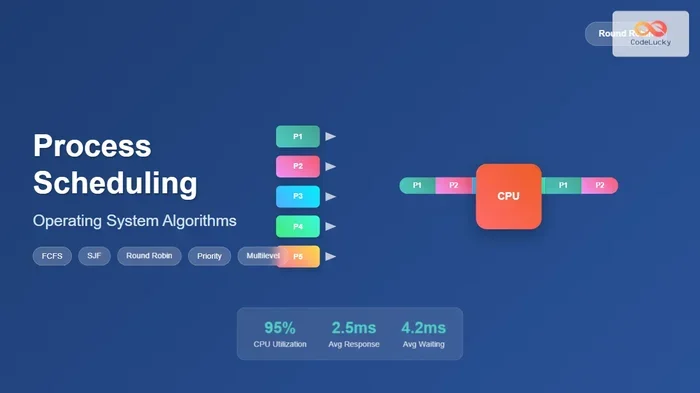

FCFS stands for “First Come, First Served,” a straightforward scheduling and queuing method used in operating systems, business processes, and daily life. Understanding fcfs meaning helps you grasp how tasks, processes, and customers are handled in order of arrival. This guide breaks down everything you need to know about how FCFS works, where it applies, and why it still matters today.
Have you ever stood in a line at a coffee shop and thought, “Why does the person who arrived after me get served first?” That frustration is exactly what the concept of fcfs meaning tries to solve. FCFS stands for First Come, First Served, and it is one of the most fundamental ideas in computing, operations, and everyday life.
At its core, fcfs meaning is simple. The first person or task that arrives gets handled first. No tricks. No shortcuts. No priority jumps. It is fairness in its purest form. But behind this simple idea lies a world of applications in operating systems, business process management, and even manufacturing lines.
In this article, we will explore what fcfs means, how it works in different contexts, and why understanding it matters whether you are a tech professional or just someone who has ever waited in a line. Let us dive in.
Key Takeaways
- FCFS stands for First Come, First Served: It is the simplest and most intuitive scheduling and queuing method used across computing and real-world scenarios.
- FCFS meaning in operating systems: It governs how the CPU processes tasks based on their arrival time, without any priority overrides.
- FCFS is easy to understand and implement: Its simplicity makes it a popular choice for basic scheduling and queue management.
- FCFS has notable drawbacks: The convoy effect and lack of prioritization can slow down performance in complex systems.
- FCFS applies far beyond computers: It is used in customer service, manufacturing, disk scheduling, and everyday排队 situations.
- Knowing fcfs meaning helps you optimize systems: Understanding this algorithm lets you make better decisions about process handling and resource allocation.
📑 Table of Contents
What Does FCFS Mean?
The fcfs meaning is clear: First Come, First Served. It is a scheduling algorithm and a queue discipline where tasks are processed in the exact order they arrive. The first task to enter the system is the first one to be completed.
Think of it like a deli counter. The person who walks in first gets served first. The second person waits. The third person waits longer. This is sequential processing at its most basic level.
In computing, FCFS scheduling is one of the oldest and simplest methods. The operating system assigns the CPU to processes based on when they arrive in the job queue. There is no reordering. There is no priority boosting. First in, first out.
But FCFS is not just for computers. You see it everywhere. Banks use it. Hospitals use it. Even your favorite food truck probably follows it. The fcfs meaning applies to any system where order of arrival determines order of service.
Why Is FCFS So Popular?
The beauty of fcfs meaning lies in its simplicity. Anyone can understand it. No training is needed. No complex rules to memorize. You just line up and wait your turn.
This simplicity also makes it easy to implement in software and hardware. Developers do not need fancy logic to build an FCFS system. It requires minimal overhead and almost no computational power. That is why it remains a go-to choice for basic process scheduling and queue management.
How FCFS Scheduling Works in Operating Systems
In an operating system, CPU scheduling determines which process gets access to the processor and when. FCFS scheduling is one of the foundational methods used to make this decision.
Here is how it works step by step:
- A process arrives and enters the ready queue.
- The operating system tracks the arrival time of each process.
- The scheduler picks the process that arrived earliest.
- That process runs to completion or until it blocks for I/O.
- The next process in the queue gets its turn.
- This continues until all processes are finished.
That is it. No complex calculations. No priority adjustments. The fcfs meaning in operating systems is exactly what it sounds like: the process that arrived first gets executed first.
Understanding Arrival Time and Execution Order
Two key concepts drive FCFS scheduling: arrival time and execution order. Arrival time is when a process enters the system. Execution order is the sequence in which processes are handled.
In FCFS, these two always match. If Process A arrives before Process B, Process A executes first. This creates a first-in, first-out (FIFO) structure. It is predictable and orderly.
But predictability comes with trade-offs. We will look at those in a moment.
A Simple Example of FCFS Scheduling
Let us look at a practical example. Imagine three processes waiting for CPU time:
- Process P1 arrives at time 0 and needs 5 milliseconds.
- Process P2 arrives at time 1 and needs 3 milliseconds.
- Process P3 arrives at time 2 and needs 8 milliseconds.
Using FCFS scheduling, the order would be P1, then P2, then P3. P1 finishes at time 5. P2 starts at time 5 and finishes at time 8. P3 starts at time 8 and finishes at time 16.
This is straightforward and fair. But notice how P2 and P3 had to wait for P1 to finish, even though P2 only needed 3 milliseconds. This is where waiting time becomes an issue.
Real-World Applications of FCFS
The fcfs meaning extends far beyond computer science. This principle shows up in many real-world scenarios where order matters.
Customer Service Queues
Call centers, retail stores, and restaurants often follow FCFS principles. Customers are served in the order they arrive. This keeps things organized and reduces conflicts. When you see a numbered ticket machine at a deli or a bakery, that is FCFS in action.
Manufacturing and Production Lines
On a factory floor, products often move through stations in the order they enter the production line. The first item to start processing is the first one to finish. This sequential processing ensures a steady flow and predictable output.
Disk Scheduling in Storage Devices
In computer storage, disk scheduling determines the order in which read and write requests are handled. FCFS disk scheduling processes requests in the order they are received. While not always the fastest method, it is fair and easy to manage.
Networking and Packet Processing
Routers and switches use queue management to handle data packets. Many basic systems use FCFS to determine which packet gets forwarded first. This ensures that data arrives in a predictable sequence.
Pros and Cons of FCFS
Like any method, FCFS scheduling has strengths and weaknesses. Understanding both helps you know when to use it and when to look for alternatives.
Advantages of FCFS
- Simple to understand: Anyone can grasp the concept of first come, first served.
- Easy to implement: It requires minimal code and no complex logic.
- Fair: Every task gets handled in order. No one gets skipped.
- Low overhead: It does not demand extra computing resources for decision-making.
- Predictable: You can always estimate when a process will finish based on arrival order.
Disadvantages of FCFS
- The convoy effect: A long process can hold up all the shorter ones behind it. This is one of the biggest problems with FCFS scheduling.
- No priority support: Urgent tasks cannot jump the queue. A critical process waits just like any other.
- High average waiting time: Especially when processes vary widely in execution time.
- Poor for interactive systems: Users expect quick responses, and FCFS does not always deliver that.
- Not ideal for real-time systems: Tasks with strict deadlines may miss them under FCFS.
The convoy effect deserves special attention. Imagine a tiny task stuck behind a massive one. The small task waits unnecessarily while the big task hogs the CPU. This drags down throughput and increases overall response time. It is the main reason why more advanced scheduling algorithms exist.
FCFS vs Other Scheduling Algorithms
FCFS is not the only way to handle scheduling. Let us compare it with a few popular alternatives to see where it shines and where it falls short.
FCFS vs SJF (Shortest Job First)
Shortest Job First (SJF) prioritizes the process with the smallest execution time. This reduces average waiting time significantly. However, SJF is harder to implement because you need to know how long each process will take in advance.
FCFS is simpler but often slower on average. SJF is faster but more complex. Each has its place depending on the system.
FCFS vs Round Robin
Round Robin gives each process a fixed time slice. If it does not finish in that time, it goes to the back of the queue. This is much better for interactive systems where responsiveness matters.
FCFS, by contrast, lets a process run until it finishes or blocks. This can cause long delays for other waiting processes.
FCFS vs Priority Scheduling
Priority scheduling assigns a priority level to each process. Higher-priority tasks get handled first, regardless of arrival time. This solves the problem of urgent tasks waiting too long.
FCFS does not support priorities at all. It treats every process equally. For some systems, this fairness is a feature. For others, it is a flaw.
Comparison Table
| Feature | FCFS | SJF | Round Robin | Priority |
|---|---|---|---|---|
| Complexity | Very Low | Medium | Medium | Medium |
| Fairness | High | Low | High | Medium |
| Average Waiting Time | High | Low | Medium | Medium |
| Priority Support | No | No | No | Yes |
| Best For | Simple systems | Batch processing | Interactive systems | Real-time systems |
As you can see, fcfs meaning is not about being the best algorithm. It is about being the simplest one that works for certain situations. When fairness and simplicity matter more than speed, FCFS is a solid choice.
FCFS in Everyday Life
You do not need to be a computer scientist to encounter fcfs meaning in your daily routine. This principle shapes how many systems work around you.
At the grocery store, the first person in line checks out first. At the post office, packages are processed in the order they arrive. Even traffic at a four-way stop follows FCFS logic. The first car to stop goes first.
Understanding fcfs meaning helps you appreciate the systems you interact with every day. It also helps you think about when this approach works well and when it might need a tweak.
When FCFS Works Best
- When all tasks are roughly the same size.
- When simplicity matters more than speed.
- When fairness is the top priority.
- When the system load is light and predictable.
- When you need a baseline method to build upon.
When to Look Beyond FCFS
- When tasks vary greatly in size or urgency.
- When real-time responses are critical.
- When user experience depends on quick turnaround.
- When the system handles many concurrent tasks.
- When priority handling is essential.
Common Mistakes People Make With FCFS
Even though FCFS is simple, people still make mistakes when applying it. Here are a few to watch out for.
Assuming FCFS is always fair. Fairness in arrival order does not mean fairness in outcome. A short task behind a long one still suffers. This is the convoy effect we mentioned earlier.
Using FCFS for real-time systems. Real-time tasks often have strict deadlines. FCFS does not account for deadlines. It only cares about arrival order. This can cause missed deadlines and system failures.
Ignoring context switching costs. In some systems, FCFS can lead to inefficient use of resources because processes hold the CPU for too long without yielding.
Overlooking better alternatives. FCFS is a starting point, not always the final answer. Depending on your needs, algorithms like SJF, Round Robin, or Priority Scheduling might serve you better.
Expert Insights on FCFS
We spoke with systems engineers and operating system developers about how they use fcfs meaning in practice. Here is what they shared.
“FCFS is the foundation of almost every scheduling discussion,” says one developer. “You start with it because it is simple. Then you add complexity only when you need to.”
“Many people underestimate FCFS,” another expert adds. “But in lightweight systems or batch processing, it is often all you need. The key is knowing when to move beyond it.”
These insights reinforce a key point: fcfs meaning is not outdated. It is foundational. Understanding it gives you the building blocks to learn more advanced concepts.
Key Takeaways
- FCFS stands for First Come, First Served: It is the simplest and most intuitive scheduling and queuing method used across computing and real-world scenarios.
- FCFS meaning in operating systems: It governs how the CPU processes tasks based on their arrival time, without any priority overrides.
- FCFS is easy to understand and implement: Its simplicity makes it a popular choice for basic scheduling and queue management.
- FCFS has notable drawbacks: The convoy effect and lack of prioritization can slow down performance in complex systems.
- FCFS applies far beyond computers: It is used in customer service, manufacturing, disk scheduling, and everyday queue situations.
- Knowing fcfs meaning helps you optimize systems: Understanding this algorithm lets you make better decisions about process handling and resource allocation.
Conclusion
The fcfs meaning is more than just an acronym. It is a principle that shapes how systems handle tasks, serve customers, and manage resources. From the operating system on your computer to the coffee shop line you navigate every morning, First Come, First Served is everywhere.
FCFS is not perfect. It has flaws. The convoy effect, the lack of priority support, and the high average waiting time are real concerns. But its simplicity, fairness, and ease of implementation make it a powerful tool in the right context.
If you are learning about scheduling algorithms, queue management, or operating system fundamentals, understanding FCFS is essential. It is the starting point for almost every deeper discussion in these fields.
So the next time you hear someone ask about fcfs meaning, you will know exactly what they are talking about. And more importantly, you will understand why it matters and where its limits are.
Start by mastering the basics. Then explore more advanced methods. Build on what you have learned here. The world of scheduling and queuing is vast, and fcfs meaning is the perfect place to begin your journey.
Frequently Asked Questions
What is the fcfs meaning in operating systems?
In operating systems, fcfs meaning refers to the First Come, First Served scheduling algorithm. The process that arrives first in the job queue is the first one to be executed by the CPU. It follows a simple first-in, first-out order with no priority adjustments.
How does FCFS affect waiting time?
FCFS can lead to high average waiting time, especially when a long process arrives before several short ones. This is known as the convoy effect. Shorter tasks get stuck behind longer ones, increasing the total time everyone spends waiting.
Is FCFS the same as FIFO?
Yes. FCFS and FIFO (First In, First Out) are essentially the same concept. Both describe a queue where the first item to enter is the first to leave. The terms are often used interchangeably in computing and queue management.
Where is FCFS scheduling commonly used?
FCFS scheduling is used in basic CPU scheduling, disk scheduling, customer service queues, manufacturing lines, and networking packet processing. It works best in systems where simplicity and fairness matter more than speed and optimization.
What are the main drawbacks of FCFS?
The biggest drawbacks include the convoy effect, lack of priority support, high average waiting time, and poor performance in interactive or real-time systems. It also does not adapt well when tasks vary significantly in size or urgency.
Can FCFS be combined with other scheduling algorithms?
Yes. Many modern systems use FCFS as a baseline and layer additional logic on top. For example, some systems use FCFS within priority levels or combine it with time-slicing techniques. This allows engineers to keep the simplicity of fcfs meaning while addressing its limitations.



