
pegged meaning is an essential topic that provides valuable insights.
Key Takeaways
- Understanding pegged meaning: Provides essential knowledge
📑 Table of Contents
- What Does Pegged Mean? The Core Definition
- Pegged in Finance and Economics
- Pegged in Everyday Language and Slang
- How Currency Pegging Works in Practice
- Common Mistakes People Make About Pegged
- Quick Tips to Remember the Meaning of Pegged
- Expert Insights on the Pegged Meaning
- Key Takeaways
- Conclusion
What Does Pegged Mean? The Core Definition
At its simplest, pegged means fixed or attached to something else. When something is pegged, it is tied to a reference point that sets its value or behavior. This reference point could be a currency, a price, a standard, or even a label.
The pegged meaning changes slightly depending on the context. In economics, it usually refers to a fixed exchange rate. In everyday language, it might mean identifying or pinning down a description. Let us look at the different ways this word is used so you never have to guess again.
The Origin of the Word Pegged
The word pegged comes from the noun “peg,” which has been used for centuries. A peg is a small pin or peg used to fasten things in place. Over time, the verb form “to peg” evolved to mean fixing something at a certain level. This makes sense when you think about it. A peg holds something steady. It keeps it from moving. That is exactly what pegged means in almost every context.
When something is pegged, it is held at a specific value or position. It is not free to float or change on its own. This idea of being fixed or attached is the heart of the pegged meaning. Whether it is a currency, a price, or a description, being pegged means being tied to something solid.
Pegged in Finance and Economics
The most common use of pegged happens in finance and economics. Here, the pegged meaning is clear and specific. A pegged currency is one that is fixed to another currency or to a group of currencies. This is called a pegged exchange rate or a pegged rate.
Countries choose to peg their currency for many reasons. It helps keep trade stable. It reduces uncertainty for businesses. It also controls inflation. Let us look at the main types of pegged systems used around the world.
Hard Peg vs. Soft Peg
A hard peg means the exchange rate is fixed tightly. The central bank steps in to keep the rate exactly where it is set. A soft peg allows a small range of movement. The currency can float a little within that band, but the central bank still guides it.
Here is a quick look at the difference:
- Hard Peg: The currency is fixed to another currency with almost no wiggle room. The central bank must always buy or sell its own currency to keep the rate steady.
- Soft Peg: The currency can move within a narrow band. The central bank steps in only when the rate moves too far from the target.
- Crawling Peg: The fixed rate changes slowly over time, usually to match inflation differences between countries.
Real-World Examples of Pegged Currencies
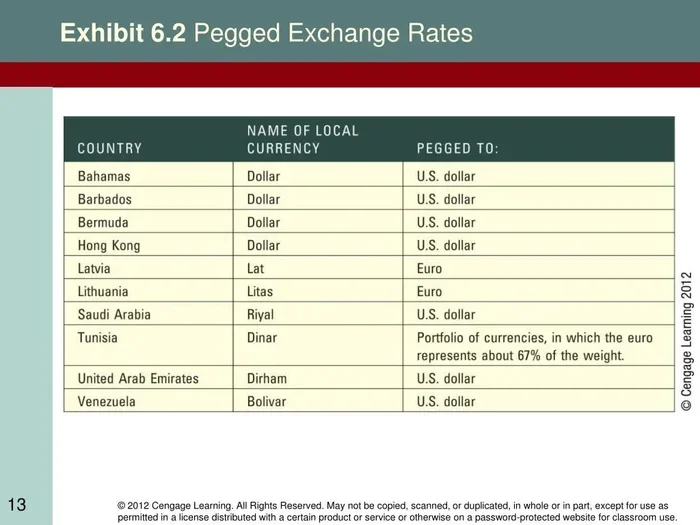
Many countries use a pegged currency system. For example, Hong Kong has pegged its dollar to the US dollar since 1983. The Hong Kong dollar stays within a narrow band around 7.80 HKD per 1 USD. This gives businesses and investors confidence in the stability of the region.
Another example is Saudi Arabia, which pegs its riyal to the US dollar. This keeps oil trade predictable and steady. Smaller economies often choose to peg to a larger, more stable currency like the US dollar or the euro. This helps them avoid wild swings in value that could hurt their people and businesses.
Pegged in Everyday Language and Slang
The pegged meaning is not just about money. In everyday English, pegged has several common uses. Understanding these helps you follow conversations more easily, whether online or in person.
To Peg Someone or Something
When people say they pegged someone, they mean they identified or categorized that person. For example, “I pegged him as a tech person right away.” This use of pegged is informal and conversational. It means you made a quick judgment or label based on what you observed.
This slang usage has been around for decades. It often shows up in casual conversations and social media posts. The pegged meaning here is about pinning down an identity or characteristic. It is quick and often based on first impressions.
Pegged as a Past Tense Verb
As a past tense verb, pegged can mean several things:
- To fasten or attach: “She pegged the tent to the ground with stakes.”
- To identify or classify: “They pegged the noise as coming from the attic.”
- To reach a limit: “The temperature pegged at 105 degrees.”
- To blame or accuse: “He pegged me for the mistake.”
Each of these uses shares the same core idea. Something is being fixed, attached, or pointed to a specific thing. That is the thread that connects all the pegged meaning across different contexts.
How Currency Pegging Works in Practice
Currency pegging is a policy tool used by central banks and governments. When a country pegs its currency, it promises to exchange its money at a fixed rate for the currency it is tied to. This requires the central bank to hold large reserves of the foreign currency.
The pegged exchange rate system has both benefits and risks. Let us break them down clearly.
Benefits of a Pegged Currency
- Stability for trade: Businesses know exactly what exchange rates will be. This makes planning and budgeting much easier.
- Inflation control: By tying your currency to a stable one like the US dollar, you import that country’s low inflation rate.
- Investor confidence: A pegged rate reduces currency risk, which can attract foreign investment.
- Discipline for the government: A peg forces the government to keep its fiscal policies in check.
Risks and Challenges
No system is perfect, and a pegged currency comes with its own set of problems:
- Loss of monetary control: The country cannot freely adjust its interest rates to fight recessions or cool down an overheating economy.
- Reserve depletion: Keeping a pegged rate requires spending foreign reserves. If the market pushes hard enough, the central bank can run out.
- Misalignment risk: If the pegged rate does not match the true market value, it can create trade imbalances and economic stress.
- Speculative attacks: Traders may bet against a pegged currency if they believe it cannot hold. This can force a sudden and painful devaluation.
Common Mistakes People Make About Pegged
Even smart people sometimes mix up the pegged meaning. Here are the most common mistakes to avoid.
Confusing Pegged with Floating
A pegged exchange rate is fixed. A floating exchange rate moves freely based on supply and demand. These are two very different systems. A pegged rate means the government or central bank actively manages the value. A floating rate lets the market decide.
Thinking Pegged Means Cheap
Just because a currency is pegged does not mean it is undervalued or cheap. The pegged rate could be higher or lower than the free-market value. It all depends on what rate the government chose to set. Always check whether the peg is at a realistic level.
Ignoring the Maintenance Cost
Keeping a currency pegged is expensive. The central bank must constantly buy or sell its own currency to maintain the rate. This uses up foreign reserves and can strain the economy if the peg is not well managed.
Quick Tips to Remember the Meaning of Pegged
Remembering the pegged meaning is easy when you use these simple tips:
- Think of a peg in a wall. It holds something in place. That is what pegged does. It fixes something at a set value or position.
- Connect it to exchange rates. When you hear about a pegged currency, think “fixed rate.” That is the finance meaning.
- Use it as a label. In casual talk, pegged means “I figured it out” or “I categorized it.”
- Remember the past tense. Pegged is just the past tense of “to peg.” It describes something that was already fixed, attached, or identified.
- Look at the context. Is the conversation about money? Then it is about exchange rates. Is it about people? Then it is about labeling or identifying.
Expert Insights on the Pegged Meaning
Economists and language experts agree that the word pegged carries more weight than most people realize. In the world of international trade, a pegged exchange rate can shape entire economies. When a country chooses to peg its currency, it is making a long-term commitment to stability.
Language experts point out that the pegged meaning has expanded over time. What started as a simple term for fastening or fixing has grown to cover financial systems, identity labeling, and even technology. In software, “pegged” can mean a value that has hit a maximum or minimum limit. The word has become versatile, but its core idea stays the same: something is fixed or tied to a reference point.
Understanding the pegged meaning gives you an edge in both financial literacy and everyday communication. It is one of those words that shows up more often than you would expect, and knowing what it means makes you a sharper thinker and communicator.
Key Takeaways
- Core definition: The pegged meaning is about fixing, attaching, or tying something to a reference point or standard.
- In finance: A pegged currency is fixed to another currency at a set exchange rate. This creates stability for trade and investment.
- Hard vs. soft peg: A hard peg is strict and fixed, while a soft peg allows a small range of movement around the target rate.
- In everyday language: Pegged means identifying, labeling, or categorizing someone or something quickly.
- Common uses: The word appears in economics, casual conversation, technology, and even sports contexts.
- Risks exist: Maintaining a pegged rate can be costly and may lead to reserve depletion or speculative attacks.
- Context is key: Always look at the surrounding words to determine which pegged meaning applies in a given situation.
Conclusion
The pegged meaning is simpler than it might seem at first glance. Whether you are reading about a pegged currency in the news or using the word in a casual conversation, the core idea stays the same. Pegged means fixed, tied, or attached to a reference point. In finance, it keeps exchange rates stable. In everyday talk, it means identifying or categorizing something quickly.
Now that you understand the pegged meaning across all its contexts, you can follow conversations and articles with confidence. You will spot the word in economic reports, social media posts, and everyday dialogue and know exactly what it means. Keep this guide handy. Share it with friends who are curious. The more you use and understand this word, the more natural it will feel.
Remember, language is all about context. The next time you see or hear the word pegged, pause for a moment. Ask yourself what is being fixed or tied to what. That simple question will unlock the pegged meaning every single time. You are now equipped with the knowledge to use and understand this word like a pro.
Frequently Asked Questions
What is the pegged meaning in simple terms?
Pegged means fixed or tied to a specific value, rate, or reference point. In finance, a pegged currency is linked to another currency at a set exchange rate. In everyday talk, it means identifying or categorizing something quickly.
What does pegged mean in finance?
In finance, pegged refers to a fixed exchange rate system. A country’s central bank ties its currency to another currency or a basket of currencies. This keeps the exchange rate stable and predictable for traders and investors.
How is pegged used in everyday conversation?
In casual speech, pegged means you identified or labeled someone or something. For example, “I pegged her as a designer the moment I saw her outfit.” It is a quick way of saying you made a judgment or classification based on observation.
What is the difference between a hard peg and a soft peg?
A hard peg means the exchange rate is fixed with almost no movement allowed. A soft peg lets the currency move within a small band around the target rate. The central bank steps in more often with a hard peg than with a soft peg.
Why do countries peg their currencies?
Countries peg their currencies to maintain trade stability, control inflation, and attract foreign investment. A pegged rate reduces uncertainty for businesses that trade across borders. It also helps smaller economies borrow stability from larger, more trusted currencies like the US dollar.
Can a pegged currency ever be unpegged?
Yes, a country can choose to unpeg its currency at any time. This is called a peg break or dedollarization. It usually happens when the peg is no longer sustainable or when the country wants more control over its own monetary policy. Unpegging can lead to significant currency value changes.



