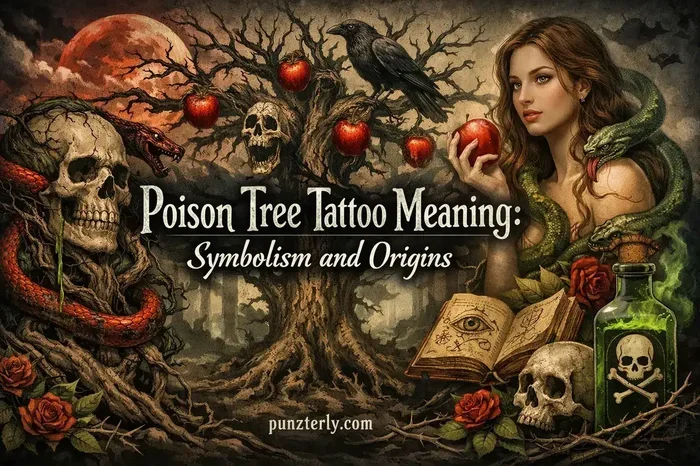

The poison tree meaning goes far deeper than its dark name suggests. It symbolizes suppressed anger, hidden resentment, and the consequences of bottling up emotions. William Blake’s famous poem “A Poison Tree” brings this symbol to life, showing how unexpressed anger can grow into something destructive. Understanding the poison tree meaning helps us recognize emotional patterns and find healthier ways to process our feelings.
Key Takeaways
- Repressed Anger: The poison tree is a powerful metaphor for anger that is buried and left to grow.
- William Blake’s Influence: His poem “A Poison Tree” shaped how we view this symbol today.
- Cultural Depth: The poison tree appears in biblical stories, mythology, and folklore across cultures.
- Emotional Warning: It teaches us that ignoring negative emotions leads to toxic outcomes.
- Modern Relevance: The poison tree meaning applies to relationships, mental health, and personal growth today.
- Tree Symbolism Connection: Trees carry deep symbolic weight across many traditions, as explored in our article on Christmas Tree Name and its cultural roots.
📑 Table of Contents
- What Is the Poison Tree?
- William Blake and “A Poison Tree”
- The Symbolism Behind the Poison Tree
- Poison Tree Meaning in Different Cultures
- The Poison Tree and Human Emotions
- Applying the Poison Tree Lesson in Daily Life
- Common Mistakes When Interpreting the Poison Tree
- Expert Insights on the Poison Tree
- Conclusion
What Is the Poison Tree?
When you hear the phrase poison tree meaning, what comes to mind? Most people think of something dark, dangerous, and full of hidden pain. And they are not wrong. The poison tree is one of the most striking symbols in literature and art. It represents the dangers of suppressed emotions, especially anger and resentment.
But the poison tree is not just a literary device. It shows up in religion, mythology, and even in everyday life. People use the idea of a poison tree to describe relationships, situations, and mindsets that grow worse when ignored. The deeper you dig into this symbol, the more layers you find.
Trees have always carried strong symbolic weight. They represent life, growth, and connection between the earth and the sky. When a tree becomes poisonous, something has gone wrong. That shift from life-giving to harmful is at the heart of the poison tree meaning. It is a warning wrapped in a metaphor.
Interestingly, trees carry deep symbolic meaning across many cultures. For example, the naming and symbolism of trees in holiday traditions shows how deeply rooted tree meanings are in human life. You can learn more about this in our article on Christmas Tree Name, which explores how a single tree can hold so many different meanings.
So why does the poison tree resonate so strongly with people? Because almost everyone has experienced anger they kept inside. Almost everyone has felt resentment grow quietly over time. The poison tree gives a face to that feeling. It turns an invisible emotion into something we can see, touch, and understand.
William Blake and “A Poison Tree”
The most famous reference to the poison tree meaning comes from William Blake. His poem “A Poison Tree,” published in 1794 as part of his Songs of Experience, is a masterpiece of brevity and power. Blake used simple language to describe something deeply complex. That is why the poem still speaks to readers more than 200 years later.
In the poem, Blake talks about being angry with a friend and a foe. When he told his friend about his anger, it ended. But when he hid his anger from his foe, it grew. He watered it with fears, watered it with tears, and gave it sun. And it bore a bright, shiny apple. His foe saw the apple and knew it was poison. He stole into Blake’s garden at night and died under the poison tree.
The Poem’s Structure and Style
Blake kept the poem short. Four stanzas. Simple rhyme scheme. Easy to read on the surface. But underneath, the poem is packed with meaning. He uses gardening metaphors to describe emotional processes. Watering, sunning, and growing are all actions we associate with care. But here, they describe the care of anger. That contrast is what makes the poem so unsettling.
The poem also uses a very clear before-and-after structure. First, Blake shows what happens when anger is expressed. It ends. Simple and clean. Then he shows what happens when anger is hidden. It grows. It becomes a tree. And that tree produces something deadly. The contrast is the whole point of the poison tree meaning.
Why Blake’s Poem Still Matters
Blake wrote during a time of great change. The Industrial Revolution was reshaping society. Political revolutions were sweeping Europe. People were grappling with new ideas about emotion, reason, and control. Blake’s poem speaks to the tension between expressing feelings and suppressing them.
Today, the poem feels just as relevant. Modern life encourages people to stay positive, keep calm, and avoid conflict. But Blake shows the danger of that approach. When you never express anger, it does not just go away. It grows. It becomes a poison tree in your mind, your relationships, and your life.
The poem also connects to broader tree symbolism in literature and culture. Trees often represent knowledge, life, and moral choices. The poison tree flips this. It represents the dark side of growth. It shows how something that starts small can become deadly when left unchecked.
The Symbolism Behind the Poison Tree
The poison tree meaning is rich with symbolism. Every element of the image carries weight. The tree itself represents something that was once alive and healthy but has been corrupted. The fruit represents temptation and the hidden dangers of things that look appealing on the outside.
The garden in Blake’s poem is also important. Gardens are places of cultivation. They are where we tend to things we care about. But in the poem, the garden becomes a place of danger. The foe enters secretly, under cover of darkness. This adds a layer of betrayal and hidden threat to the poison tree meaning.
The Apple as a Symbol
The bright, shiny apple is perhaps the most powerful image in the poem. It echoes the story of Adam and Eve in the Bible. In Genesis, the apple from the Tree of Knowledge of Good and Evil leads to humanity’s fall. Blake borrows this imagery but twists it. His apple is not about knowledge. It is about hidden anger. It is about the consequences of keeping secrets.
This connection to the biblical tree of knowledge deepens the poison tree meaning. Both stories involve a tree that offers something dangerous. Both involve a choice to consume or engage. And both show that the consequences of ignoring warnings can be severe.
Water, Sun, and Tears
Blake uses natural elements to describe how anger grows. Water represents tears and fear. Sun represents attention and energy. These are the same elements that help a real tree grow. By using them to describe the growth of anger, Blake makes the metaphor feel real and believable. The poison tree does not just appear out of nowhere. It is cultivated, day by day, by the person holding the anger.
This is one of the most powerful lessons in the poison tree meaning. Anger does not grow on its own. It grows because we feed it. Every time we replay a hurt in our minds, every time we let resentment build, we water the poison tree. And eventually, it bears fruit.
Poison Tree Meaning in Different Cultures
The poison tree meaning is not limited to one poem or one culture. Trees with dark or poisonous associations appear in mythology, religion, and folklore around the world. These stories all share a common thread: the idea that something beautiful or life-giving can become harmful when corrupted.
The Tree of Life and the Tree of Knowledge
In many religious traditions, trees hold central importance. The Tree of Life appears in Christianity, Judaism, Islam, and many other faiths. It represents eternal life, wisdom, and divine connection. The Tree of Knowledge, as mentioned in Genesis, represents the boundary between innocence and experience.
When these trees become associated with poison or danger, the shift is dramatic. It shows that even the most sacred symbols can be corrupted. The poison tree meaning reminds us that nothing is immune to the effects of hidden negative emotions. Even the most beautiful tree can become deadly if anger and resentment take root.
Trees in Mythology and Folklore
Many cultures have stories about poisonous or cursed trees. In Norse mythology, the world tree Yggdrasil connects all realms, but it also faces threats from decay and corruption. In Celtic traditions, certain trees were associated with dark magic and fairy curses.
These stories reinforce the poison tree meaning as a universal concept. Across cultures, people understand that trees can be both life-giving and dangerous. The poison tree represents the dark side of that duality.
Even the concept of Christmas tree name and its cultural roots shows how deeply people connect trees to identity and meaning. The same tree that brings joy during the holidays can carry entirely different symbolism in other contexts. This duality is part of what makes the poison tree so powerful as a symbol.
The Poison Tree in Modern Psychology
Modern psychology has embraced the poison tree meaning as a way to explain emotional patterns. Therapists often talk about “suppressed anger” and “unresolved resentment.” These are exactly what Blake described in his poem. The poison tree is a perfect visual metaphor for what happens when emotions are not processed or expressed.
In psychology, the concept of “projection” is closely related. When people cannot face their own anger, they often project it onto others. This creates toxic dynamics in relationships. The poison tree grows in the space between people who refuse to communicate honestly.
Studies on emotional suppression show that hiding feelings leads to increased stress, anxiety, and even physical health problems. The poison tree is not just a poetic image. It is a psychological reality. The tree grows inside us when we refuse to deal with our emotions directly.
The Poison Tree and Human Emotions
The poison tree meaning is ultimately about human emotion. It is about what happens when we do not deal with our feelings in healthy ways. Anger is not the only emotion that can become poisonous. Resentment, jealousy, fear, and grief can all grow into something destructive when left unaddressed.
Recognizing the Poison Tree in Your Life
How do you know if a poison tree is growing in your life? Here are some signs to watch for:
- You replay arguments or hurts in your mind over and over.
- You feel bitterness toward someone but say nothing about it.
- You notice that small grievances have built up into deep resentment.
- You avoid certain people or situations because of unresolved feelings.
- You feel a sense of heaviness or negativity that does not go away.
These are all signs that a poison tree is growing. The good news is that awareness is the first step toward change. Once you recognize the pattern, you can start to address it.
How to Prevent the Poison Tree from Growing
The best way to stop the poison tree from growing is to deal with anger and resentment early. Here are some practical steps:
- Speak up early. Do not wait until anger builds to a breaking point. Address issues as they come up, calmly and honestly.
- Write it down. Journaling can help you process emotions without directing them at anyone. Getting feelings out of your head and onto paper stops the watering of the poison tree.
- Practice forgiveness. Forgiveness does not mean accepting bad behavior. It means releasing the hold that anger has on you. Letting go of resentment stops the growth of the poison tree.
- Seek support. Talk to a trusted friend, family member, or therapist. Expressing your feelings to someone safe can prevent them from festering.
- Set boundaries. Sometimes the poison tree grows because you allow harmful behavior to continue. Setting clear boundaries protects your emotional health.
These steps are simple, but they are not always easy. The poison tree grows because it feels safer to hide anger than to face it. Breaking that pattern takes courage and practice.
The Role of Communication
Blake’s poem makes one thing clear: communication stops the poison tree from growing. When he told his friend about his anger, the anger ended. The simple act of expressing his feelings broke the cycle. This is a powerful lesson for all of us.
Healthy communication is the antidote to the poison tree. It does not mean being aggressive or hurtful. It means being honest, direct, and respectful. When you express your feelings clearly, you prevent them from turning into something toxic.
Many relationship problems stem from unspoken grievances. Partners, friends, and family members often assume the other person knows how they feel. But assumptions breed resentment. And resentment waters the poison tree. Open, honest dialogue is the best way to keep the tree from growing.
Applying the Poison Tree Lesson in Daily Life
The poison tree meaning is not just an academic concept. It has real, practical applications for everyday life. Understanding this symbol can help you navigate conflicts, improve relationships, and protect your mental health.
In Relationships
Every relationship faces conflict. The difference between healthy and unhealthy relationships often comes down to how conflict is handled. When partners suppress their anger instead of addressing it, a poison tree grows between them. Over time, this tree can destroy even strong relationships.
The antidote is simple but not always easy. Talk about your feelings. Do not let resentment build in silence. If you find it hard to express yourself directly, try writing a letter or using “I feel” statements to communicate without blame.
In the Workplace
Workplace conflict is another breeding ground for the poison tree. Unfair treatment, missed promotions, and difficult colleagues can all create buried anger. When this anger goes unaddressed, it affects your performance, your mood, and your relationships with coworkers.
The best approach is to address issues early and professionally. If you cannot resolve a conflict directly, talk to a manager or HR representative. Do not let the poison tree grow in your professional life.
In Personal Growth
On a personal level, the poison tree meaning invites you to examine your inner world. What emotions are you suppressing? What resentments are you carrying? What fears are you watering every day? These questions are not comfortable, but they are essential for growth.
Self-awareness is the key to preventing the poison tree from taking root. Meditation, therapy, journaling, and honest self-reflection can all help you identify and process emotions before they become toxic. The goal is not to never feel anger. The goal is to feel it, express it, and then let it go.
Quick Tips for Keeping the Poison Tree at Bay
- Pause before reacting. Give yourself time to process emotions before responding.
- Practice active listening in conversations. Understanding others reduces resentment.
- Take responsibility for your feelings. No one else can water your poison tree but you.
- Create a regular emotional check-in habit. Ask yourself how you are really feeling each day.
- Remember that expressing anger is not the same as being angry. Healthy expression is a skill you can develop.
Common Mistakes When Interpreting the Poison Tree
There are several common misunderstandings about the poison tree meaning that are worth addressing:
- Thinking it only applies to anger. The poison tree can represent any suppressed negative emotion, including fear, grief, and jealousy.
- Believing the tree is always external. The poison tree often grows within the person holding the anger, not just in the relationship between two people.
- Assuming the poem is purely negative. Blake’s poem also contains a hopeful message. It shows that expressing emotions can stop the cycle of destruction.
- Ignoring the cultural context. The poison tree draws on deep traditions of tree symbolism in religion and mythology. Understanding this context enriches the meaning.
Avoiding these mistakes helps you get the full value from the poison tree meaning. It is a complex symbol with many layers, and the more carefully you explore it, the more insights you gain.
Expert Insights on the Poison Tree
Many psychology professionals and literary scholars have weighed in on the poison tree meaning. Dr. Susan David, a psychologist at Harvard Medical School, has noted that emotional agility requires us to face difficult feelings rather than suppress them. The poison tree is a perfect metaphor for what happens when we do the opposite.
Literary scholars also point out that Blake’s poem is part of a larger body of work exploring the tension between innocence and experience. The poison tree represents the experience side. It shows what happens when we act from hidden emotions rather than honest communication.
Experts in conflict resolution also cite the poison tree as a useful framework. The metaphor helps people visualize how small grievances can grow into major problems when ignored. It makes the abstract concept of emotional suppression feel concrete and urgent.
As one therapist noted, “The poison tree is not just a literary image. It is a mirror. When you look at it, you see the emotions you have been watering in yourself.” This insight captures the real power of the poison tree meaning. It is not just about understanding a poem. It is about understanding ourselves.
Conclusion
The poison tree meaning is a powerful and enduring symbol. From William Blake’s famous poem to modern psychology, the poison tree reminds us of the dangers of suppressed emotions. It teaches us that anger left unexpressed does not disappear. It grows. It becomes something poisonous. And it can destroy relationships, health, and peace of mind.
But the poison tree also offers hope. Blake’s poem shows that the cycle can be broken. A simple conversation can stop the growth. Honest expression can prevent the fruit from ever forming. The choice is always ours.
Trees are symbols of life. Even a poison tree started as something living and healthy. The poison tree meaning invites us to nurture the positive aspects of our emotional lives while weeding out the harmful ones. It is a call to awareness, honesty, and growth.
Next time you feel anger building inside, remember the poison tree. Do not water it. Do not let it grow in the shadows. Speak up, reach out, and let the light in. The fruit of honest expression is always sweeter than the poison of silence.
Frequently Asked Questions
What does the poison tree symbolize?
The poison tree symbolizes suppressed anger, hidden resentment, and the destructive consequences of bottling up emotions. It represents how negative feelings grow when ignored rather than expressed. The symbol is most famously associated with William Blake’s poem “A Poison Tree.”
Who wrote “A Poison Tree” and what is its significance?
William Blake wrote “A Poison Tree” in 1794 as part of his collection Songs of Experience. The poem is significant because it uses simple gardening metaphors to describe the dangerous growth of unexpressed anger. It has become one of the most referenced poems in discussions of emotional suppression and conflict resolution.
How does the poison tree relate to the biblical tree of knowledge?
The poison tree draws on the imagery of the biblical tree of knowledge from the Book of Genesis. Both involve a tree that offers something dangerous. Blake’s apple echoes the forbidden fruit, but instead of representing the pursuit of knowledge, it represents the consequences of hidden anger and secrecy.
Can the poison tree meaning apply to modern relationships?
Absolutely. The poison tree meaning is highly relevant to modern relationships. Unspoken grievances and suppressed emotions create the same toxic dynamics Blake described in his poem. Couples and friends who avoid honest communication often find resentment growing like a poison tree over time.
What is the emotional lesson of the poison tree?
The emotional lesson is clear: express your feelings before they grow out of control. Suppressing anger does not make it go away. It gives the poison tree the conditions it needs to grow. Healthy communication and honest expression are the best ways to prevent emotional toxicity.
How is the poison tree connected to broader tree symbolism?
The poison tree is part of a larger tradition of tree symbolism found in religion, mythology, and culture. Trees often represent life, knowledge, and moral choices. The poison tree flips this by showing the dark side of growth. It demonstrates that even the most life-giving symbols can become harmful when corrupted by negative emotions.



