
Learning how to say 1:00 PM in Spanish is simpler than you think. Whether you need the formal es la una de la tarde or a quick casual phrase, this guide covers it all. You will learn the 24-hour clock, essential vocabulary, common mistakes, and real-world examples to build your Spanish time-telling skills with confidence.
How to say 1:00 PM in Spanish is one of the first things every language learner wants to master. Telling time is a basic skill you will use every single day. Whether you are traveling to a Spanish-speaking country or chatting with a friend, knowing how to express afternoon hours correctly makes a huge difference.
The good news is that it is not as hard as it sounds. Spanish follows clear and logical patterns once you understand a few simple rules. In this guide, we will walk you through everything you need to know. From formal expressions to casual texting shortcuts, you will find practical examples that you can use right away.
We will also cover common mistakes so you do not trip up when speaking. By the end of this article, you will feel confident saying the time in Spanish without thinking twice. Let us dive in and make telling time in Spanish feel easy and fun.
Key Takeaways
- 1:00 PM in Spanish is expressed as es la una de la tarde in formal settings and la una de la tarde in casual conversation.
- The Spanish 24-hour clock uses 13:00 to represent 1:00 PM, which is common in written schedules and official contexts.
- Knowing key Spanish numbers and time words like tarde, mañana, and mediodía makes telling time much easier.
- Texting in Spanish often uses shortened forms and abbreviations, so understanding casual conventions helps in real conversations.
- Avoiding common mistakes like confusing AM and PM or using the wrong gender for articles will make your Spanish sound more natural.
- Practice with real dialogues and daily routines to reinforce your learning Spanish time skills effectively.
📑 Table of Contents
Understanding the 24-Hour Clock in Spanish
Before we focus on 1:00 PM specifically, it helps to understand how the Spanish clock system works. In many Spanish-speaking countries, people use the 24-hour format. This means the day runs from 00:00 to 23:59. It might feel different at first, but it is actually very straightforward.
How the Spanish Clock System Works
In the 24-hour format, 1:00 PM becomes 13:00. That is because the clock starts over after noon. So 12:00 PM is 12:00, and 1:00 PM is 13:00. This system is used on train schedules, work hours, and official documents. Once you get used to it, you will find it much clearer than switching between AM and PM.
Here is a quick look at how the hours work:
- 1:00 PM = 13:00
- 2:00 PM = 14:00
- 3:00 PM = 15:00
- 12:00 AM = 00:00
AM vs PM in Spanish
Spanish does not really use AM and PM the way English does. Instead, it uses words like de la mañana (morning), de la tarde (afternoon), and de la noche (night). These phrases tell you exactly when something happens during the day. For 1:00 PM, the correct phrase is de la tarde because it falls in the afternoon hours.
This might feel like extra work at first, but it actually removes confusion. You do not have to guess whether someone means morning or night. The words do the work for you. This is one of the reasons why Spanish time telling feels so logical once you learn the basics.
How to Say 1:00 PM in Spanish
Now let us get to the main question. How to say 1:00 PM in Spanish depends on the situation. Are you speaking formally? Chatting with a friend? Writing a text message? Each context has its own preferred way of expressing the time.
The Formal Way
In formal situations, the full expression is es la una de la tarde. This translates directly to “it is one in the afternoon.” You would use this when speaking with someone you do not know well, during a business meeting, or in any setting that requires politeness and clarity.
Here are a few formal examples you might use:
- Es la una de la tarde. (It is 1:00 PM.)
- La reunión es a la una de la tarde. (The meeting is at 1:00 PM.)
- ¿A qué hora es? Es la una de la tarde. (What time is it? It is 1:00 PM.)
The Casual Way
When talking with friends or family, you can keep it shorter. Simply saying la una de la tarde works perfectly. You can also drop the article and say just la una if the context is clear. In very casual settings, some people even say la una picando, which is a regional way of saying “one o’clock” in parts of Latin America.
The key is to match your tone to the situation. Formal settings call for complete sentences. Casual settings let you be more relaxed and brief. Over time, you will naturally pick up which form fits each moment.
Breaking Down the Time Vocabulary
To truly master telling time in Spanish, you need to understand the building blocks. These are the words and numbers that make up every time expression. Let us break them down so you can build any time sentence with ease.
Essential Spanish Numbers for Telling Time
You do not need to know every number to tell the time. For 1:00 PM, you really only need a few. Here is what matters most:
- Uno = One
- Dos = Two
- Tres = Three
- Cinco = Five
- Diez = Ten
- Medio = Half
- Cuarto = Quarter
Notice that for 1:00, you use la una instead of el uno. This is because la hora (the hour) is feminine in Spanish. It is a small detail, but it makes a big difference in sounding natural.
Key Words for Morning and Afternoon
Spanish divides the day into three main parts. Each part has its own word that you pair with the time:
- De la mañana = Morning (roughly midnight to noon)
- De la tarde = Afternoon (roughly noon to sunset)
- De la noche = Night (roughly sunset to midnight)
Since 1:00 PM falls in the afternoon, de la tarde is the correct pairing. If it were 1:00 AM, you would use de la mañana. And if it were 1:00 PM in a different context where it is nighttime, you might use de la noche. The context always guides you.
Practical Examples and Conversations
The best way to learn is by seeing how real people use these phrases. Here are some practical examples that show how to say time in Spanish in everyday situations.
Common Phrases You Will Hear
When you are in a Spanish-speaking environment, you will hear these phrases constantly:
- ¿Qué hora es? (What time is it?)
- Es la una de la tarde. (It is 1:00 PM.)
- Son las dos de la tarde. (It is 2:00 PM.)
- Tenemos que salir a la una. (We have to leave at one.)
- ¿A qué hora quedamos? A la una de la tarde. (What time do we meet? At 1:00 PM.)
How to Ask What Time It Is
The most useful phrase in any language is asking for the time. In Spanish, you say ¿Qué hora es? This works in every situation, from formal to casual. If someone asks you, simply reply with Es la una de la tarde for 1:00 PM or Son las [number] de la tarde for any other afternoon hour.
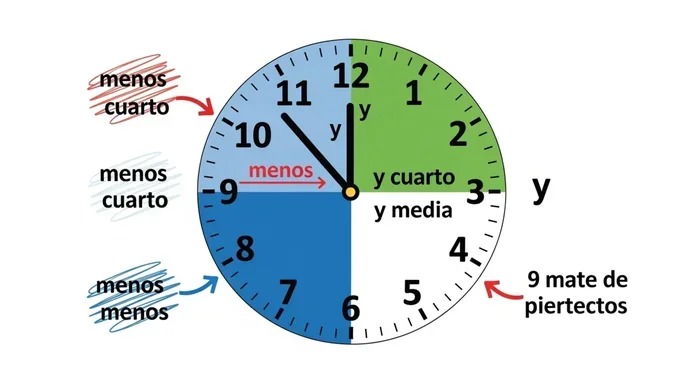
If you want to be even more specific, you can add minutes. For example, Es la una y cuarto de la tarde means “It is 1:15 PM.” And Es la una y media de la tarde means “It is 1:30 PM.” These small additions make your Spanish conversation time skills much more practical.
Texting and Casual Communication
In today’s digital world, a lot of communication happens through text messages. When you are texting in Spanish, people often use shortcuts and abbreviations. If you are curious about how people communicate casually in text, you might also come across phrases like wtw meaning in text, which shows how English text abbreviations sometimes carry over into bilingual conversations. Similarly, you may encounter ts meaning in text in casual digital exchanges.
How People Text Time in Spanish
When texting about time, Spanish speakers keep things short. Instead of writing out the full phrase, they might just write:
- 1:00 pm or 13:00
- A la 1 de la tarde
- Quedamos a la 1
Some people also use the 24-hour format in texts because it is quick and clear. So 13:00 is a very common way to text “1:00 PM.” You will see this on group chats, event planning messages, and casual conversations.
Common Abbreviations Used in Texting
Just like in English, Spanish texters love abbreviations. While there is no specific abbreviation just for 1:00 PM, you will often see shortened versions of common time phrases. The culture of quick, efficient texting means that la una de la tarde might become simply 1 de tarde in a text thread. Understanding these patterns helps you keep up in fast-paced digital conversations.
If you are learning Spanish and also curious about how people use abbreviations in text messages more broadly, exploring topics like text abbreviations can give you a bigger picture of how digital language works across cultures.
Common Mistakes to Avoid
Even motivated learners make mistakes when telling time in Spanish. Here are the most common ones and how to avoid them.
Confusing AM and PM
Since Spanish does not use AM and PM, English speakers often get confused about when to use de la mañana, de la tarde, or de la noche. A simple rule of thumb: if the sun is up and it is early, use mañana. If it is after lunch but before dark, use tarde. If it is after dark, use noche.
For 1:00 PM, always use de la tarde. Using de la mañana would mean 1:00 AM, which is a completely different time. This mistake is very common among beginners, so do not worry if you make it. Just practice the correct pairings until they feel natural.
Forgetting the Gender of Nouns
Remember that la hora is feminine. This means you say es la una (it is one), not es el uno. This rule applies to all singular hours. When the hour is plural (2:00 and above), you switch to son las because the number becomes plural. For example, son las dos de la tarde (it is 2:00 PM).
This gender rule trips up many learners, especially those whose native language does not have grammatical gender. The trick is to simply memorize that la hora is feminine and build from there.
Expert Tips for Mastering Spanish Time
Want to get really good at telling time in Spanish? Here are some tips from experienced language learners and teachers that actually work.
- Practice with a real clock. Look at a clock and say the time out loud in Spanish every hour. This builds muscle memory.
- Change your phone’s language settings. Seeing the time in Spanish throughout the day reinforces your learning without extra effort.
- Watch Spanish TV shows. Pay attention to how characters mention the time. You will pick up natural phrasing quickly.
- Use flashcards for numbers. Strong number skills make all time expressions easier. Spend 10 minutes a day on number practice.
- Talk to native speakers. There is no substitute for real conversation. Ask a Spanish-speaking friend to quiz you on the time.
These small habits add up fast. Within a few weeks, you will find yourself thinking in Spanish time without translating from English. That is the real goal of learning Spanish time skills.
FAQ
Is there a difference between how Spain and Latin America say 1:00 PM?
Not really. Both regions use es la una de la tarde as the formal expression. However, some Latin American countries prefer the 24-hour format (13:00) more often in daily life. Spain also uses the 24-hour format widely, especially in writing. The core phrases remain the same across all Spanish-speaking regions.
Can I just say “la una” without “de la tarde”?
Yes, absolutely. In casual conversation, la una is perfectly fine. Native speakers drop parts of phrases all the time when the context is clear. If you are texting a friend or speaking in a relaxed setting, la una alone will be understood just fine.
What is the difference between “la una” and “el uno”?
This comes down to grammatical gender. La hora (the hour) is feminine, so you use la una for 1:00. You would never say el uno when telling time. This is a very common mistake for English speakers, but once you remember that la hora is feminine, it becomes second nature.
Do Spanish speakers use AM and PM?
Rarely. Spanish uses de la mañana, de la tarde, and de la noche instead. These phrases are much more precise and eliminate the need for AM/PM. If you are writing for a Spanish-speaking audience, stick with these traditional phrases rather than borrowing English abbreviations.
How long does it take to learn to tell time in Spanish?
Most learners can pick up basic time-telling within a few days of practice. The key is consistent daily use. Change your phone’s clock display, practice saying the time out loud, and try to incorporate Spanish time expressions into your daily routine. Within two to three weeks, it will feel completely natural.
What if someone asks me the time and I do not know the exact number?
You can always say No sé la hora exacta (I do not know the exact time). Or you can ask someone nearby, ¿Qué hora es? (What time is it?). Being honest and asking for help is perfectly fine, and native speakers appreciate the effort of trying to communicate in their language.
Conclusion
How to say 1:00 PM in Spanish does not have to be intimidating. With the right phrases and a little practice, you will be telling time in Spanish like a pro. Remember the key expression: es la una de la tarde for formal settings and la una de la tarde for casual ones.
The 24-hour clock, the vocabulary for morning and afternoon, and the basic numbers are your foundation. Once you have these down, you can tell any time in Spanish with confidence. Avoid the common mistakes we covered, and use the expert tips to accelerate your learning.
Start practicing today. Say the time out loud every time you look at a clock. Text a friend in Spanish about your plans. The more you use these phrases, the more natural they will become. Telling time in Spanish is one of those skills that opens doors to deeper conversations and richer cultural connections. Keep going, and you will be amazed at how fast you improve.
How to say 1:00 PM in Spanish is just the beginning. Build on this foundation, explore new phrases, and enjoy the journey of learning a beautiful language.