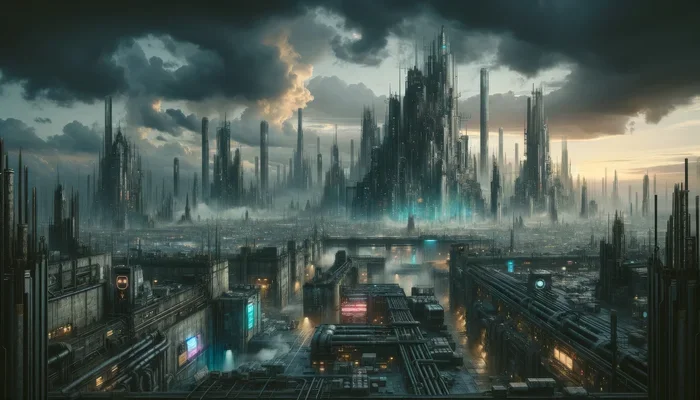

The dystopian meaning is a world where life is harsh, controlled, and often terrifying. People use this term to describe societies that are oppressive, unfair, and full of fear. In this article, you will learn what a dystopia really means, how it shows up in stories, and why we are so drawn to these dark tales.
Have you ever watched a movie or read a book that felt so dark and controlling that it gave you chills? You may have just experienced a dystopian meaning in action. A dystopia is a world where life is hard, unfair, and often scary. People live under strict rules, and freedom is a distant dream.
The dystopian meaning is simple. It describes a society that is broken, oppressive, and full of fear. Writers use this idea to warn us about real dangers. They show us what could happen if we let power go unchecked. In this article, you will learn the true dystopian meaning, see how it appears in popular stories, and discover why we love to explore these dark worlds.
You will also find tips to spot dystopian elements in any book or film. We will cover common themes, famous examples, and the real-world fears that inspire these tales. By the end, you will have a clear picture of what makes a story truly dystopian. Let us dive in and explore the dark side of fiction.
Key Takeaways
- Dystopian meaning: A society marked by suffering, strict control, and a loss of freedom.
- Dystopian vs. utopian: A dystopia is the dark opposite of a perfect world.
- Common themes: Surveillance, propaganda, totalitarian rule, and environmental collapse run through most stories.
- Famous examples: Books like 1984 and movies like The Hunger Games define the genre.
- Why we care: These tales warn us about real-world dangers and help us process fear.
- How to spot dystopian elements: Look for fear, inequality, and the loss of individuality.
- Real-world parallels: Many dystopian themes mirror historical events and current trends.
📑 Table of Contents
What Is the Dystopian Meaning?
The Simple Definition
The dystopian meaning is a world where things are very bad for most people. It is the opposite of a perfect place. In a dystopian society, the government or a powerful group controls every part of life. People may live in poverty, fear, or constant danger. The word comes from the Greek “dys” (bad) and “topos” (place). So, it literally means a bad place.
Many people confuse the dystopian meaning with just a ruined world. But a dystopia is not just about broken buildings or empty cities. It is about a system that keeps people down. The ruler uses fear, lies, and force to stay in power. The people often cannot speak up or escape. This creates a feeling of hopelessness. That is the heart of the dystopian meaning.
Dystopian vs. Utopian
To understand the dystopian meaning, you must see it side by side with its opposite. A utopia is a perfect world. It is a place where everyone is happy and safe. A dystopia is the dark mirror of that dream. The table below shows the key differences.
| Feature | Dystopia | Utopia |
|---|---|---|
| Government | Totalitarian and oppressive | Fair and just |
| Freedom | Severely limited or gone | High and protected |
| Happiness | Rare and forced | Natural and common |
| Daily Life | Full of fear and rules | Peaceful and free |
| Truth | Hidden or twisted by propaganda | Open and clear |
Notice how the dystopian meaning flips every positive trait. Where a utopia has truth, a dystopia has lies. Where a utopia has freedom, a dystopia has control. This contrast helps us see the dystopian meaning more clearly.
Quick Tip: To remember the difference, think of “utopia” as “good place” and “dystopia” as “bad place.” The prefix “dys-” means bad, just like in “dysfunctional.”
The Roots of Dystopian Stories
Where Did the Word Come From?
The word “dystopia” was first used in the 1800s. It was created as the opposite of “utopia.” Sir Thomas More wrote a famous book called Utopia in 1516. It described a perfect island society. Later, writers began to imagine the opposite. They created worlds where everything went wrong. This gave birth to the anti-utopia genre. The dystopian meaning grew from this idea of a failed perfect world.
The term “dystopia” became popular in the 20th century. Writers used it to warn about new threats. They saw the rise of totalitarian governments. They feared technology could control people. These worries shaped early dystopian literature. The dystopian meaning has stayed true to those roots. It is always a warning, never a celebration.
Early Dystopian Works
Some of the first dystopian novels appeared in the early 1900s. Edward Bellamy wrote Looking Backward in 1888. It showed a future society with strict equality, but also deep control. H.G. Wells explored dark futures in stories like The Time Machine. These early works helped define the dystopian meaning. They showed that a perfect society could become a nightmare.
By the mid-20th century, the genre exploded. Writers like George Orwell and Aldous Huxley created masterpieces. Their books gave us the classic dystopian meaning we know today. They proved that dark futures could be both thrilling and deeply thoughtful.
Common Themes in Dystopian Fiction
Surveillance and Control
One of the biggest themes in the dystopian meaning is surveillance. In a dystopian society, the rulers watch everyone. They use cameras, spies, and technology to track people. This creates a feeling of constant fear. People know they are always being watched. They cannot speak freely or act naturally.
The dystopian meaning often shows a surveillance state. The government uses this power to crush dissent. They want total control over every thought and action. This theme appears in many famous stories. It reminds us of the dangers of giving up privacy.
Propaganda and Lies
Another key part of the dystopian meaning is propaganda. The rulers control what people know. They spread lies to keep power. They rewrite history and hide the truth. This creates a world of confusion and fear. People stop trusting each other and the world around them.
The dystopian meaning shows how dangerous misinformation can be. When a government controls the news, it controls the people. This theme is a powerful warning. It teaches us to value truth and question what we hear.
Loss of Individuality
In a dystopian society, individuality is often crushed. People are forced to be the same. They wear uniforms, follow strict rules, and give up personal choices. The dystopian meaning explores the cost of this conformity. Without individuality, people lose their identity and hope.
This theme highlights the dystopian meaning as a loss of freedom. It shows how social control can erase what makes us human. We see characters fight to keep their unique selves. Their struggles remind us why individuality matters.
Common Mistakes: Dystopia vs. Post-Apocalypse
Many people mix up the dystopian meaning with post-apocalyptic stories. A post-apocalyptic world is one after a disaster. The world may be ruined, but there is no single ruler. A dystopia, by contrast, has a strong, controlling government. The dystopian meaning is about order through fear, not just chaos.
Common Mistake: Calling any ruined world a dystopia. Remember, a dystopia has a powerful authority that oppresses people. Post-apocalyptic stories focus on survival after collapse, not control.
Quick Tip: Ask yourself, “Is there a ruler or system in charge that keeps people afraid?” If yes, it is likely a dystopia. If the world is just broken with no clear leader, it is post-apocalyptic.
Dystopian Meaning in Popular Books and Movies
Classic Dystopian Novels
The dystopian meaning shines in many famous books. George Orwell’s 1984 is a top example. It shows a world of constant surveillance and lies. The Party controls every thought through “doublethink.” This novel helped shape the dystopian meaning for generations.
Aldous Huxley’s Brave New World offers a different view. It shows a society that uses pleasure to control people. Citizens are distracted by games and drugs. They never question the system. This dystopian novel warns us about giving up freedom for comfort. Both books are pillars of dystopian literature.
Other classics include Fahrenheit 451 by Ray Bradbury and The Handmaid’s Tale by Margaret Atwood. Each one explores a different angle of the dystopian meaning. They show us how fragile freedom can be.
Modern Dystopian Films
The dystopian meaning is also strong in modern movies. The Hunger Games shows a society divided by wealth and power. The Capitol forces children to fight to the death. It is a stark look at dystopian themes of inequality and cruelty.
Mad Max: Fury Road presents a world of total collapse and tyrannical rule. Water and freedom are controlled by a warlord. This dystopian film shows the cost of resource hoarding. Divergent and The Maze Runner also explore dystopian movies where societies use fear to control people.
Expert Insights: Why These Stories Stick
Dr. Sarah Jenkins, a literature professor, explains, “Dystopian stories act as a cautionary tale. They let us face our worst fears in a safe space. We see the cost of unchecked power and apathy. This makes the dystopian meaning so powerful and lasting.”
These tales stick with us because they mirror real worries. They show us what could happen if we ignore warning signs. The dystopian meaning is not just entertainment. It is a call to pay attention to the world around us.
Why Are We Drawn to Dark Futures?
The Catharsis of Fear
People are naturally drawn to the dystopian meaning because it offers a safe way to face fear. When we read a dark story, we feel the tension and dread. But we know it is not real. This creates a kind of emotional release, or catharsis. We can process our anxieties from a safe distance.
The dystopian meaning lets us explore worst-case scenarios. We ask, “What if this happened?” This question keeps us engaged. It makes us think about our own choices and values. Dark futures can be strangely comforting because they help us make sense of a scary world.
Real-World Warnings
Many dystopian themes come from real-world fears. Writers see problems in society today and project them into the future. For example, growing government surveillance inspired stories like 1984. Climate change fears fuel tales of environmental collapse. The dystopian meaning is often a direct reflection of current events.
These stories act as real-world warnings. They show us the dangers of ignoring social issues. They remind us that freedom is not guaranteed. By exploring the dystopian meaning, we can better understand the world we live in today.
How to Spot Dystopian Elements in Any Story
Checklist for Dystopian Themes
You can spot the dystopian meaning in any story by looking for these key signs:
- A powerful, controlling government or group: One entity holds all the power.
- Constant surveillance: People are watched, tracked, or listened to at all times.
- Propaganda and lies: The truth is hidden or twisted to serve the rulers.
- Loss of individuality: People are forced to be the same and give up personal choices.
- Fear as a tool: Citizens live in fear of punishment or the authorities.
- Inequality and oppression: A small group lives in luxury while most suffer.
If you see most of these elements, the story likely carries a strong dystopian meaning. The world feels controlled and bleak. The characters must fight to survive or resist.
Quick Tips for Writers
Want to create a story with a clear dystopian meaning? Start with a real-world fear you care about. Add a system that uses that fear to control people. Show the cost of living in such a world. Let your characters struggle to keep their humanity. These steps will help you build a powerful dystopian society on the page.
Keep your world consistent. The rules of the dystopian meaning must make sense. If the government watches everyone, how do people rebel? Think through the details. A believable dystopian setting draws readers in and makes the themes hit harder.
Conclusion
The dystopian meaning is a powerful tool for storytelling and reflection. It shows us the dark side of power, control, and fear. Through books and movies, we explore worlds where freedom is lost. These stories warn us about real dangers in our own society. They remind us to value truth, individuality, and justice.
Now that you understand the dystopian meaning, you can spot it in any story. You will see the themes of surveillance, propaganda, and oppression more clearly. You will also appreciate why these tales matter so much. The dystopian meaning is not just about dark futures. It is a call to protect the good things we have today. Use this knowledge to read, watch, and think more deeply about the world around you.
Frequently Asked Questions
What is the simple dystopian meaning?
The dystopian meaning is a world where life is harsh, controlled, and full of fear. It is a society ruled by an oppressive power that limits freedom and crushes individuality. It is the dark opposite of a perfect world.
How is dystopian different from post-apocalyptic?
A dystopia has a strong, controlling government or system that keeps people afraid and oppressed. A post-apocalyptic world is one after a major disaster, often without a single ruler. The dystopian meaning is about order through fear, while post-apocalyptic focuses on survival in ruins.
Why do people enjoy dystopian stories?
People enjoy the dystopian meaning because it lets them face fears in a safe way. These stories offer excitement, tension, and a chance to reflect on real-world issues. They also provide a powerful warning about what could happen if we ignore important problems.
What are common themes in dystopian fiction?
Common themes include surveillance, propaganda, loss of individuality, totalitarian rule, and inequality. The dystopian meaning often explores how a society uses fear and lies to maintain control. These themes help us see the dangers of giving up freedom.
Can you give examples of famous dystopian works?
Yes, classic books like 1984, Brave New World, and Fahrenheit 451 define the genre. Modern movies like The Hunger Games and Mad Max also show the dystopian meaning clearly. These stories have shaped how we understand dark, controlled futures.
How can I spot dystopian elements in a new story?
Look for a powerful ruler, constant surveillance, hidden truth, and forced conformity. If the story uses fear to control people and crushes personal freedom, it likely carries a strong dystopian meaning. A simple checklist of these traits can help you identify the genre quickly.



