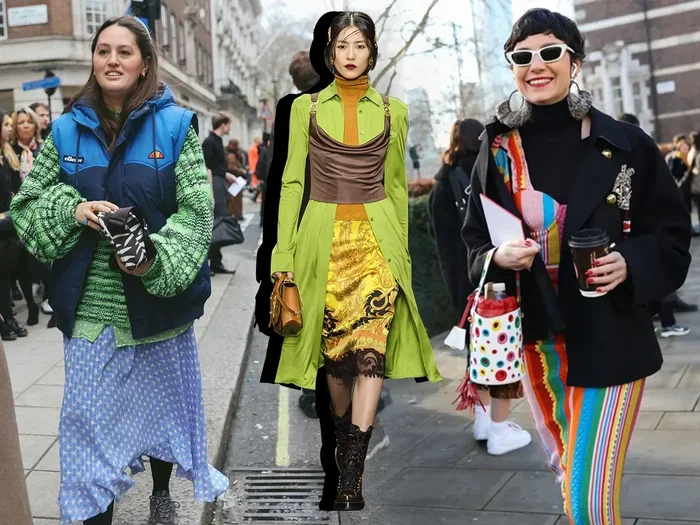

The eccentric meaning goes way deeper than most people realize. It describes someone or something that is uniquely unconventional and delightfully different. Understanding this word opens up a richer way to describe quirky personalities, creative minds, and bold behavior. This guide covers the full eccentric meaning, its origin, real-world examples, and how to use it with confidence.
Have you ever met someone so uniquely quirky that no single word quite captured who they are? Maybe it was the artist down the street who wore mismatched socks every day. Or perhaps it was a brilliant professor who spoke to plants during lectures. Chances are, you wanted to call them eccentric. But what does eccentric meaning really hold? This word carries far more depth than most people realize.
When you dig into the eccentric definition, you find a word rich with history, nuance, and creative energy. It is not just a fancy way of saying “weird.” It is a celebration of individuality, originality, and bold self-expression. In this guide, we will unpack the full eccentric meaning from every angle. You will learn where the word came from, how to use it correctly, and why it matters more than ever in today’s world.
Whether you are a writer looking for the perfect word, a student building your vocabulary, or simply someone who loves language, this article has you covered. Let us explore the wonderful world of eccentricity together.
Key Takeaways
- Eccentric meaning explained: It refers to someone or something that deviates from what is conventional or expected in a charming or unusual way.
- Rich history: The word comes from Greek and Latin roots, originally used in astronomy before evolving into everyday language.
- More than “weird”: Eccentric carries a positive or neutral tone, unlike terms that imply something is simply strange or broken.
- Famous eccentrics: Many celebrated artists, scientists, and leaders were known for their eccentric behavior and thinking.
- Practical usage: You can use “eccentric” as a noun, adjective, or even in technical contexts like physics and engineering.
- Eccentric vs. weird: There is a clear difference in tone and connotation that matters in everyday conversation.
- Actionable tips: The article includes practical examples, common mistakes, and expert insights to help you master the word.
📑 Table of Contents
What Does Eccentric Mean? The Full Definition
The eccentric meaning in its simplest form refers to someone or something that behaves in an unconventional or slightly strange way. But that definition barely scratches the surface. The word carries a sense of charm and uniqueness. It does not mean something is broken or wrong. It means something stands out in an interesting way.
Here is a quick breakdown of the eccentric definition:
- As an adjective: It describes a person or thing that is unconventional and slightly unusual.
- As a noun: It refers to a person who is notably different from what is considered normal.
- In technical contexts: It has specific meanings in physics, engineering, and mathematics.
When you say someone is eccentric, you are usually saying they march to the beat of their own drum. They do not follow the crowd just because everyone else is following. This quality can show up in how they dress, speak, think, or live their daily lives.
For example, you might say, “My neighbor is such an eccentric person. He collects vintage typewriters and talks to his garden every morning.” Notice how the word here feels warm and admiring, not insulting. That is a key part of understanding the eccentric meaning in everyday English.
Eccentric Meaning in a Sentence
Seeing the word in action helps solidify your understanding. Here are a few examples of how to use eccentric naturally:
- “The eccentric inventor built a car that runs on coffee grounds.”
- “She has always been known as the most eccentric member of the team.”
- “His eccentric sense of humor makes every gathering more fun.”
- “The town is famous for its eccentric residents who paint their houses bright purple.”
Each of these sentences uses the word in a way that feels natural and positive. That is the beauty of eccentric. It lifts people up rather than putting them down.
The Origin and History of the Word Eccentric
Words often have fascinating backstories. The eccentric meaning has evolved significantly over centuries. Understanding where the word came from gives you a deeper appreciation for its richness.
The word eccentric traces back to the Greek word “ekkentros.” This term combined two parts: “ek,” meaning “out of,” and “kentron,” meaning “center.” So at its core, eccentric literally means “out of the center.”
In the 1500s, scientists and astronomers used the term to describe orbits that were not perfectly circular. A planet with an eccentric orbit did not follow a perfect circle around the sun. Instead, it traced an oval or elliptical path. This was the original eccentric definition in a scientific context.
Over time, people began using the word metaphorically. If someone’s behavior did not follow the “center” of normal social expectations, they were labeled eccentric. By the 1800s, the word had fully entered everyday English. It was no longer just for scientists. Writers, artists, and everyday people used it to describe unusual personalities.
Today, the eccentric meaning has expanded even further. It appears in pop culture, psychology, fashion, and business. The word has come a long way from its astronomical roots.
Eccentricity vs. Eccentric: What Is the Difference?
You may have noticed two related forms of this word. Let us clarify the difference:
- Eccentric is the adjective or noun form. It describes a quality or a person.
- Eccentricity is the noun form that refers to the state or quality of being unconventional.
For instance, you might say, “His eccentricity is what makes him so memorable.” Both words share the same root and core meaning. The difference is simply in how they function in a sentence.
Eccentric vs. Weird: Understanding the Nuance
One of the most common questions people ask is about the difference between eccentric and “weird.” These words are not synonyms. They carry very different tones and implications.
When you call something weird, it often has a negative or at least neutral connotation. Weird can imply something is unsettling, strange, or even uncomfortable. It does not necessarily celebrate the uniqueness of the subject.
On the other hand, the eccentric meaning is almost always positive or at least neutral. Calling someone eccentric suggests you find their uniqueness admirable or at least interesting. There is a sense of respect hidden in the word.
Here is a simple comparison:
- Weird: “That noise was weird.” (implies discomfort or strangeness)
- Eccentric: “She has such an eccentric style.” (implies admiration for uniqueness)
Another related term is quirky. Quirky is similar to eccentric but usually lighter and more playful. You might describe a small habit as quirky but reserve eccentric for someone whose entire personality stands out.
Related Words and Synonyms
Expanding your vocabulary around this concept helps you communicate more precisely. Here are some synonyms and related terms:
- Quirky — Playfully unusual
- Unconventional — Not following accepted norms
- Idiosyncratic — Peculiar to an individual
- Offbeat — Unusual and different
- Eccentric — Uniquely unconventional in a charming way
- Bohemian — Free-spirited and artistic
- Eccentric — A person known for unusual behavior
Each of these words captures a slightly different shade of meaning. But eccentric remains the most versatile and widely understood.Famous Eccentric People in History
Throughout history, many brilliant and influential people were known for their eccentric behavior. Their uniqueness often fueled their creativity and changed the world in remarkable ways.
Let us look at some of the most famous eccentrics:
- Albert Einstein — The genius physicist was known for his wild hair, refusal to wear socks, and playful personality. His eccentric approach to thinking revolutionized modern physics.
- Steve Jobs — The Apple co-founder was famous for his minimalist style, barefoot meetings, and relentless pursuit of perfection. His eccentricity shaped one of the most valuable companies in history.
- Nikola Tesla — The inventor had a deep love for pigeons, a habit of walking around a block three times before entering a building, and an intense fascination with the number three.
- Frida Kahlo — The iconic Mexican artist wore bold, colorful outfits and embraced her unique appearance. Her eccentric style became inseparable from her art.
- David Bowie — The legendary musician constantly reinvented his look and sound. His fearless eccentricity inspired generations of artists.
What these people share is a refusal to conform. Their eccentric traits were not flaws. They were the very things that made them extraordinary.
What Makes Someone Eccentric?
Being eccentric is not about being random or chaotic. There are common characteristics that tend to show up in eccentric individuals:
- A strong preference for doing things their own way
- Unusual hobbies or interests that others might not understand
- A willingness to take risks with their appearance or behavior
- Deep passion for specific topics, sometimes to an extreme degree
- A creative mind that makes unusual connections between ideas
These traits are not flaws. They are signs of a mind that operates differently. And in many fields, that difference is exactly what drives innovation.
Eccentric in Different Contexts
The eccentric meaning shifts depending on the context. While the core idea stays the same, the word is used in very different ways across various fields.
Eccentric in Everyday Language
In casual conversation, calling someone eccentric is usually a compliment. It suggests the person has a distinctive personality that makes them memorable. You might describe a friend, a coworker, or even a celebrity as eccentric.
For example: “The new barista at the coffee shop is so eccentric. She knows every customer’s name and draws little pictures on their cups.”
Eccentric in Science and Engineering
In physics and engineering, eccentric has a very specific technical meaning. An eccentric object is one whose center does not align with its axis of rotation. Think of a wheel that is slightly off-center. It will wobble as it turns.
This technical use comes directly from the original Greek meaning of “out of the center.” Engineers use the term eccentric when designing gears, pulleys, and rotating machinery. In this context, the word is purely descriptive and carries no emotional weight.
Eccentric in Art and Literature
Artists and writers have always embraced eccentricity. Many of the most celebrated works in history came from people who were considered eccentric by their peers. The eccentric meaning in creative fields is almost always associated with originality and bold vision.
Writers like Oscar Wilde and Emily Dickinson were known for their unconventional habits and perspectives. Their eccentricity was a driving force behind their genius. In art, the eccentric style often challenges viewers to see the world differently.
Eccentric in Psychology
In psychology, researchers study eccentric behavior as part of understanding personality. Some studies suggest that mildly eccentric individuals may have higher levels of creativity and intelligence. Being eccentric is not a disorder. It is simply a variation of normal human behavior.
Psychologists use the term to describe patterns of behavior that fall outside the statistical norm but do not cause distress or impairment. This is an important distinction. True eccentricity is a lifestyle choice, not a symptom of a problem.
How to Use Eccentric Correctly
Now that you understand the full eccentric meaning, let us talk about how to use the word effectively. Proper usage makes your writing and speaking more polished and confident.
Common Mistakes to Avoid
Even native speakers sometimes misuse this word. Here are a few common pitfalls:
- Using it as a pure insult: The eccentric meaning is not purely negative. If you want to criticize someone, use “weird” or “strange” instead.
- Confusing it with “eccentric” in math only: While the technical meaning exists, most everyday conversations use the word in its broader, human sense.
- Overusing it: Like any strong word, “eccentric” loses its impact if you use it too often. Save it for moments when someone truly stands out.
- Ignoring the positive tone: Always remember that eccentric carries warmth. Using it with a negative tone feels unnatural and awkward.
Tips for Using Eccentric Like a Pro
- Pair it with specific details. Instead of just saying “She is eccentric,” describe what makes her eccentric. This makes your writing vivid and engaging.
- Use it in storytelling. The word shines when you are describing memorable characters or real people. It adds color and personality to your narrative.
- Combine it with other descriptive words. Try phrases like “charmingly eccentric,” “brilliantly eccentric,” or “delightfully eccentric” to add depth.
- Remember the noun form. Using “an eccentric” or “the eccentric” can make your sentences feel more dynamic and varied.
Quick Tips for Mastering the Word
- Read the word aloud to get comfortable with its rhythm and sound.
- Write three original sentences using “eccentric” every day.
- Watch interviews with creative people and notice when “eccentric” fits perfectly.
- Keep a vocabulary journal and add “eccentric” along with its synonyms.
- Practice using the word in both casual and formal settings.
Like any new vocabulary word, the more you use eccentric, the more natural it becomes. Start small and build your confidence over time.
Why Understanding Eccentric Matters Today
In a world that increasingly values conformity, the eccentric meaning reminds us of the beauty of being different. Social media often pushes people to fit into narrow molds. But the truth is that the most innovative and inspiring people in every field have been eccentric.
Understanding this word helps you appreciate the diverse ways people think and live. It also gives you a powerful tool for self-expression. Whether you consider yourself eccentric or you know someone who is, the word captures something essential about human creativity.
The eccentric meaning is ultimately about celebrating what makes each of us unique. It is about having the courage to be yourself, even when that means standing out from the crowd.
Next time you meet someone who thinks differently, dresses differently, or sees the world in their own special way, remember the eccentric meaning. You might just find the perfect word to describe them.
Conclusion
The eccentric meaning is richer and more layered than most people realize. From its ancient Greek roots to its modern-day usage, this word has evolved into a celebration of individuality and creative boldness. It is not just a synonym for “weird.” It is a term that honors the beauty of being different.
We have explored the full eccentric definition, its history, its use in different fields, and practical tips for incorporating it into your vocabulary. We have looked at famous eccentrics who changed the world and learned how to distinguish eccentric from similar words like “weird” and “quirky.”
The next time you want to describe someone who is wonderfully unconventional, reach for “eccentric.” Use it with confidence and warmth. And remember that the eccentric meaning is ultimately a word of admiration. It says, “You are different, and that is a beautiful thing.”
Embrace the eccentric in yourself and in others. The world needs more people brave enough to stand out.
Frequently Asked Questions
What is the simple meaning of eccentric?
The simple eccentric meaning is someone or something that is unconventional and slightly unusual in a charming way. It describes behavior or personality that stands out from what is considered normal, but in an interesting and often admirable way.
Is eccentric a positive word?
Yes, the eccentric meaning is almost always positive or neutral. It suggests uniqueness and individuality rather than something being wrong or broken. When you call someone eccentric, it usually implies you find their quirks endearing or impressive.
What is the difference between eccentric and weird?
The main difference is in tone. “Weird” often implies something is strange or unsettling, while the eccentric meaning carries warmth and admiration. Eccentric suggests someone is uniquely charming in their unconventionality, whereas weird is more neutral or negative.
Can eccentric be used as a noun?
Yes, absolutely. When used as a noun, “eccentric” refers to a person who is notably unconventional. For example, “He is quite the eccentric” or “The town is full of eccentrics.” The noun form is widely used in everyday English.
Where does the word eccentric come from?
The word comes from the Greek “ekkentros,” combining “ek” meaning “out of” and “kentron” meaning “center.” It was originally used in astronomy to describe orbits that were not perfectly circular. Over time, it evolved to describe people and things that fall outside the center of normal expectations.
How can I use eccentric in a sentence naturally?
Try pairing “eccentric” with specific details about what makes someone or something unusual. For example, “Her eccentric taste in fashion always turns heads.” Using it in storytelling or when describing creative individuals helps it feel natural and engaging.



