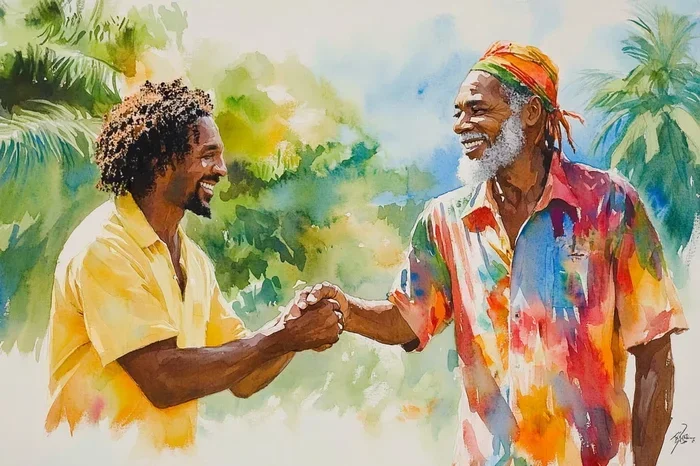

Learning how to say good morning in Jamaican is a fun way to connect with Jamaican culture and people. From the classic “Good morning” to the popular patois greeting “Wah gwaan,” you will discover multiple ways to greet others the Jamaican way. This guide covers pronunciations, cultural context, and real-life examples so you can greet like a local with confidence.
Have you ever wanted to greet someone in Jamaican and watch their face light up with surprise? Learning how to say good morning in Jamaican is one of the simplest and most rewarding things you can do. Whether you are planning a trip to Jamaica, chatting with Jamaican friends, or just curious about the language, morning greetings open the door to deeper connections. Jamaicans are known for their warmth, and a proper greeting goes a long way in showing respect. In this guide, we will walk you through every popular way to greet someone in the morning, complete with pronunciations and cultural tips.
The Jamaican language is a beautiful blend of English, African influences, and Caribbean Creole. When you learn how to say good morning in Jamaican, you are not just learning words. You are stepping into a culture rich with history, music, and community spirit. The phrases you will learn today are used every day by millions of people across Jamaica and the Jamaican diaspora around the world. So let us dive in and start greeting like a true Jamaican.
Key Takeaways
- Multiple Greetings: There are several ways to say good morning in Jamaican, from formal to casual patois expressions.
- Cultural Respect: Using Jamaican greetings shows respect for the culture and helps build genuine connections.
- Pronunciation Matters: Getting the rhythm and tone right makes your greeting sound more natural and authentic.
- Context Is Key: Different situations call for different greetings, just like in any language.
- Beyond Morning Greetings: Jamaican greetings often lead to longer conversations, reflecting the culture’s warmth.
- Easy to Learn: Even beginners can pick up these phrases quickly with a little practice.
📑 Table of Contents
- Why Jamaican Greetings Matter
- Basic Ways to Say Good Morning in Jamaican
- Cultural Context Behind Jamaican Morning Greetings
- Common Jamaican Morning Phrases Beyond “Good Morning”
- How to Pronounce Jamaican Greetings Correctly
- Comparing Jamaican Good Morning Greetings
- How to Respond When Someone Greets You in Jamaican
- Final Thoughts: Saying Good Morning Like a True Jamaican
Why Jamaican Greetings Matter
Greetings in Jamaica are more than just a polite exchange. They are a reflection of the island’s vibrant culture and communal spirit. When you say good morning in Jamaican, you are acknowledging someone’s presence and showing that you value them. This is deeply rooted in Jamaican social norms, where personal connections matter more than rushing through interactions.
The Role of Language in Jamaican Culture
Jamaica has a unique linguistic landscape. Most Jamaicans speak both English and Jamaican Creole, also known as Patois. The Creole language carries the rhythms of African languages mixed with colonial English influences. When you greet someone in their native tongue, even if it is just a simple morning phrase, you show that you care about their heritage. This small effort can mean a lot to the person you are greeting.
In Jamaica, the way you greet someone often determines the tone of the entire conversation. A warm morning greeting can turn a stranger into a friend within seconds. This is why learning how to say good morning in Jamaican is such a valuable skill. It is your first step toward authentic communication on the island.
Basic Ways to Say Good Morning in Jamaican
Let us start with the most common and straightforward greetings. These are the phrases you will hear and use every single day in Jamaica.
1. “Good Morning”
Yes, it is that simple. Many Jamaicans use the standard English greeting “Good morning” in formal settings or when speaking with people they do not know well. This is the safest option if you are unsure which dialect or level of Patois to use. It is respectful, clear, and universally understood.
However, if you want to sound more natural and connect on a deeper level, you will want to explore the Patois versions. The English greeting works well in business settings, hotels, and with older generations who prefer formal speech.
2. “Wah Gwaan”
This is arguably the most iconic Jamaican greeting. “Wah Gwaan” literally translates to “What is going on?” But in practice, it is simply a friendly way of saying good morning. You will hear this phrase everywhere, from Kingston to Montego Bay. It is casual, warm, and instantly makes you sound like you belong.
The pronunciation is “wah gwan,” with a soft “g” sound. The “wa” rhymes with “bah,” and the “gwan” sounds like “gun” without the “n” emphasis. Once you say it a few times, it will feel natural on your tongue.
3. “Good Mawnin'”
This is the Jamaican Creole pronunciation of “Good Morning.” The key difference is the way you say “morning.” In Jamaican Patois, it becomes “mawnin'” with a drawled “awn” sound. This casual version is perfect for friends, family, and everyday interactions.
Using “Good Mawnin'” shows that you are familiar with Jamaican speech patterns. It is the kind of greeting that makes locals smile because it tells them you have taken an interest in their language. This is one of the most practical phrases to learn if you want to blend in during your visit.
Cultural Context Behind Jamaican Morning Greetings
Understanding the “why” behind Jamaican greetings is just as important as learning the “how.” In Jamaica, greetings are not rushed. They are an invitation to connect. When a Jamaican person says good morning, they often expect a response and sometimes even a brief conversation before moving on with the day.
Morning Greetings in Rural vs. Urban Jamaica
In rural areas, morning greetings can be longer and more personal. You might exchange several pleasantries before getting to the business at hand. In urban areas like Kingston, greetings can be shorter but equally warm. No matter where you are, the spirit of friendliness remains the same.
Here are some cultural tips to keep in mind when greeting Jamaicans in the morning:
- Make eye contact: This shows sincerity and respect during the greeting.
- Use a friendly tone: Jamaicans appreciate warmth and enthusiasm in their greetings.
- Be patient: Allow the conversation to flow naturally without rushing.
- Smile genuinely: A real smile goes a long way in Jamaican culture.
- Use the person’s name if you know it: This adds a personal touch that Jamaicans value.
If you are curious about how other Jamaican expressions work in text messages, you might find our article on Wtw meaning in text interesting. Many Jamaicans use texting abbreviations just like everyone else, and understanding them helps you follow along in digital conversations.
Common Jamaican Morning Phrases Beyond “Good Morning”
Once you master the basic good morning greetings, you can expand your repertoire with additional phrases that Jamaicans use throughout the morning hours.
“Yu Deh Yah”
This phrase means “You are here” but is used as a casual acknowledgment. You might hear it as a response to your good morning greeting. It is a way of saying “I see you” or “I acknowledge your presence.” The pronunciation is “yuh deh yah,” with a soft “yuh” sound at the start.
“Mi Deh Yah”
Saying “Mi Deh Yah” means “I am here” or “I am doing well.” This is a common response when someone greets you with “Wah Gwaan.” It reassures the other person that you are doing fine and ready to engage in conversation.
“Mawnin, Boss”
Adding “Boss” to your morning greeting is a popular way to show respect, especially in urban Jamaica. It is not about hierarchy. It is about acknowledging someone’s importance and treating them with dignity. You can use “Boss,” “Man,” or “Sister” depending on the person and the vibe.
How to Pronounce Jamaican Greetings Correctly
Pronunciation is key to sounding natural when you say good morning in Jamaican. The Jamaican Creole has its own rhythm and flow that differs from standard English. Here are some tips to help you get it right.
Tips for Mastering the Jamaican Accent
- Soften your consonants: Jamaican Patois uses softer “t” and “d” sounds. For example, “good” becomes more like “guud.”
- Drawl your vowels: The “or” sound in “morning” becomes “awnin'” with a longer, drawn-out vowel.
- Drop your “r” sounds: Words like “morning” lose the final “r” and become “mawnin’.”
- Listen to native speakers: Watching Jamaican music, movies, or videos is one of the best ways to pick up the natural rhythm.
- Practice with friends: If you have Jamaican friends, ask them to correct your pronunciation gently.
Remember, no one expects you to sound like a native speaker overnight. The effort you put into learning these greetings will always be appreciated. Jamaicans are generally very forgiving and encouraging when visitors try to speak their language.
Common Mistakes to Avoid
When learning how to say good morning in Jamaican, there are a few pitfalls to watch out for. Avoid these common mistakes to ensure your greetings come across as respectful and natural.
- Overdoing the accent: Do not exaggerate the Patois too much. Subtlety goes a long way.
- Using slang incorrectly: Some Jamaican slang words have different meanings in different contexts. Make sure you understand the phrase before using it.
- Skipping the response: If someone greets you, always respond. Silence can be seen as rude in Jamaican culture.
- Ignoring the cultural context: Some greetings are more appropriate for certain settings. Read the room before choosing your phrase.
If you come across other Jamaican expressions or abbreviations in text messages and want to understand them better, check out our guide on Ts meaning in text. It covers another common abbreviation you might encounter in Jamaican digital conversations.
Comparing Jamaican Good Morning Greetings
To help you choose the right greeting for the right situation, here is a quick comparison of the most popular ways to say good morning in Jamaican.
| Greeting | Level of Formality | Best Used With | Meaning |
|---|---|---|---|
| Good Morning | Formal | Strangers, business settings | Standard English greeting |
| Good Mawnin’ | Casual | Friends, everyday use | Jamaican Creole version of Good Morning |
| Wah Gwaan | Casual | Friends, peers, young people | What is going on? (friendly greeting) |
| Mawnin, Boss | Casual with respect | Acquaintances, community | Good morning with added respect |
| Yu Deh Yah | Very Casual | Close friends | I see you / You are here |
As you can see, each greeting has its own place. The beauty of Jamaican greetings is that there is always an option that fits the moment. You can start with the formal “Good Morning” and gradually work your way up to the casual “Wah Gwaan” as you become more comfortable.
How to Respond When Someone Greets You in Jamaican
Greeting is a two-way exchange. Knowing how to respond is just as important as knowing how to greet. When someone says “Wah Gwaan” to you, the most common response is “Mi Deh Yah,” which means “I am here” or “I am doing well.” You can also simply reply with “Good morning” or “Good Mawnin'” depending on the level of familiarity.
If someone says “Yu Deh Yah,” you can respond with “Yuh too” meaning “You as well.” These simple exchanges keep the conversation flowing and show that you understand the rhythm of Jamaican communication.
For those interested in learning more about Jamaican expressions and how they carry over into text conversations, understanding abbreviations is a great next step. Many Jamaicans blend traditional greetings with modern texting language, creating a unique blend of old and new communication styles.
Final Thoughts: Saying Good Morning Like a True Jamaican
By now, you should feel confident about how to say good morning in Jamaican in several different ways. From the formal “Good Morning” to the beloved “Wah Gwaan,” you have a toolkit of greetings that will serve you well in any Jamaican setting. The key is to practice, stay respectful, and enjoy the process of learning a new way to connect with people.
Remember, greetings are the foundation of every meaningful interaction. In Jamaica, they carry extra weight because they reflect the island’s deep sense of community and warmth. When you greet someone in their own language, you are saying, “I see you. I respect you. I am glad you are here.” That is a powerful message no matter how you say it.
So the next time the morning arrives and you want to greet someone special, try one of these Jamaican phrases. You will not just be saying good morning. You will be sharing a piece of Jamaican culture and building a bridge between your world and theirs. And that is something truly worth doing.
Music plays a huge role in Jamaican culture, and many iconic songs carry deep meanings that reflect the island’s spirit. If you are curious about the meaning behind the famous song “Good Riddance,” you can explore our article on the Good Riddance meaning to discover its cultural significance.
Frequently Asked Questions
What is the most common way to say good morning in Jamaican?
The most common way is “Wah Gwaan.” It is casual, friendly, and used by Jamaicans of all ages in everyday situations. It is the go-to greeting that instantly feels authentic and warm.
Is Jamaican Patois hard to learn for English speakers?
Not at all. Since Jamaican Patois is based on English, most English speakers can pick up basic phrases relatively quickly. The key is to practice the pronunciation and get comfortable with the rhythm of the language. Start with simple greetings and build from there.
Can I use “Good Morning” in Jamaica without sounding like a tourist?
Yes, absolutely. “Good Morning” is perfectly acceptable and widely used, especially in formal settings. To sound more natural, you can add the Patois version “Good Mawnin'” or mix in “Wah Gwaan” once you are more comfortable with the local dialect.
Do Jamaicans greet each other differently in the morning versus other times of day?
Yes, morning greetings are specifically tied to the time of day. “Good Mawnin'” or “Wah Gwaan” are used in the morning. As the day progresses, Jamaicans shift to “Good Afternoon” or “Good Evening” with their Patois equivalents. The structure stays the same, but the time reference changes.
Are there any Jamaican greetings I should avoid using?
Most Jamaican greetings are warm and welcoming, so there are very few to avoid. However, it is best not to overuse Patois if you are not familiar with the cultural context. Use greetings naturally and respectfully, and Jamaicans will appreciate your effort regardless of perfection.
How do Jamaican greetings compare to other Caribbean greetings?
Caribbean greetings share a lot of warmth and informality. While each island has its own unique expressions, the underlying spirit is similar. Jamaican greetings tend to be expressive and music-influenced, reflecting the island’s deep connection to reggae and dancehall culture.
=== CONCLUSION ===
Learning how to say good morning in Jamaican is a small effort that brings big rewards. You now have multiple greetings at your fingertips, from the formal “Good Morning” to the iconic “Wah Gwaan.” Each phrase carries a piece of Jamaican culture and warmth that will help you connect with people on a deeper level. Practice these greetings, use them with confidence, and enjoy the smiles they bring. The Jamaican way of greeting is more than words. It is an invitation to share in the island’s vibrant spirit and community heart. So wake up tomorrow morning, say “Wah Gwaan” with a smile, and start your day the Jamaican way.



