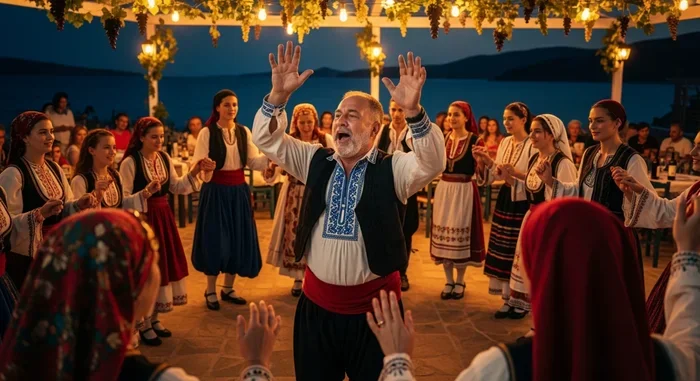

Knowing how to say hello in Greece opens doors to genuine connections and deeper cultural experiences. Greek greetings go far beyond a simple “hello” — they reflect warmth, respect, and the famous Mediterranean hospitality. This guide covers everything from basic verbal greetings to body language, informal and formal phrases, and insider tips that most tourists never learn. You will walk away confident and ready to greet locals like a true insider.
Imagine stepping off a ferry onto a sun-soaked Greek island. The warm breeze carries the scent of olive trees. A friendly local waves at you and says something in Greek. You smile back but have no idea what they just said. Now imagine instead responding with a confident “Yassou!” and watching their face light up. That small moment changes everything. It turns a tourist into a guest. It turns a stranger into a friend. This is the power of learning how to say hello in Greece the right way.
Greece is a country where greetings carry deep cultural meaning. It is not just about the words you use. It is about the warmth behind them. The eye contact. The hand gestures. The genuine interest in how someone is doing. Whether you are planning a trip to Athens, exploring the Cyclades, or just curious about Greek culture, this guide will teach you everything you need to know. We will cover basic phrases, formal and informal greetings, body language, regional variations, and plenty of insider tips. By the end, you will be ready to greet like a true local.
Key Takeaways
- Yassou is the most common Greek hello: Use it in casual settings with friends and strangers alike.
- Formality matters in Greece: Learn when to switch between informal and formal greetings based on context.
- Body language is a huge part of Greek greetings: Handshakes, kisses on the cheek, and warm eye contact carry real meaning.
- Greek hospitality is legendary: Locals genuinely appreciate when visitors make the effort to speak even basic Greek.
- Regional differences exist: Greetings can vary across the Greek islands and mainland, adding richness to the culture.
- Practice makes perfect: Using these greetings in real conversations builds trust and opens up authentic experiences.
📑 Table of Contents
- Why Learning Greek Greetings Matters
- The Most Common Greek Greetings
- Formal vs Informal Greetings in Greece
- Body Language and Non-Verbal Greetings
- Greek Greetings Across the Regions
- Common Mistakes to Avoid When Greeting in Greece
- Insider Tips for Greeting Like a True Local
- Practicing Your Greek Greetings
- The Deeper Meaning Behind Greek Greetings
- Conclusion
Why Learning Greek Greetings Matters
You might wonder why a simple hello deserves so much attention. The answer lies in Greek culture. Greeks value personal connection. They are famously hospitable. And they notice when someone makes an effort to speak their language, even if the effort is small.
Using Greek greetings shows respect. It signals that you are not just passing through. You are engaging. You are present. This small gesture can transform your entire experience in Greece. Shopkeepers become more helpful. Restaurant owners share personal stories. Locals offer directions with genuine warmth. The difference between being treated as a tourist and being treated as a welcome guest often comes down to that first greeting.
Also, Greece has a rich linguistic tradition. The Greek language is one of the oldest in the world. It has shaped Western civilization. When you learn even the simplest phrases, you tap into thousands of years of history. It adds depth and meaning to your travels.
The Role of Greetings in Greek Social Life
In Greece, greetings are not rushed. They are not transactional. When a Greek person says hello, they often want to know how you are. They want to connect. This reflects the broader Greek value of philoxenia, which means love of strangers. It is the foundation of Greek hospitality. Understanding this helps you appreciate why greetings in Greece feel so personal and warm.
Many travelers pick up basic phrases from phrasebooks or apps. But real conversations go beyond memorized words. They involve tone, timing, and body language. This guide helps you understand all of those layers. You will learn not just what to say but how to say it naturally.
The Most Common Greek Greetings
Let us start with the basics. Every traveler needs to know the essential greetings. These are the words and phrases you will hear and use every day in Greece.
Yassou — The Universal Greek Hello
Yassou (pronounced “yah-SOO”) is the most common way to say hello in Greek. You can use it in almost any situation. It works with friends, strangers, shopkeepers, and even casual acquaintances. Think of it as the Greek equivalent of “hi” or “hello” in English.
Here are some quick tips for using Yassou:
- Use it in informal settings: Yassou is perfect for casual encounters.
- Pair it with a smile: A genuine smile makes the greeting feel authentic.
- Say it with confidence: Even if your pronunciation is not perfect, Greeks appreciate the effort.
Yassou comes from the word “chaire” which means “rejoice” or “be happy.” So when you say Yassou, you are essentially wishing someone joy. That is a beautiful way to start any interaction.
Yassas — The Polite and Respectful Greeting
Yassas (pronounced “yah-SAS”) is a slightly more formal version of Yassou. Use it when you want to show extra respect. It works well in the following situations:
- Speaking with older people
- Addressing someone you do not know well
- Entering a shop or business
- Formal or semi-formal settings
Yassas carries a tone of politeness and consideration. Greeks often use it with visitors because it feels respectful without being overly distant. It is a safe and universally appropriate greeting in most situations.
Kalimera and Kalispera — Greetings for Morning and Evening
Greek has beautiful time-based greetings that add warmth to your conversations:
- Kalimera (kah-lee-MEH-rah) means “Good morning.” Use it until around noon.
- Kalispera (kah-lee-SPEH-rah) means “Good evening.” Use it from the afternoon onward.
These greetings show that you understand Greek daily rhythms. Locals appreciate when visitors use them. They signal cultural awareness and thoughtfulness. Try using Kalimera when you walk into a cafe in the morning. Watch how the barista responds. You will notice a shift in energy and warmth.
Other Essential Greek Greeting Phrases
Beyond the basics, here are additional phrases that come in handy:
- Geia sas (YAH-sahs) — A versatile greeting that can mean hello, hi, or even goodbye depending on context.
- Chaire (KHAY-reh) — An older, more traditional greeting meaning “rejoice.”
- As efcharisto (ahs ef-hah-REE-stoh) — “Thank you very much,” which pairs perfectly with any greeting.
- Parakalo (pah-rah-KAH-loh) — “You are welcome” or “Please,” depending on context.
These phrases create a complete greeting toolkit. You can greet someone, thank them, and respond to their thanks — all in Greek. That kind of effort goes a long way.
Formal vs Informal Greetings in Greece
Greek has distinct levels of formality. Understanding when to use each one is key to greeting like a local. Using the wrong level can feel awkward or even disrespectful.
When to Use Informal Greetings
Informal greetings are for casual, everyday situations. Use Yassou when:
- Talking to peers or younger people
- Meeting someone in a relaxed setting like a cafe or beach
- Interacting with fellow travelers
- Greeting someone you have already met casually
Greek culture is warm and expressive. Even in informal settings, the greeting carries genuine feeling. Do not be surprised if a stranger wishes you a wonderful day after a simple Yassou exchange.
When to Use Formal Greetings
Formal greetings are appropriate in these situations:
- Meeting someone older for the first time
- Business or professional settings
- Speaking with authority figures
- Visiting someone’s home for the first time
In formal situations, use Yassas or the person’s title followed by their name. Greeks value respect for elders and authority. Matching the formality level shows that you understand and honor these cultural norms.
A Quick Guide to Choosing the Right Greeting
| Situation | Best Greeting | Formality Level |
|---|---|---|
| Casual meet-up with friends | Yassou | Informal |
| Meeting an elder or stranger | Yassas | Formal |
| Morning greeting | Kalimera | Neutral |
| Evening greeting | Kalispera | Neutral |
| Business setting | Yassas | Formal |
| Quick hello to a shopkeeper | Geia sas | Neutral |
This table gives you a quick reference for everyday situations. Keep it in mind as you navigate Greek social life.
Body Language and Non-Verbal Greetings
Here is something many travelers do not expect. In Greece, body language matters just as much as words. The way you greet someone physically can communicate just as much as what you say.
The Greek Handshake
A firm but friendly handshake is common in formal settings. Greeks shake hands with eye contact and a warm smile. Do not be too aggressive. The handshake should feel confident but not overpowering. In casual settings, a simple wave or nod can also work well.
Cheek Kissing — The Greek Way
Among friends and family, cheek kissing is a standard greeting in Greece. Here is how it typically works:
- Two kisses are standard in most parts of Greece — one on each cheek.
- Start with your right cheek.
- Lean in naturally and do not rush.
- Some regions may use three kisses, especially in Crete and certain islands.
If you are unsure whether to kiss or shake hands, let the other person lead. Greeks are generally understanding with visitors. They appreciate the effort regardless of the outcome.
Eye Contact and Smiling
Greeks value direct eye contact. It shows honesty and confidence. Avoiding eye contact can be interpreted as disinterest or even distrust. Pair strong eye contact with a genuine smile, and your greeting will feel warm and authentic.
Smiling is deeply embedded in Greek social culture. Even in formal settings, a smile softens the interaction. It makes the other person feel at ease. So smile often. It costs nothing and means everything.
Greek Greetings Across the Regions
Greece is a diverse country with rich regional traditions. Greetings can vary from island to island and from the mainland to the mountains. Understanding these differences adds another layer of authenticity to your interactions.
Island Greetings
The Greek islands have their own unique charm. On islands like Crete, Rhodes, and Corfu, greetings often come with extra warmth and enthusiasm. Islanders tend to be more expressive. A simple hello can turn into a mini conversation about the weather, your journey, or their family. Embrace this. It is not small talk. It is genuine connection.
Mainland Greetings
In mainland cities like Athens and Thessaloniki, greetings can feel a bit more fast-paced. People are busy. But that does not mean they are cold. A quick Yassou with a nod is perfectly acceptable in urban settings. As the conversation develops, the warmth comes through naturally.
Mountain and Village Greetings
In rural areas and mountain villages, greetings are deeply personal. Elders especially appreciate traditional phrases. Taking the time to greet someone properly in a small village can lead to wonderful conversations. You might be invited for coffee or even a meal. This is the magic of Greek hospitality in action.
Common Mistakes to Avoid When Greeting in Greece
Even well-meaning travelers can make mistakes. Here are some common pitfalls to watch out for:
- Skipping the greeting entirely: Going straight to your question or request feels abrupt and rude in Greek culture. Always greet first.
- Using overly casual language with elders: Calling an older person by their first name or using Yassou inappropriately can feel disrespectful.
- Ignoring body language: A greeting without eye contact or a smile feels hollow. Match your words with your expression.
- Rushing the interaction: Greeks value the moment. Do not rush through a greeting to get to the point. Slow down and enjoy it.
- Pronouncing everything perfectly: Greeks do not expect perfection. They appreciate effort. So do not stress about getting every syllable exactly right.
Avoiding these mistakes helps you greet with confidence and authenticity. Remember, the goal is connection, not perfection.
Insider Tips for Greeting Like a True Local
Here are some expert tips that go beyond textbooks and phrasebooks. These are the kind of insights you pick up from spending real time in Greece.
Learn the Rhythm of the Greeting
Greek greetings have a natural rhythm and flow. They often start with a warm hello, move to a question about how you are, and then settle into the conversation. Pay attention to this pattern. Mirror it in your own interactions. It will feel instantly more natural.
Use Hand Gestures with Confidence
Greeks are expressive with their hands. While greeting, you might see people use open palm gestures or gentle waves. Feel free to add your own natural gestures. It makes the greeting feel alive and genuine.
Listen Before You Speak
Before launching into your Greek greeting, listen to how locals greet each other. Every region has its own subtle variations. Tuning your ear first helps you adapt naturally.
Carry a Few Key Phrases on Your Phone
Many travelers keep a note on their phone with key Greek phrases. This is a great habit. When you need a quick reminder, you have it right there. Just be careful not to stare at your phone while greeting someone. Glance, smile, and then speak.
When Texting Greeks, Keep It Warm
If you are communicating with Greek friends or contacts through text messages, carry that same warmth into your messages. Even casual texting in Greek benefits from a friendly opening. You might even come across phrases like wtw meaning in text or other informal abbreviations that Greek speakers use in digital conversations. Adapting your tone to the medium shows cultural awareness.
Embrace the Moment
Perhaps the most important tip is simply to enjoy the process. Greeting someone in Greece is not a task to check off. It is a moment of human connection. Relax. Be present. Let the greeting unfold naturally. That is exactly what locals do.
Practicing Your Greek Greetings
Now that you know the phrases and the culture behind them, how do you actually practice? Here are some practical ways to build confidence before your trip.
- Practice out loud every day: Saying the words out loud helps your mouth remember the sounds. Even five minutes a day makes a difference.
- Watch Greek shows or videos: Listening to native speakers helps you pick up natural rhythm and pronunciation.
- Find a language exchange partner: Apps and websites connect you with Greek speakers who want to practice English. It is a win-win.
- Greet Greek restaurants in your area: Visit a local Greek restaurant and try greeting the staff in Greek. They will love it.
- Write a few phrases on index cards: Carry them with you and review during downtime.
The more you practice, the more natural it feels. And the more natural it feels, the more confidently you can use it in real situations.
The Deeper Meaning Behind Greek Greetings
Understanding the deeper meaning behind Greek greetings enriches your experience. Every phrase carries cultural weight. Every gesture reflects centuries of tradition.
Greek greetings are rooted in the concept of philoxenia — the love of the stranger. This ancient virtue shaped Greek society for millennia. It is why Greeks often go out of their way to make visitors feel at home. When you greet a Greek person, you are participating in a tradition that stretches back to Homer and the ancient Olympic Games.
This is also why Greeks often ask “How are you?” as part of the greeting. It is not just a polite formality. It is a genuine expression of interest. When you answer honestly, even with a simple “I am well, thank you,” you are building a bridge of mutual respect.
Some greetings also carry religious or seasonal undertones. During Easter, for example, Greeks exchange special greetings that reflect the joy of the holiday. Learning these seasonal phrases shows deep cultural respect and curiosity. It is a beautiful way to connect during important celebrations.
Conclusion
Learning how to say hello in Greece is about much more than words. It is about opening yourself to connection, warmth, and one of the most welcoming cultures in the world. From the simple Yassou to the formal Yassas, from the cheerful Kalimera to the heartfelt cheek kiss, each greeting carries a piece of Greek spirit.
Use the phrases in this guide. Practice the body language. Respect the cultural nuances. And most importantly, enjoy the process. Every greeting you offer in Greek is a small gift — to the person you are greeting and to your own travel experience.
So the next time you find yourself in Greece, whether in a bustling Athens cafe or a quiet village square, greet with confidence. Smile. Make eye contact. Say hello like a local. You will be amazed at how far those two simple words can take you.
Frequently Asked Questions
What is the most common way to say hello in Greece?
The most common Greek hello is “Yassou” (yah-SOO). It is used in casual, everyday situations with friends, strangers, and acquaintances alike. It is the Greek equivalent of saying “hi” or “hello” in English and works in almost any informal setting.
Is there a difference between Yassou and Yassas?
Yes, there is a clear difference. Yassou is informal and used with peers and in casual settings. Yassas is more formal and polite, making it the better choice when speaking with elders, strangers, or in professional situations. Think of Yassou as “hi” and Yassas as “hello” with extra respect.
Do Greeks greet each other with kisses on the cheek?
Yes, cheek kissing is a common greeting among friends and family in Greece. Typically, two kisses are exchanged — one on each cheek, starting with the right. However, this is reserved for people you know well. With strangers or in formal settings, a handshake is more appropriate.
What Greek greetings should I use in the morning and evening?
Use “Kalimera” (kah-lee-MEH-rah) for good morning and “Kalispera” (kah-lee-SPEH-rah) for good evening. These time-based greetings are widely used and appreciated by locals. They show cultural awareness and add a thoughtful touch to your interactions.
Do I need to speak fluent Greek to greet people properly?
Absolutely not. Even basic Greek greetings are met with immense appreciation. Greeks are forgiving of pronunciation mistakes and deeply value the effort. A simple Yassou with a warm smile goes a very long way, even if your Greek is still a work in progress.
Are Greek greetings different on the islands compared to the mainland?
There are subtle differences. Island greetings tend to be more expressive and unhurried, reflecting the relaxed island pace of life. Mainland city greetings can be quicker but are still warm. Rural and mountain village greetings are often the most personal and traditional. Each region adds its own flavor to the art of greeting.
=== CONCLUSION ===
How to say hello in Greece is a journey that goes far beyond words. You have learned the essential phrases, the cultural context, the body language, the regional variations, and the common mistakes to avoid. You now have the tools to greet like a true local insider. The next time you step into a Greek taverna, walk through a village square, or meet someone new, carry these greetings with you. They are small words that carry big meaning. Use them with warmth, confidence, and genuine curiosity. Greece will welcome you back tenfold.