
Learning how to say the date in French is easier than you think once you understand the basic format and rules. This guide covers everything from French date format and ordinal numbers to days of the week and months. You will learn how to write and pronounce dates correctly, avoid common mistakes, and use dates in both formal and informal settings.
Have you ever tried to say the date in French and felt completely lost? You are not alone. The French date format works differently from what most English speakers are used to. Once you learn a few simple rules, saying the date in French becomes second nature.
This guide will walk you through everything you need to know. We will cover the basic format, ordinal numbers, days of the week, months, and common mistakes. By the end, you will know exactly how to say the date in French in any situation.
Key Takeaways
- French dates follow a day-month-year format, which is the opposite of the American style.
- Ordinal numbers are essential for expressing dates, and most end in the letter “e.”
- The preposition “le” is used before the date number in almost all cases.
- Days and months are not capitalized in French, unlike in English.
- Practicing with real examples is the fastest way to master French date expression.
- Formal and informal date formats differ slightly, and knowing both helps you communicate naturally.
📑 Table of Contents
Understanding the French Date Format
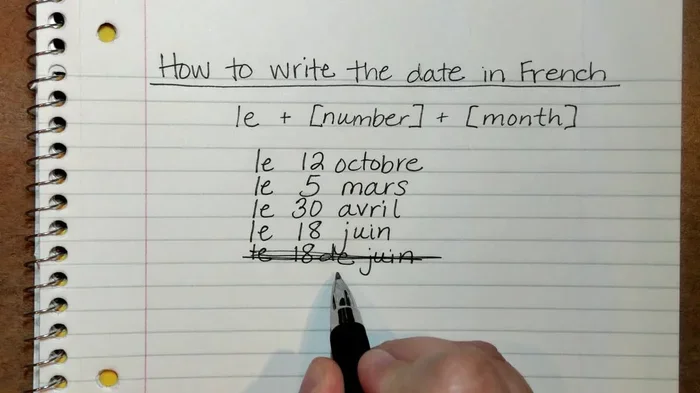
The first thing you need to know is that French dates follow a different order than English dates. In English, we write month-day-year. In French, the order flips to day-month-year. This is called the French date format, and it is used in France and other French-speaking countries.
Here is a simple comparison:
- English format: June 15, 2025
- French format: 15 juin 2025
As you can see, the day comes first in French. This is one of the most important French date conventions to remember. Once you get used to this order, everything else falls into place.
The Role of “Le” in French Dates
In French, you almost always place the word “le” before the date number. “Le” means “the” in English. So instead of just saying “15,” you say “le 15.” This small word changes everything.
For example:
- Le 15 juin 2025 = June 15, 2025
- Le 1er janvier 2026 = January 1, 2026
Using “le” is a basic rule of date expression in French. It makes your speech sound natural and correct. Skipping it can make your French sound awkward or incomplete.
Writing Dates in French: Formal vs. Informal
There are two main ways to write dates in French. The formal style is used in official documents, letters, and professional settings. The informal style is what you use in everyday conversation and text messages.
Formal style:
- Le 15 juin 2025
- Le premier décembre 2025
Informal style (texting):
- 15/06/25
- 01/12/25
When texting a friend, you might use short forms like these. If you are curious about what other abbreviations mean in text, check out Wtw Meaning In Text for more texting shorthand. The key is knowing when to use each style.
Days of the Week and Months in French
To say the date in French, you need to know the days of the week and months. The good news is that most of them look similar to their English versions. The tricky part is that none of them are capitalized in French.
Here are the days of the week:
- Lundi – Monday
- Mardi – Tuesday
- Mercredi – Wednesday
- Jeudi – Thursday
- Vendredi – Friday
- Samedi – Saturday
- Dimanche – Sunday
And here are the months:
- Janvier – January
- Février – February
- Mars – March
- Avril – April
- Mai – May
- Juin – June
- Juillet – July
- Août – August
- Septembre – September
- Octobre – October
- Novembre – November
- Décembre – December
Why Capitalization Matters in French
In English, we always capitalize days and months. In French, you do not. This is one of the first things that trips up English speakers. Remember: “lundi” and “January” are not the same when it comes to capitalization rules.
Also, the week starts on Monday in the French calendar, not Sunday. This is a French cultural difference that affects how dates are written and spoken. If you are learning about French culture, you might also find Funny French Names interesting, as French naming conventions differ from English ones in fun ways.
Putting Days and Dates Together
When you combine the day of the week with the date, you use the preposition “en” or “le.” Here is how it works:
- Lundi le 15 juin = Monday, June 15
- Jeudi le premier mars = Thursday, March 1
This is a common pattern in French date patterns. Once you memorize it, you can build any date in French with confidence.
Ordinal Numbers: The Key to French Dates
Ordinal numbers are the backbone of saying dates in French. In English, we say “first,” “second,” and “third.” In French, you use ordinal numbers like “premier,” “deuxième,” and “troisième.”
The most important one to know is “premier”, which means “first.” You will use it constantly because the first day of every month is always “le premier.”
Here are the ordinal numbers you need:
- Premier – First
- Deuxième – Second
- Troisième – Third
- Quatrième – Fourth
- Cinquième – Fifth
- Sixième – Sixth
- Septième – Seventh
- Huitième – Eighth
- Neuvième – Ninth
- Dixième – Tenth
The Special Case of “Premier”
“Premier” is the only ordinal number that does not end in “e.” All the others do. This is an important French ordinal number rule to remember. It also changes the spelling of the article before it. “Le premier” becomes “la première” when the noun is feminine.
For dates, you will almost always use “le premier” because the date itself is masculine. But when you say “la première fois” (the first time), the feminine form applies.
Abbreviating Ordinal Numbers
In written French, you can abbreviate ordinal numbers with a superscript “e” or “ère.” For example:
- 1er = premier
- 2e = deuxième
- 3e = troisième
This is very common in formal date writing and on calendars. You will see “1er janvier” everywhere in France during the new year.
How to Pronounce French Dates
Pronunciation can make or break your ability to communicate dates in French. The good news is that French date pronunciation follows predictable patterns. Once you learn these, you will not struggle with date pronunciation in French.
Here are some key pronunciation tips:
- Numbers ending in “e”: In spoken French, the final “e” in ordinal numbers is usually silent. So “premier” sounds like “prem-ee-ay” but the final “r” is soft.
- Months are not stressed: Each month gets equal emphasis. Do not stress the first syllable more than the rest.
- Linking sounds: French speakers link words together. “Le quinze juin” sounds like “luh kanzh zhwan” with smooth transitions.
Quick Tips for Better Pronunciation
- Listen to native speakers saying dates on French news channels.
- Practice saying today’s date out loud every morning.
- Record yourself and compare with native pronunciation.
- Use language apps that focus on date expression.
The more you practice, the more natural it will feel. Date pronunciation improves fast with daily repetition.
Common Mistakes When Saying Dates in French
Even advanced learners make mistakes with French dates. Knowing what to avoid can save you from embarrassing errors. Here are the most common French date mistakes to watch out for.
Mistake 1: Using the Wrong Order
The biggest mistake is putting the month before the day. Remember: in French, the day always comes first. Saying “juin 15” instead of “15 juin” is a dead giveaway that you are not a native speaker.
Mistake 2: Capitalizing Days and Months
As mentioned earlier, days and months are lowercase in French. Writing “Lundi 15 Juin” instead of “lundi 15 juin” is incorrect. Keep them small unless they start a sentence.
Mistake 3: Forgetting “Le”
Skipping “le” before the date number is a common error. Always include it unless you are in a very casual texting situation where numbers alone work.
Mistake 4: Confusing Ordinal Numbers
French ordinal numbers follow different rules than English ones. “Premier” is irregular, and some numbers like “vingtième” (twentieth) can be tricky. Double-check your ordinals when writing formal dates.
Mistake 5: Using “et” Instead of the Correct Format
Some learners try to say “le quinze et juin” (the fifteenth and June). This is wrong. The correct form is “le quinze juin” with no “et” between the day and month.
Quick Tips and Practical Examples
Now that you know the rules, let us put them into practice. Here are some quick tips and real-life examples to help you master how to say the date in French.
Tip 1: Practice with Today’s Date
Every morning, try to say today’s date in French. Write it down and say it out loud. This simple habit builds fluency fast.
For example, if today is April 22, 2025:
- Written: Le 22 avril 2025
- Spoken: Luh vingt-deux avril deux mille vingt-cinq
Tip 2: Use the 24-Hour Clock for Times with Dates
When you mention a date and time together, French people use the 24-hour clock. So “3:00 PM” becomes “15 heures.” This is important for formal date and time expression in French.
Tip 3: Learn the Abbreviations
In informal settings, French people use short date formats:
- JJ/MM/AA = Day/Month/Year
- 01/12/25 = December 1, 2025
This is similar to how people text date abbreviations in English. If you are curious about how abbreviations work in different languages, you might also enjoy learning about Ts Meaning In Text to see how texting language varies across cultures.
Tip 4: Master the Prepositions
Prepositions are small words that make a big difference. In French dates, “le” is your best friend. When talking about recurring events, you use “en” for months and years:
- En juillet = In July
- En 2025 = In 2025
- Le cinq mai = May 5th
Getting the prepositions right shows a strong command of French language basics and date conventions.
Putting It All Together
Let us review a full date from start to finish. Here is how you construct a French date step by step:
- Start with “le” (the).
- Add the day number using the correct ordinal form.
- Add the month in lowercase.
- Add the year.
Example: Le vingt-cinq décembre deux mille vingt-cinq = December 25, 2025.
That is it! You now know how to say the date in French for any day of the year. The more you practice, the faster and more natural it becomes.
Remember that French date expression follows clear and logical rules. Once you internalize the day-month-year order, the use of ordinal numbers, and the preposition “le,” you will never second-guess yourself again.
Conclusion
Learning how to say the date in French is a fundamental skill for anyone studying the language. The French date format, ordinal numbers, days, months, and prepositions all work together in a logical system. Once you understand the basics, you can handle any date situation with confidence.
Start by practicing today’s date every day. Pay attention to pronunciation and avoid the common mistakes we covered. Over time, expressing dates in French will feel automatic and natural.
The key is consistency and practice. Use these tips, build your vocabulary, and soon you will be saying dates in French like a native speaker. Bonne chance!
Frequently Asked Questions
What is the standard French date format?
The standard French date format is day-month-year, written as “le [day] [month] [year].” For example, “Le 15 juin 2025” means June 15, 2025. The day always comes first, followed by the month and then the year.
Do you capitalize days and months in French?
No, days and months are not capitalized in French. Unlike English, where “January” and “Monday” are always capitalized, French keeps them lowercase: “janvier” and “lundi.” This is one of the key differences in French date conventions.
What is the French word for “first” in dates?
The French word for “first” in dates is “premier.” You will use it for the first day of every month, as in “le premier janvier” for January 1st. It is the most important ordinal number for French date expression.
How do you pronounce French dates?
French date pronunciation follows smooth, linked sounds. Say “le” softly, pronounce the number clearly, and flow into the month name. Practice listening to native speakers to pick up the natural rhythm and linking between words.
What preposition is used before months and years in French?
The preposition “en” is used before months and years in French. For example, “en juillet” means “in July” and “en 2025” means “in 2025.” The preposition “le” is used before the specific day number in a full date.
How do French people write dates in informal settings?
In informal settings, French people often use the short numeric format JJ/MM/AA, which stands for jour/mois/année (day/month/year). For example, “15/06/25” means June 15, 2025. This is similar to how date abbreviations work in texting and casual communication.