
Need to know how to say V in Spanish? This guide breaks down the Spanish V pronunciation step by step, covering everything from letter sounds to common mistakes you should avoid. Whether you are a beginner or brushing up on your Spanish language skills, you will master the V sound quickly and confidently. The Spanish V is softer than the English V and closer to the letter B, and this guide shows you exactly how to get it right.
Key Takeaways
- The Spanish V sounds like a soft B: Unlike English, the V in Spanish is pronounced almost identically to the letter B. Both lips come together gently, and your vocal cords vibrate.
- Do not use the English V sound: Avoid pressing your lower lip against your upper teeth. This creates an English V sound that does not exist in Spanish.
- Keep it light and gentle: The Spanish V should never be forceful or aggressive. Think of it as a soft, quiet sound.
- B and V are phonetically identical in Spanish: Native speakers do not distinguish between these two letters. They sound exactly the same in every position.
- Practice daily for best results: Short, consistent practice sessions are far more effective than occasional long ones.
- Real-world usage matters: The letter V appears in everyday slang, texting abbreviations, and casual conversation. Understanding these contexts helps you sound more natural.
📑 Table of Contents
What Does the Letter V Sound Like in Spanish?
Here is a question that trips up almost every English speaker learning Spanish. The letter V looks simple enough on paper. But its pronunciation in Spanish is quite different from how you say it in English. This is one of those Spanish pronunciation details that can make a huge difference in how native speakers perceive your fluency.
In English, the V sound comes from pressing your lower lip against your upper teeth and letting air vibrate. This is called a labiodental fricative. But in Spanish, the V sound is much closer to the letter B. That is right. When a Spanish speaker says the word “vaca” (cow), it sounds almost exactly like “baca.”
This similarity between B and V is one of the biggest Spanish pronunciation challenges for English speakers. The good news is that once you understand the basic mechanics, it becomes much easier. You are not alone if this has confused you. Almost every learner of Spanish as a second language has stumbled over this at some point.
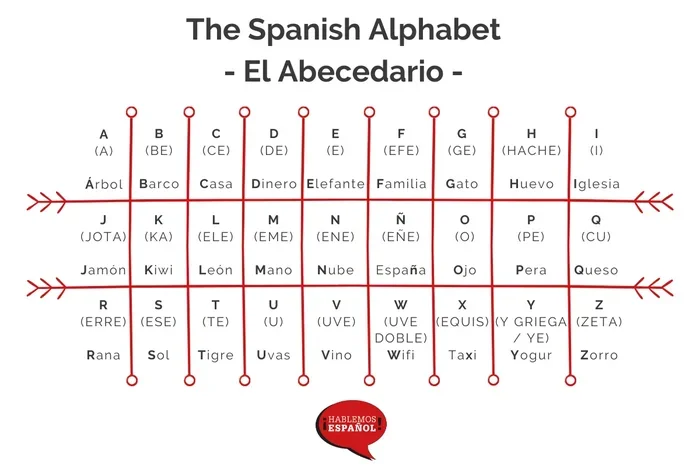
The Spanish V belongs to the Spanish alphabet, which has 27 letters. The extra letter is the Ñ. Each letter has a specific sound, and V is no exception. Let us break down exactly how to produce this sound correctly.
The Soft B-Like Sound
The Spanish V is a voiced bilabial stop. That means both lips come together briefly, and your vocal cords vibrate. It is softer than the English B, though. Think of it as a gentle press of the lips, not a hard burst of air.
Here is a simple way to practice. Place your lips together. Now say a soft “b” sound. That is very close to the Spanish V. Your lips should touch lightly. There should be no puff of air. The sound comes from your throat, not from your lips pushing air out. This articulation technique is the foundation of correct V pronunciation.
Another way to think about it is to whisper the word “very” in English. Notice how your lips barely touch? That soft, gentle quality is exactly what you want for the Spanish V. It should feel effortless. If your jaw or lips feel tense, you are probably using too much force.
How to Pronounce the Spanish V Correctly
Now that you understand what the V sounds like, let us walk through the actual pronunciation steps. Breaking it down into small actions makes it much easier to practice and remember.
- Relax your lips and jaw. Tension is the enemy of good pronunciation.
- Bring both lips together gently. Do not press hard.
- Turn on your voice. Your vocal cords should vibrate.
- Release the lips softly. Do not let air escape forcefully.
- Practice with simple words like “vino” (wine) or “vida” (life).
That is it. Five simple steps. The key is keeping everything relaxed. Many learners overthink the V sound and end up adding too much force. Remember, the Spanish V is gentle and soft. It should never sound harsh or sharp.
Practice Words for the V Sound
Here are some common Spanish words that start with V. Try saying each one slowly and focus on keeping the sound soft and consistent.
- Vaso (glass) – pah-soh
- Vela (candle) – beh-lah
- Vivo (alive) – bee-voh
- Voz (voice) – bohs
- Valle (valley) – bah-yeh
- Viernes (Friday) – bee-air-nes
- Vuelo (flight) – bweh-loh
Notice how each word starts with a soft B-like sound. That is the correct way to pronounce V in Spanish. Do not try to make the English V sound. It will sound unnatural to native speakers. These pronunciation guide words are excellent starting points for daily practice.
V in the Middle and End of Words
The V sound also appears in the middle and end of words. The rules stay the same. For example, “avión” (airplane) has the V sound in the middle. “Cervantes” has it at the end. In every position, the sound remains the same soft B-like quality.
Spanish phonetics are very consistent. Unlike English, where letters can have many different sounds, Spanish follows clear rules. Once you learn the V sound, you can apply it everywhere. This consistency is one of the great advantages of learning Spanish pronunciation. You do not need to memorize dozens of exceptions.
B and V: The Great Confusion in Spanish
One of the most interesting facts about the Spanish language is that B and V share the exact same sound. This is called phonetic equivalence. In English, B and V are completely different letters with different sounds. But in Spanish, they are pronounced identically. This can be a tough concept for English speakers to wrap their heads around.
This might seem confusing at first. How can two different letters sound the same? The answer lies in historical linguistics. In Latin, B and V were pronounced differently. Over centuries, the sounds merged in Spanish. Today, native speakers do not distinguish between them at all.
Why English Speakers Struggle
If you speak English, your brain is wired to hear B and V as different sounds. When you hear a Spanish speaker say “vaca,” your brain might register it as “baca.” This is normal. Your ears need time to adjust to the new phonetic patterns of Spanish.
The best way to overcome this is consistent practice. Listen to native speakers. Repeat words out loud. Record yourself and compare. Over time, your ear will learn to recognize the subtle differences in Spanish letter sounds that make the language unique. Spanish speaking practice with native audio is the fastest path to improvement.
Do Native Speakers Ever Distinguish B and V?
In everyday speech, no. Native speakers pronounce B and V the same way. However, some careful speakers or language purists might slightly differentiate them in very formal contexts. But for practical purposes, they are identical. You do not need to worry about making this distinction.
This also means that spelling in Spanish can sometimes be tricky for learners. If you see a word spelled with V, do not try to give it an English V sound. Always default to the soft B-like pronunciation. This rule applies 100 percent of the time. It is one of the simplest Spanish language tips you will ever receive.
Common Mistakes When Saying V in Spanish
Making mistakes is a natural part of learning any language. But some errors are very common when it comes to the Spanish V. Let us look at the most frequent ones so you can avoid them and sound more natural from day one.
Mistake 1: Using the English V Sound
This is the number one mistake. English speakers tend to use their familiar English V sound when they see the letter V in Spanish. They press their lower lip against their upper teeth and let air vibrate. This sounds very wrong to Spanish ears.
The English V is a fricative sound. It involves friction between the lip and teeth. The Spanish V is a stop sound. The lips come together and release. There is no friction. This difference might seem small, but it changes everything. Native speakers will immediately notice if you use the English V sound. It is one of the most recognizable markers of a non-native speaker.
Mistake 2: Pronouncing V Too Hard
Another common error is adding too much force. Some learners punch the V sound out aggressively. This makes it sound like a hard English B or even a P. The Spanish V should always be light and gentle.
Think of it this way. If you were whispering a word that starts with V, how would you say it? That soft, quiet sound is exactly what you want. No force. No aggression. Just a gentle touch of the lips. This Spanish phonetics principle applies to many sounds in the language. Softness is key.
Mistake 3: Adding an English Glide
In English, the letter V often comes with a slight glide or transition sound. For example, “very” has a smooth onset. Spanish does not work this way. Each letter has one clean sound. The V is just the soft B-like stop. Nothing more.
Avoid adding any extra sounds before or after the V. Keep it clean and simple. This is one of the best Spanish speaking tips you can follow. Clean articulation makes your speech clearer and more professional sounding.
Practice Exercises and Tips for Mastering the V Sound
Knowledge is great. But practice is what actually improves your Spanish pronunciation. Here are some proven exercises to help you master the V sound and build confidence in your speaking ability.
Exercise 1: Lip Placement Drill
Start by just practicing the lip placement. Say the letter B over and over. Feel how your lips come together and release. Now do the same thing, but imagine you are saying V. The motion is identical. The sound is the same. Keep repeating this until it feels natural. Do this for just two minutes a day. You will be surprised at how fast your mouth adjusts.
Exercise 2: Minimal Pair Practice
Minimal pairs are words that differ by only one sound. In Spanish, since B and V sound the same, you can practice words like “barco” (boat) and “varco” (a variant). This helps train your mouth muscles to produce the correct sound consistently. It also builds your Spanish phonetic awareness over time.
Exercise 3: Record and Compare
Use your phone to record yourself saying Spanish words with V. Then listen to a native speaker saying the same words. Compare the two. You will start to notice where your pronunciation differs. This feedback loop is incredibly valuable for language learning progress. Try to do this at least three times per week for the best results.
Exercise 4: Read Aloud
Find a short Spanish text or children’s book. Read it aloud slowly. Focus on every V sound. Make sure each one is soft and gentle. This exercise builds muscle memory for the correct pronunciation. Start with simple texts and gradually move to more complex material as your confidence grows.
Quick Tips for Daily Practice
- Practice for just 5 minutes every day. Consistency beats long sessions.
- Watch Spanish shows or movies and repeat lines out loud.
- Use language apps that have pronunciation exercises built in.
- Find a language partner to practice with regularly.
- Be patient with yourself. Progress takes time and effort.
- Focus on one sound at a time rather than trying to fix everything at once.
V in Everyday Spanish: Texting and Slang
Spanish speakers use the letter V in many interesting ways, especially in texting and casual conversation. The V sound shows up in abbreviations and slang that you will encounter in real-world communication with native speakers.
For instance, many Spanish speakers use abbreviations in text messages that include the letter V. You might see “V” used as a shorthand in casual chats, similar to how English speakers use abbreviations like “LOL” or “BRB.” Understanding these texting abbreviations helps you follow along in digital conversations with native speakers and stay connected in modern communication.
Sometimes you might come across abbreviations where the letter V or similar letters appear in creative ways. For example, WTW meaning in text is one such abbreviation that Spanish speakers may use in bilingual texting contexts. Similarly, TS meaning in text shows how letters get repurposed in informal digital communication among Spanish and bilingual speakers.
These texting patterns are a fun part of modern Spanish communication. They show how the language evolves in digital spaces. If you want to understand casual Spanish conversations online, knowing these abbreviations gives you an edge. It also helps you connect with younger Spanish speakers who use these terms daily.
The letter V also appears in slang expressions. For example, “vaina” is a common informal word in many Spanish-speaking countries. It can mean “thing” or “stuff” depending on the region. Pronouncing it correctly with the soft V-B sound helps you sound more natural in casual settings. Another example is “vale,” which means “okay” or “alright” in many Spanish-speaking countries. You will hear this constantly in everyday conversation.
Mastering these real-world uses of V helps you move beyond textbook Spanish. You start to sound more like a local and less like a student. This is the goal of any serious language learner who wants to communicate authentically and build genuine connections with Spanish speakers.
As you continue your Spanish learning journey, remember that the V sound is just one piece of the puzzle. But it is an important one. Getting it right shows respect for the language and its speakers. It also opens doors to deeper conversations and more meaningful relationships with people from Spanish-speaking communities around the world.
The beauty of learning Spanish is that each small improvement builds on the last. Master the V sound, and you will find that other sounds become easier too. Your confidence will grow. Your conversations will flow more naturally. And people will appreciate the effort you put into speaking their language correctly. Keep practicing, stay curious, and enjoy the journey.
Frequently Asked Questions
Is the Spanish V the same as the English V?
No, the Spanish V is not the same as the English V. In Spanish, the V sounds like a soft B, with both lips coming together gently. The English V involves pressing your lower lip against your upper teeth and creating friction. This is the single biggest difference English speakers need to understand and practice.
Do Spanish speakers pronounce B and V differently?
In everyday speech, no. Spanish speakers pronounce B and V identically. The two letters are phonetically equivalent in Spanish. While some formal or careful speakers might make a tiny distinction, for all practical purposes, they sound exactly the same in every position within a word.
How long does it take to master the Spanish V sound?
This depends on your practice consistency and current level. Most learners notice improvement within two to four weeks of daily practice. The key is short, focused sessions rather than long, infrequent ones. Recording yourself and comparing with native speakers accelerates progress significantly.
Does the V sound change in different Spanish-speaking regions?
No, the V sound remains the same across all Spanish-speaking regions. Whether you are in Spain, Mexico, Argentina, or Colombia, the V is pronounced as a soft B-like sound. This consistency is one of the great advantages of learning Spanish pronunciation.
Can I use the English V sound and still be understood?
You will likely be understood, but using the English V sound marks you as a non-native speaker. Native speakers may find it unusual or distracting. Taking the time to learn the correct Spanish V sound shows respect for the language and helps you sound more natural and fluent in conversations.
What is the easiest way to practice the V sound at home?
The easiest way is to practice the lip placement drill for just five minutes a day. Say the letter B repeatedly, then transition to V using the same soft lip motion. Add recording and comparison with native audio for faster improvement. Consistency and patience are your best tools.
=== CONCLUSION ===
Learning how to say V in Spanish is simpler than it seems. The secret is remembering that the Spanish V sounds like a soft B, not like the English V. Keep your lips gentle, your voice steady, and your practice consistent. Avoid the common mistakes of using too much force or adding English glide sounds.
With the exercises and tips in this guide, you now have everything you need to master this important Spanish pronunciation skill. Practice the words, record yourself, and compare with native speakers. Over time, the V sound will become second nature.
Remember that B and V are the same in Spanish. This knowledge alone will save you from many pronunciation pitfalls. And as you explore real-world Spanish, from texting abbreviations like WTW meaning in text to everyday slang, you will see how the letter V fits naturally into the living, breathing language.
So go ahead. Practice your V sounds today. Speak with confidence. And enjoy the rewarding journey of learning Spanish pronunciation. Every soft B-like V you say brings you one step closer to sounding like a true Spanish speaker.



