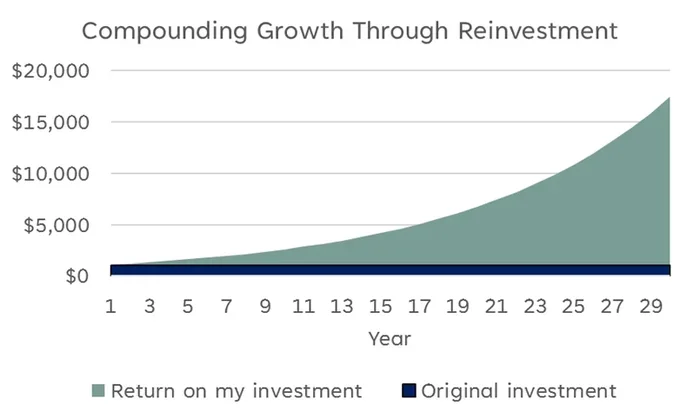

The irr meaning stands for Internal Rate of Return, a key financial metric that helps investors measure how profitable an investment might be. It tells you the annual growth rate your money could earn over time. Understanding irr meaning gives you the power to compare projects, evaluate deals, and make smarter financial decisions with confidence.
Key Takeaways
- Irr meaning: Internal Rate of Return measures the annual profitability of an investment as a percentage.
- Simple concept: It finds the discount rate that makes the net present value of all cash flows equal to zero.
- Why it matters: Investors use irr meaning to compare different opportunities side by side.
- Real estate and business: IRR is widely used in real estate investing, private equity, and capital budgeting decisions.
- Common mistakes: Assuming IRR works perfectly for every situation can lead to bad decisions. Always pair it with other metrics.
- Hurdle rate comparison: A good IRR should beat your required rate of return or cost of capital.
- Time value of money: IRR accounts for the fact that money today is worth more than money tomorrow.
📑 Table of Contents
What Does Irr Mean?
Let us start with the basics. The irr meaning is Internal Rate of Return. It is a financial term that describes the annual rate at which an investment grows. You might also hear people call it the IRR discount rate.
When you invest money, you want to know if it is worth it. IRR gives you one clear number that answers that question. It tells you the percentage your money is expected to earn each year over the life of the investment.
Think of it this way. You put money into something today. That investment pays you back over time through cash flows. Irr meaning is the rate at which all those future payments equal your original investment in today’s dollars.
It is one of the most popular tools in capital budgeting. Companies and individuals use it to decide where to put their money. Whether it is a new project, a real estate deal, or a stock, IRR helps you weigh the options.
The beauty of IRR is that it simplifies complex financial data into a single percentage. Instead of looking at dozens of cash flow numbers, you get one easy-to-understand figure. That is why so many investors love it.
Irr Definition in Plain English
Here is a simple IRR definition. The internal rate of return is the interest rate that makes the net present value of all cash flows from an investment equal to zero. Let us break that down.
Net present value, or NPV, is the total value of future cash flows in today’s money. When you set that total to zero, the rate you find is the IRR. It sounds technical, but the idea is straightforward.
Imagine you invest 10,000 dollars today. Over five years, you get paid back. Irr meaning tells you what yearly return those payments represent in today’s dollars. It factors in the time value of money, which means a dollar today is worth more than a dollar tomorrow.
So when someone asks, “What is the irr meaning?” you can say, “It is the annual growth rate that makes an investment break even when you account for the value of money over time.” That is it in a nutshell.
How Irr Works in Simple Terms
Understanding how IRR works does not require a finance degree. Let us walk through it step by step. The core idea behind irr meaning is comparison.
When you evaluate an investment, you look at two things. First, how much money you put in. Second, how much money you get back over time. IRR connects these two pieces and gives you a percentage.
For example, say you invest in a rental property. You pay 200,000 dollars upfront. Each year, you collect rent. Over ten years, you sell the property for a profit. IRR calculates what your average annual return was on that 200,000 dollars.
The calculation considers every cash flow. That includes money going out and money coming in. It also accounts for the timing of each payment. Money you receive sooner is worth more than money you receive later. This is the time value of money at work.
IRR uses this principle to give you a fair picture. It does not just add up total returns. It looks at when those returns happen. That is what makes it more powerful than a simple average return.
The Role of Cash Flow in Irr
Cash flow is the heartbeat of IRR. Without cash flows, there is no IRR to calculate. Every payment in or out matters.
Positive cash flows come in when you receive money. Think rental income, dividends, or sale proceeds. Negative cash flows go out when you spend money. Think of your initial investment or ongoing costs like maintenance.
The IRR formula balances these flows. It finds the rate where the present value of all inflows equals the present value of all outflows. When that balance is reached, the net present value is zero.
This is why IRR is so useful for investment returns analysis. It gives you a complete picture of how money moves in and out of a deal over time.
The Irr Formula Explained
You do not need to be a math expert to grasp the IRR formula. But knowing the basics helps you understand what is happening behind the scenes.
The IRR formula sets the net present value of all cash flows equal to zero. It looks like this in its simplest form:
Zero equals the sum of each cash flow divided by (1 plus IRR) raised to the power of its time period. You solve for IRR, and that is your answer. In practice, most people use Excel or a financial calculator to find it.
The formula uses a discount rate concept. The discount rate is the rate at which future money is worth less than today’s money. IRR finds the specific rate where the present value of future cash flows matches your initial investment.
Here is a quick tip. When you type =IRR(values) into Excel, the software does all the heavy lifting. You just need to list your cash flows in order. The first value is usually negative because it is your initial investment.
Understanding the Discount Rate
The discount rate is a key concept in irr meaning. It represents the cost of capital or the minimum return you expect. Also called the hurdle rate, it is your benchmark.
If your IRR is higher than your hurdle rate, the investment looks good. If it is lower, you might want to pass. This comparison is at the heart of smart capital budgeting.
Different investors use different hurdle rates. A conservative investor might set theirs at 10 percent. A risk-tolerant investor might accept 6 percent. Your hurdle rate depends on your goals, risk tolerance, and alternative opportunities.
So irr meaning is not just about the number itself. It is about how that number compares to your personal or business standards. That comparison drives real decisions.
Irr Vs Npv: Key Differences
IRR and NPV are two of the most common investment evaluation tools. They work together but serve different purposes. Understanding both makes you a stronger investor.
Net present value tells you the dollar amount an investment is worth today. It shows the absolute value of future cash flows in today’s terms. IRR tells you the percentage rate of return. Both use the same inputs but give different outputs.
Here is a simple way to think about it. NPV answers, “How much value will this create?” IRR answers, “What percentage return will I earn?” Both are useful, but they answer different questions.
When to Use Irr vs Npv
Use IRR when you want a quick percentage to compare projects. It is great for ranking investments side by side. Use NPV when you want to know the actual dollar value an investment adds.
In practice, smart investors use both. IRR gives you the big picture. NPV gives you the precise numbers. Together, they provide a complete view of an investment’s potential.
One limitation of IRR is that it assumes you reinvest cash flows at the same rate. NPV does not have this assumption. That is why some analysts prefer NPV for very long-term projects.
Still, irr meaning remains one of the most widely used metrics in finance. It is quick, intuitive, and easy to communicate. Most investors and business leaders understand it instantly.
Why Irr Matters for Investors
IRR matters because it helps you make better investment choices. Without it, you would be guessing. With it, you have data to back up your decisions.
Here are the main reasons irr meaning is so important for investors:
- Easy comparison: You can compare very different investments using one percentage number.
- Time aware: It accounts for the timing of cash flows, not just the total amounts.
- Universal language: Investors, lenders, and partners all understand what IRR means.
- Goal setting: It helps you set and measure return targets for your portfolio.
- Risk assessment: A higher IRR often signals a better risk-adjusted return.
- Decision making: It gives you a clear yes-or-no signal when compared to your hurdle rate.
When you understand irr meaning, you stop relying on gut feelings. You start using numbers. That shift changes everything about how you invest.
Irr in Real Estate Investing
IRR is huge in the real estate world. Investors use it to evaluate rental properties, development projects, and commercial deals. It is practically the standard metric in the industry.
When you look at a real estate deal, the sponsor will likely share the projected IRR. This number tells you what kind of annual return the deal expects to deliver. For example, a deal with a projected 15 percent IRR looks very attractive compared to one at 8 percent.
Real estate investments involve large sums and long time horizons. IRR handles both of those factors well. It captures the timing of rental income, mortgage payments, and eventual sale proceeds.
Many investors also compare IRR with the equity multiple. The equity multiple tells you how many times your money is returned. A deal might offer a 2.0x equity multiple and a 12 percent IRR. Together, these numbers paint a full picture.
So if you are exploring real estate investing, learning irr meaning is essential. It is one of the first metrics you should understand before committing capital.
Irr in Private Equity and Venture Capital
Private equity and venture capital firms live and breathe IRR. They use it to track the performance of their funds and individual investments. Limited partners, or LPs, often ask for IRR numbers before committing money.
In these industries, deals can take years to mature. IRR smooths out the timeline and shows the annualized return. This makes it easier to compare investments with different holding periods.
A venture capital firm might report a fund IRR of 25 percent. That does not mean every investment returned 25 percent per year. It means the blended annual return across all investments in the fund was 25 percent.
This is why irr meaning is so powerful in these contexts. It turns complex, long-term investment data into a single, comparable number.
Common Mistakes People Make With Irr
Even though IRR is a powerful tool, it has pitfalls. Many people make mistakes when using it. Knowing these mistakes helps you avoid them.
Here are the most common errors investors make with IRR:
- Assuming higher IRR is always better: A higher number does not always mean a better deal. Look at the scale and risk too.
- Ignoring the reinvestment assumption: IRR assumes you reinvest cash flows at the same rate. In reality, that may not happen.
- Using it alone: IRR should never be your only metric. Always pair it with NPV, payback period, and other tools.
- Comparing apples to oranges: Do not compare IRR from a one-year investment to a ten-year investment without considering the time difference.
- Overlooking scale: A small investment with a high IRR might make less total money than a large investment with a lower IRR.
- Ignoring negative cash flows: If a project has multiple phases of spending, IRR can give misleading results.
The biggest mistake is treating irr meaning as a magic number. It is a tool, not a crystal ball. Use it wisely alongside other analysis methods.
When Irr Can Be Misleading
IRR can mislead you in specific situations. One common case is when cash flows change direction multiple times. This creates what is called “multiple IRRs.”
Another issue is when comparing projects of very different sizes. A 50 percent IRR on a 1,000 dollar investment is exciting. But a 15 percent IRR on a 1 million dollar investment might create far more total wealth.
This is why understanding irr meaning goes beyond just knowing the formula. You need the judgment to interpret the results in context. Always look at the full financial picture before making a decision.
Irr in Business and Capital Budgeting
Businesses use IRR every day to decide where to invest. Whether it is a new factory, a marketing campaign, or a technology upgrade, IRR helps leaders choose the best options.
The process is called capital budgeting. Companies list all potential projects. They calculate the IRR for each one. Then they rank the projects and pick the ones with the highest returns.
Most companies set a minimum IRR threshold. This is often their hurdle rate or cost of capital. Any project with an IRR above that threshold gets approved. Projects below it get rejected.
This system keeps businesses focused on value creation. It prevents them from wasting resources on projects that do not meet their return goals. Understanding irr meaning is just as important for business leaders as it is for individual investors.
Irr and the Time Value of Money
The time value of money is a foundational concept behind irr meaning. It states that money available today is worth more than the same amount in the future. Why? Because you can invest today’s money and earn a return.
IRR builds on this principle. It discounts future cash flows back to their present value. Then it finds the rate that balances those discounted values with your initial investment.
This is what makes IRR superior to simple return calculations. A simple return ignores timing. IRR captures it. That is why financial professionals rely on it for serious analysis.
Next time you hear someone talk about irr meaning, you will know they are referring to a method that respects the timing of every dollar in and out of an investment.
How to Calculate Irr Step by Step
Calculating IRR by hand is very difficult. But using tools makes it simple. Here is how you do it in practice.
Step 1: List all cash flows in chronological order. The first entry is your initial investment, and it should be negative. Then list all expected inflows for each period.
Step 2: Open Excel or Google Sheets. In a cell, type =IRR(A1:A10) where A1 through A10 contain your cash flow values.
Step 3: Press Enter. Excel will calculate the IRR and display it as a percentage. Format the cell as a percentage to see it clearly.
Step 4: Compare the result to your hurdle rate. If the IRR is higher, the investment looks promising. If it is lower, you may want to look elsewhere.
Here is a quick example. Your initial investment is negative 50,000 dollars. Year 1 cash flow is 10,000 dollars. Year 2 is 15,000 dollars. Year 3 is 20,000 dollars. Year 4 is 25,000 dollars. The IRR for this series is approximately 10.5 percent.
That means your investment earns about 10.5 percent per year on average. If your hurdle rate is 8 percent, this looks like a solid investment.
Quick Tips for Using Irr
- Always double-check your cash flow entries. One wrong number changes everything.
- Use the XIRR function in Excel when cash flows occur at irregular intervals.
- Remember that IRR is an annualized rate. It does not tell you the total return over the full period.
- Combine IRR with NPV for the most complete analysis possible.
- When in doubt, consult a financial advisor or use multiple evaluation methods.
Key Takeaways
- Irr meaning: Internal Rate of Return measures the annual profitability of an investment as a percentage.
- Simple concept: It finds the discount rate that makes the net present value of all cash flows equal to zero.
- Why it matters: Investors use irr meaning to compare different opportunities side by side.
- Real estate and business: IRR is widely used in real estate investing, private equity, and capital budgeting decisions.
- Common mistakes: Assuming IRR works perfectly for every situation can lead to bad decisions. Always pair it with other metrics.
- Hurdle rate comparison: A good IRR should beat your required rate of return or cost of capital.
- Time value of money: IRR accounts for the fact that money today is worth more than money tomorrow.
Conclusion
Irr meaning is one of the most valuable concepts in finance. It gives investors, business owners, and anyone making financial decisions a clear way to measure and compare returns. From real estate deals to private equity funds, IRR plays a central role in how smart people allocate their capital.
Understanding irr meaning does not require a finance background. With the basics covered in this guide, you now know what IRR is, how it works, and why it matters. You also know the common pitfalls to avoid and how to use it alongside other metrics like NPV and the hurdle rate.
The next time you evaluate an investment, look for the IRR. It will give you a quick, powerful snapshot of what you might earn. But remember, no single metric tells the whole story. Use IRR as part of a broader analysis, and you will make far better decisions.
Start applying irr meaning to your own financial choices today. Whether you are investing in property, stocks, or a business venture, this metric can help you separate the good opportunities from the great ones. Knowledge is power, and now you have a powerful tool in your toolkit.
Frequently Asked Questions
What is the irr meaning in finance?
In finance, irr meaning stands for Internal Rate of Return. It is the annualized percentage rate at which an investment grows, calculated by finding the discount rate that makes the net present value of all cash flows equal to zero. It is widely used to evaluate and compare investment opportunities.
How is irr different from roi?
ROI, or Return on Investment, measures total gain relative to cost. IRR measures the annualized growth rate over time. ROI does not account for the timing of cash flows, while IRR does. This makes IRR more precise for long-term investments with multiple cash flow periods.
What is a good irr percentage?
A good IRR depends on your hurdle rate, which is your minimum acceptable return. Many investors consider an IRR above 10 to 15 percent strong for most deals. However, what is “good” varies based on risk, industry, and your personal financial goals. Always compare IRR to your specific benchmarks.
Can irr be negative?
Yes, IRR can be negative. This happens when the investment loses money overall or when the cash outflows exceed the inflows. A negative IRR is a clear signal that the investment is not performing well. You should avoid or reconsider any project with a negative IRR unless there are strategic reasons beyond pure financial return.
What tools can I use to calculate irr?
Excel and Google Sheets both have built-in IRR functions. You simply list your cash flows and use the =IRR() formula. Financial calculators and dedicated investment software also support IRR calculations. For irregular cash flow timing, use the XIRR function instead of the standard IRR function.
Why do real estate investors use irr so much?
Real estate investors use IRR because it captures the full timeline of a deal. Rental income, expenses, and eventual sale proceeds all factor in. IRR gives a single annualized number that is easy to compare across different properties and deals. It has become the standard language in real estate investing for a reason.



