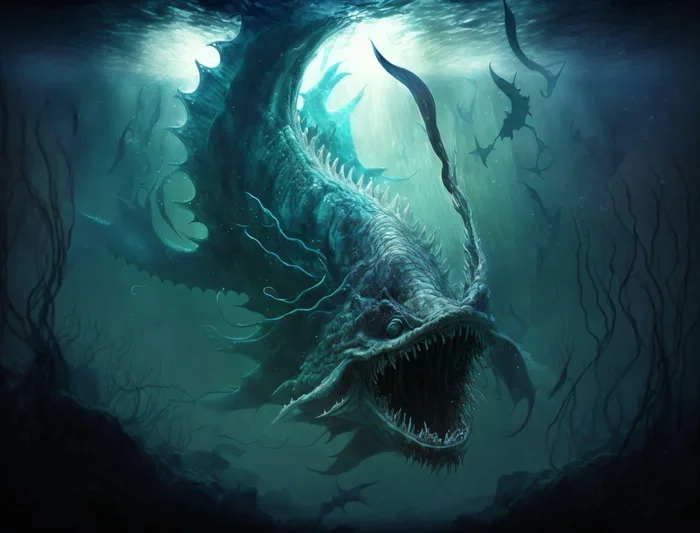

The leviathan meaning traces back to ancient biblical texts, where it described a massive sea creature symbolizing chaos and power. Today, the word carries rich layers of symbolism in literature, politics, and everyday language. This guide breaks down every aspect of the word so you understand it fully.
You have probably heard the word leviathan before. Maybe you saw it in a book, a movie, or even a news article. But what does it really mean? Where did this word come from? And why do people still use it today? This guide answers all of those questions and more.
The leviathan meaning has evolved over thousands of years. What started as a description of a mythical sea creature in ancient texts now represents something much bigger. It stands for power, chaos, fear, and the things we cannot control. Whether you are a writer, a student, or just someone curious about words, understanding this term opens up a whole new world of meaning.
In this article, we will explore the leviathan origin, its role in the Bible, its place in literature, its political uses, and how people use it in everyday conversation. By the end, you will have a deep and clear understanding of what this word truly means. Let us dive right in.
Key Takeaways
- Biblical roots: The leviathan meaning originates from the Hebrew Bible, particularly the Book of Job, where it represents a powerful sea creature.
- Literary significance: Authors like Herman Melville and Thomas Hobbes used the word to explore themes of power, chaos, and the unknown.
- Political metaphor: Hobbes famously used “leviathan” to describe the state as a powerful entity that controls society.
- Symbolic depth: The word carries meanings of fear, strength, the unconscious mind, and untamable natural forces.
- Modern usage: People use “leviathan” today to describe anything enormous, overwhelming, or uncontrollable.
- Etymology matters: Understanding the word’s origin helps you use it more accurately and with greater depth.
- Pop culture presence: Leviathans appear in movies, games, and books, keeping the word relevant in contemporary culture.
📑 Table of Contents
- What Is the Leviathan Meaning?
- The Biblical Origins of Leviathan
- Leviathan in Literature and Pop Culture
- Leviathan as a Political Metaphor
- The Symbolic and Spiritual Meaning of Leviathan
- How to Use Leviathan in Everyday Conversation
- Leviathan in the Bible vs. Modern Usage
- Why the Leviathan Meaning Matters Today
What Is the Leviathan Meaning?
The leviathan definition is not simple. That is because the word has many layers. At its core, a leviathan refers to a huge, powerful creature, often associated with the sea. But the meaning goes far deeper than that.
In its most basic sense, leviathan describes something enormous and intimidating. It can refer to a real animal, like a giant whale or a massive sea creature. It can also refer to something abstract, like a huge corporation, a powerful government, or an overwhelming force in your life.
The word carries a sense of awe and fear. When people use it, they are usually talking about something that feels impossible to control. That emotional weight is part of what makes the leviathan meaning so powerful and lasting.
The Etymology of Leviathan
The word comes from the Hebrew term “livyatan.” In ancient Hebrew, this word referred to a sea monster or a great sea creature. The root meaning is tied to the idea of something that coils or twists, much like a serpent or a large sea animal.
Over time, the word traveled through other languages. It appeared in Greek and Latin texts before making its way into English. Each culture that borrowed the word added its own layer of meaning. By the time it reached modern English, it had become a rich symbol with many interpretations.
Understanding the leviathan etymology helps you appreciate why the word feels so ancient and weighty. It is not just a modern invention. It carries thousands of years of human storytelling and imagination.
The Biblical Origins of Leviathan
The most famous references to the leviathan meaning come from the Bible. In particular, the Book of Job describes this creature in vivid detail. The passages paint a picture of something terrifying and magnificent at the same time.
Leviathan in the Book of Job
In the Book of Job, God describes the leviathan to remind Job of His power. The creature is portrayed as unstoppable. It has scales that no weapon can pierce. It breathes fire. It moves through the sea with terrifying strength.
God asks Job if he can capture or tame the leviathan. The answer is clearly no. This passage uses the creature to represent the limits of human power compared to divine power.
Many scholars believe the biblical leviathan was inspired by real animals or ancient sightings of large sea creatures. Others see it as purely symbolic. Either way, its role in the Bible is central to understanding the word today.
Other Biblical References
The word appears in several other places in the Hebrew Bible. In Psalm 74, God is praised for defeating the leviathan. In Isaiah 27, it is described as a twisting serpent of the sea.
These references reinforce the idea that the leviathan represents chaos and disorder. In the biblical worldview, God tames this chaos. The creature becomes a symbol of the wild, untamable forces of nature that only the divine can control.
The Sea Monster Connection
Many ancient cultures had stories of giant sea monsters. The leviathan sea monster idea connects to similar creatures in other traditions. Mesopotamian myths featured Tiamat, a chaos dragon of the sea. Canaanite stories had Lotan, a seven-headed sea serpent.
These parallels show that the leviathan origin is part of a broader human tradition of storytelling about the unknown dangers of the deep ocean. The sea was mysterious and deadly to ancient people. The leviathan became the perfect symbol for that fear and respect.
Leviathan in Literature and Pop Culture
The leviathan meaning has inspired writers and creators for centuries. From ancient texts to modern movies, this creature continues to capture the imagination.
Herman Melville and Moby-Dick
One of the most famous uses of the word in literature comes from Herman Melville’s Moby-Dick. While the white whale is not explicitly called a leviathan, the novel draws heavily on the idea of an unstoppable force of nature. The whale represents something vast and mysterious that humans cannot fully understand or control.
Melville used the concept of a leviathan whale to explore themes of obsession, fate, and the limits of human knowledge. The book remains one of the greatest American novels, and its connection to the leviathan idea is a big part of why it resonates so deeply.
Modern Movies and Television
You can find the leviathan creature in many modern films and shows. Movies like Pacific Rim feature massive kaiju-like monsters that fit the leviathan archetype perfectly. The Marvel Cinematic Universe includes leviathans as powerful alien beings.
In the TV show Supernatural, leviathans are ancient and terrifying monsters. In the game World of Warcraft, they appear as enormous sea beasts. These modern portrayals keep the leviathan meaning alive in popular culture.
The Leviathan in Video Games
Video games have embraced the leviathan concept in exciting ways. Many games feature leviathan bosses that players must defeat. These creatures are often the biggest and most challenging enemies in the game.
Games like Final Fantasy, Subnautica, and Dark Souls all use leviathan-like creatures. They tap into the same primal fear of the deep ocean and the unknown that has fascinated humans for millennia.
Leviathan in Mythology and Ancient Mythology
Beyond the Bible, the leviathan mythological concept appears in many cultures. Norse mythology has Jormungandr, the world serpent that encircles the entire earth. Greek mythology has the sea serpent Python and the whale-like Cetus.
These creatures share common traits with the leviathan. They are huge. They live in or near the sea. They represent forces that humans cannot easily defeat. This cross-cultural pattern shows how deeply the idea of the great sea monster is embedded in human storytelling.
Leviathan as a Political Metaphor
The leviathan meaning took a major turn in the 1600s. The philosopher Thomas Hobbes used the word to describe the state and government in a very specific way.
Thomas Hobbes and the Leviathan
In 1651, Hobbes published a book simply titled Leviathan. In it, he argued that without a strong central authority, human life would be “solitary, poor, nasty, brutish, and short.” To avoid this chaos, people give up some freedoms to a powerful ruler or government.
Hobbes called this powerful state the leviathan. Just like the biblical creature, the state is something enormous and overwhelming. It protects people from the chaos of nature but also demands absolute obedience. The political leviathan became a lasting metaphor for government power.
The Leviathan as a Symbol of Power
Today, people still use “leviathan” to describe powerful institutions. A large corporation might be called a corporate leviathan. A dominant country might be described as a geopolitical leviathan. The word instantly conveys a sense of immense size and influence.
The leviathan political metaphor works because the word already carries connotations of power, fear, and something that cannot be easily challenged. When someone calls a company or government a leviathan, they are saying it is too big and too strong to ignore or resist.
Modern Uses of the Political Metaphor
You will hear the word used in discussions about big tech, big pharma, and large financial institutions. People use it to express concerns about concentration of power. The leviathan symbolism in politics reminds us that great power requires great responsibility.
It also serves as a warning. When a leviathan grows too powerful, it can crush the people it is supposed to protect. This tension between protection and control is at the heart of the political leviathan idea.
The Symbolic and Spiritual Meaning of Leviathan
Beyond the Bible and politics, the leviathan meaning carries deep symbolic weight. People have interpreted the creature in many different ways over the centuries.
Leviathan as a Symbol of Chaos
In many traditions, the leviathan represents chaos and disorder. It is the force that threatens to destroy order and civilization. The creature lives in the deep, dark ocean, far from human control.
This chaotic symbolism connects to the idea of the unconscious mind. The deep sea represents the parts of our psyche that we cannot see or easily understand. The leviathan becomes a metaphor for the wild, untamed aspects of human nature.
Leviathan in Spiritual and Religious Contexts
In Jewish mysticism, the leviathan has a more positive role. Some traditions believe that in the future, God will slay the leviathan and serve it as a feast to the righteous. In this interpretation, the creature transforms from a symbol of chaos into a source of blessing.
Christian interpretations sometimes view the leviathan as a symbol of Satan or evil forces that God ultimately defeats. The spiritual symbolism of the leviathan varies widely depending on the tradition and the text.
The Leviathan as a Representation of Fear
At a personal level, the leviathan can represent the fears that feel overwhelming in your life. Maybe it is a health challenge, a financial problem, or a relationship that feels impossible to fix. Calling something your personal leviathan gives it a name and a shape.
And naming something is often the first step toward facing it. The leviathan meaning in this personal context is about acknowledging the things that scare us most and finding the courage to deal with them.
Leviathan in Dreams and the Unconscious
Some people report dreaming of a leviathan or a great sea creature. In dream interpretation, such a vision often points to something overwhelming in the dreamer’s waking life. It could be a repressed emotion, a looming challenge, or a feeling of being out of control.
The leviathan dream meaning is worth exploring if you have had such a dream. It might be your subconscious mind telling you that something big needs your attention.
How to Use Leviathan in Everyday Conversation
Now that you understand the deep leviathan meaning, you might wonder how to use the word in your own life. Here are some practical tips.
Describing Something Enormous
The simplest way to use the word is to describe something very large or powerful. You might say, “That new shopping mall is a real leviathan.” Or, “The company grew into a corporate leviathan over the past decade.”
This usage works well in casual conversation and in writing. It adds color and vividness to your descriptions. People will immediately understand that you are talking about something impressively big.
Using It as a Metaphor
The word shines when used as a metaphor. Instead of saying “the problem is very big,” you could say “the problem is a leviathan.” This makes your language more expressive and memorable.
Writers especially benefit from using this word in essays, stories, and articles. It adds a layer of depth and cultural resonance that simpler words cannot match.
Common Mistakes to Avoid
Here are some tips to keep in mind when using the word:
- Do not use it for small things. A leviathan is always huge and overwhelming. Do not call your cat a leviathan.
- Remember the emotional weight. The word carries feelings of fear, awe, and powerlessness. Use it when those feelings are appropriate.
- Be mindful of the context. In a religious discussion, the biblical leviathan has specific connotations. In a political essay, the Hobbesian leviathan means something different. Match your usage to the context.
- Do not overuse it. Like any powerful word, it loses impact when used too often. Save it for moments when it really matters.
Quick Tips for Using Leviathan Correctly
Here are some quick tips to help you use the word with confidence:
- Think about whether the thing you are describing is truly enormous and intimidating.
- Consider the tone you want to set. The word works best when you want to convey awe or warning.
- Use it alongside other descriptive words to paint a vivid picture.
- Read the passages in the Book of Job to get a feel for the original power of the word.
- Practice using it in writing before trying it in conversation.
Leviathan in the Bible vs. Modern Usage
The leviathan meaning has shifted significantly from its original biblical context. Understanding this shift helps you use the word more accurately today.
Then: A Creature of Divine Power
In the Bible, the leviathan was a creature created by God. It was a test of human helplessness in the face of divine power. No human could tame it or defeat it. Only God had that authority.
The creature served a theological purpose. It reminded people of their limitations and the greatness of the divine. It was not just a scary monster. It was a teaching tool wrapped in vivid imagery.
Now: A Word for Anything Overwhelming
Today, the word has broadened far beyond its religious roots. People use it to describe anything that feels too big to handle. A massive storm can be a leviathan. A giant corporation can be a leviathan. Even a difficult emotion like grief can be described as a leviathan.
This evolution shows how language changes over time. Words take on new meanings as cultures evolve. The leviathan meaning today is richer and more flexible than ever before.
The Table of Meanings
Here is a simple comparison of the different meanings of the word across contexts:
- Biblical context: A sea creature created by God, representing chaos that only the divine can control.
- Literary context: A symbol of the unknown, the subconscious, and forces beyond human understanding.
- Political context: A powerful state or institution that demands obedience and controls society.
- Modern casual context: Anything that is extremely large, powerful, or difficult to deal with.
- Psychological context: An overwhelming fear, emotion, or challenge that feels impossible to conquer.
Why the Leviathan Meaning Matters Today
You might wonder why a word from ancient texts still matters. The answer is simple. The leviathan meaning speaks to something deeply human. We all face things that feel bigger than us. We all sense forces beyond our control.
The word gives us a way to name those feelings. It gives us a shared symbol that connects us to thousands of years of human storytelling. When you say “leviathan,” you are tapping into a vast reservoir of meaning that spans cultures and centuries.
In a world full of overwhelming challenges, from climate change to political upheaval to personal struggles, the leviathan remains a relevant and powerful word. It reminds us that some things are beyond our control. And it challenges us to find the strength to face them anyway.
The Enduring Power of the Word
Words that last for thousands of years do so for a reason. The leviathan word origin gives us a window into how ancient people understood the world. Their fears and awe of the ocean live on in this single word.
Every time you use the word, you are participating in a tradition of storytelling that stretches back to the earliest human civilizations. That is a powerful thing. It connects you to the past and gives your language more depth and resonance.
Bringing It All Together
The leviathan meaning is not just a dictionary definition. It is a living concept that continues to evolve. It appears in the Bible, in novels, in political essays, in video games, and in everyday conversations. It adapts to whatever context it finds itself in.
That adaptability is what makes the word so enduring. It can be terrifying or inspiring. It can describe a monster in the deep sea or a corporation that dominates an entire industry. It can represent chaos or the triumph of order over chaos.
Now that you understand the full leviathan meaning, you can use the word with confidence and precision. You can appreciate the references in books and movies. You can bring richer language to your own writing and speech.
The next time you encounter something that feels like a leviathan, you will know exactly what that means. And you will be able to explain it to others with clarity and depth. That is the real power of understanding the words we use.
The leviathan meaning is a journey through history, mythology, literature, politics, and personal experience. It is one of those rare words that carries the weight of centuries and still feels fresh and relevant today. Embrace it. Use it. Let it add depth to your understanding of the world and the language we use to describe it.
Frequently Asked Questions
What does leviathan mean in the Bible?
In the Bible, the leviathan is a massive sea creature created by God. It appears most prominently in the Book of Job, where it symbolizes chaos and the limits of human power. The creature is described as untamable and impossibly strong.
Where does the word leviathan come from?
The word comes from the Hebrew term “livyatan,” which means a sea monster or something that coils. It has roots in ancient Near Eastern mythology and was adopted into Greek, Latin, and eventually English.
Can leviathan refer to something positive?
Yes, it can. In some Jewish mystical traditions, the leviathan is seen as a creature that God will eventually use to bless the righteous. In modern usage, calling something a leviathan can simply mean it is impressively large or powerful, without any negative connotation.
How is leviathan used in politics?
The philosopher Thomas Hobbes used the word to describe the state as a powerful entity that controls society. Today, people call large institutions or governments “leviathans” to emphasize their immense size and influence.
Is leviathan still used in modern culture?
Absolutely. The word appears in movies, video games, novels, and everyday conversation. It remains a popular way to describe anything enormous, overwhelming, or uncontrollable.
What is the difference between a leviathan and a regular sea creature?
A leviathan is not just any sea creature. It is specifically a massive, mythical, or symbolic creature that represents something overwhelming. Regular sea creatures do not carry the same weight of symbolism or cultural significance.
=== CONCLUSION ===
The leviathan meaning is one of the most fascinating word journeys you can explore. From its ancient roots in the Hebrew Bible to its modern uses in politics, literature, and everyday conversation, the word has traveled through time and culture with remarkable staying power.
We have seen how it represents chaos and divine power in the Book of Job. We have explored its role in literature, from Melville to modern movies and games. We have looked at how Hobbes turned it into a political metaphor that still resonates today. And we have examined its symbolic and spiritual dimensions across different traditions.
The beauty of this word is that it is never just one thing. It is a living symbol that adapts to the context it appears in. Whether you are reading the Bible, writing an essay, playing a video game, or simply trying to describe something impressively large, the word “leviathan” gives you a powerful and evocative choice.
Now you have the full picture. You know the leviathan origin, the leviathan definition, and the many ways people use it. You can appreciate the depth and richness this word brings to any conversation or piece of writing. Use it well, and let its centuries of meaning add weight and color to your language.
Remember, words shape how we see the world. And the leviathan meaning reminds us that some forces are bigger than us, and that is okay. It is in facing those forces, naming them, and understanding them that we grow. That is the real gift this ancient word still offers us today.



