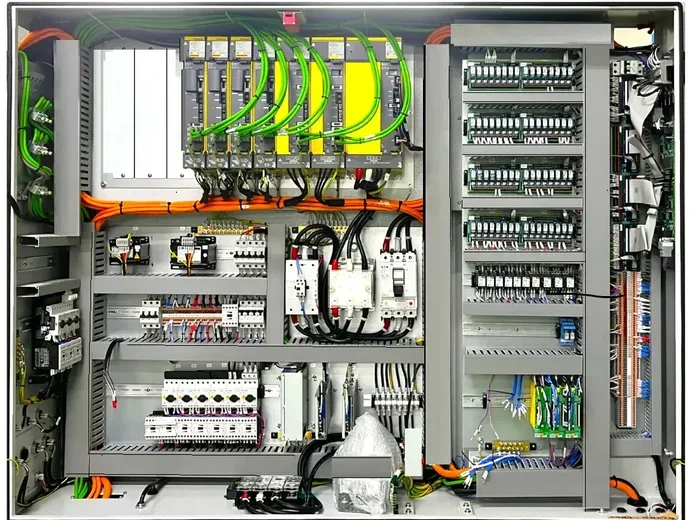

The PLC meaning is Programmable Logic Controller, a rugged computer used to control machines and processes in factories and plants. PLCs replaced old relay systems and made manufacturing faster, safer, and more reliable. Understanding PLC meaning helps anyone in automation, engineering, or industrial operations grasp how modern production lines actually work. This guide breaks it all down in plain language with real examples and practical tips.
If you have ever walked through a factory and wondered how machines know exactly what to do, the answer is a PLC. The PLC meaning is Programmable Logic Controller, and it is one of the most important pieces of technology in modern industry. Whether you are a student, a technician, or a curious learner, understanding what a PLC does can change how you see the world around you.
This article explains the PLC meaning in the simplest way possible. We will cover what a PLC is, how it works, where it is used, and why it matters so much in today’s world. By the end, you will have a clear picture of this powerful automation tool and why it is the backbone of industrial operations everywhere.
Key Takeaways
- PLC stands for Programmable Logic Controller: It is a specialized industrial computer that controls machines and processes automatically.
- PLCs replaced old relay systems: Before PLCs, factories used complex hardwired relay panels that were hard to change and maintain.
- PLCs use simple programming languages: Ladder logic is the most common, and it looks like electrical circuit diagrams.
- PLCs are everywhere in manufacturing: From assembly lines to packaging machines, PLCs control the physical world in factories.
- Understanding PLC meaning opens career doors: Knowledge of PLCs is essential for automation engineers, technicians, and plant operators.
- PLCs are built to last: They handle extreme heat, dust, vibration, and electrical noise that would destroy regular computers.
- Modern PLCs connect to networks: They work with SCADA systems, HMIs, and IoT platforms for smart factory operations.
📑 Table of Contents
What Does PLC Mean?
The PLC meaning is Programmable Logic Controller. Let us break that down piece by piece so it makes complete sense.
A programmable device means you can change what it does by writing new software. You are not stuck with fixed wiring. A logic controller means it makes decisions based on rules and conditions. Think of it like a traffic light. It follows a set of rules to control when lights turn green, yellow, or red. A PLC does the same thing but for machines and industrial processes.
A PLC is essentially a rugged industrial computer. It takes in signals from sensors, processes those signals based on a program you wrote, and sends out commands to motors, valves, and other devices. That is the core PLC meaning in a nutshell.
Why Is It Called a Controller?
The word “controller” is key here. A PLC controls physical things. It decides when a conveyor belt starts, when a robot arm moves, or when a valve opens. It sits in the middle of a system, watching inputs and directing outputs. This control role is at the heart of the PLC meaning.
PLC vs Regular Computer
You might wonder why we do not just use a normal computer. The answer is durability. A PLC is built to survive harsh environments. It handles extreme temperatures, dust, moisture, vibration, and electrical interference. A regular office computer would fail quickly in those conditions. The PLC meaning includes this toughness.
Also, a PLC runs one program over and over in a tight loop. It does not need an operating system like Windows. It just scans inputs, executes logic, and updates outputs. This simplicity makes it very reliable for real-time control tasks.
A Brief History of PLCs
To fully understand the PLC meaning, it helps to know where it came from. The history of PLCs is a story of solving real problems in factories.
Before PLCs: Relay Systems
In the early days of manufacturing, factories used relay logic to control machines. Relays are electromagnetic switches. You wired them together to create control circuits. This worked, but it had big problems. Relay panels were huge, heavy, and confusing. Changing the control logic meant rewiring everything by hand. Troubleshooting faults took hours or even days.
These hardwired relay systems were inflexible and error-prone. As factories needed more complex automation, the limitations became impossible to ignore. Industry needed a better solution. That need led directly to the invention of the PLC.
The Birth of the PLC
The first PLC was developed in the late 1960s by a company called Bedford Associates. They created it for General Motors, which wanted a way to replace relay-based assembly line controls. The goal was simple: a device that could be reprogrammed easily, just like a computer, but built for the factory floor.
The result was the Modicon 084, one of the first commercially successful PLCs. The name “Modicon” stood for Modular Digital Controller. This device introduced the concept of programmable logic control to the world, and it changed manufacturing forever.
How PLCs Evolved Over Time
Since the 1960s, PLCs have evolved dramatically. Early models had very limited memory and processing power. Today’s PLCs are incredibly powerful. They can handle complex math, communicate over networks, and connect to cloud-based systems.
Modern PLC hardware includes powerful processors, large memory, and advanced communication ports. Many PLCs now support Ethernet, Wi-Fi, and even 5G connections. This evolution has expanded the PLC meaning far beyond simple relay replacement into the realm of smart manufacturing and Industry 4.0.
How Does a PLC Work?
Understanding how a PLC actually works is essential to grasping the full PLC meaning. The process is simpler than you might think.
The PLC Scan Cycle
A PLC works by repeating a continuous loop called the scan cycle. Each scan has three main steps:
- Input Scan: The PLC reads all input devices like sensors, switches, and buttons. It records their current states.
- Program Execution: The PLC runs the control program you wrote. It uses the input data to make decisions and calculate outputs.
- Output Scan: The PLC sends commands to output devices like motors, lights, and valves based on the program results.
After the output scan, the PLC starts the cycle again. This happens thousands of times per second. The speed of the PLC scan cycle is what makes real-time control possible.
Inputs and Outputs Explained
The PLC meaning really comes alive when you understand inputs and outputs. Inputs are signals that come into the PLC. They might be from temperature sensors, proximity sensors, or pushbuttons. Outputs are signals that go out from the PLC to control actuators, pumps, and motors.
PLC I/O modules handle these connections. Digital I/O handles on/off signals. Analog I/O handles continuous signals like temperature or pressure. The mix of I/O modules determines what a PLC can control in a given application.
The Role of the Central Processing Unit
The CPU is the brain of the PLC. It executes the control program and manages communication with other devices. The CPU stores the program in memory, processes input data, and updates output data during each scan cycle. Without a strong CPU, the PLC could not keep up with fast manufacturing processes.
PLC Programming Languages
One of the most interesting parts of the PLC meaning is how you program these devices. You do not need to be a software wizard to work with PLCs. There are several programming languages designed to be intuitive for electricians and engineers.
Ladder Logic
Ladder logic is the most popular PLC programming language. It was designed to look like electrical relay circuits. This made it easy for electricians to learn and adopt. Ladder logic uses horizontal rungs and vertical rails. Each rung represents a logic condition that, when true, activates an output.
If you have ever seen a wiring diagram for a control panel, ladder logic will feel familiar. It is visual, straightforward, and perfect for discrete manufacturing applications like assembly lines and packaging machines.
Other PLC Programming Languages
Ladder logic is not the only option. The IEC 61131-3 standard defines five PLC programming languages:
- Ladder Logic (LD): The visual relay-style language most widely used in factory automation.
- Function Block Diagram (FBD): A graphical language that uses blocks connected by lines to represent logic.
- Structured Text (ST): A text-based language similar to Pascal. It is great for complex math and data handling.
- Instruction List (IL): A low-level, assembly-like language. It is compact but harder to read.
- Sequential Function Chart (SFC): Used for programming steps and transitions in batch processes.
Most automation engineers use a mix of these languages depending on the project. The flexibility of PLC programming is part of what makes PLCs so versatile.
Common PLC Applications
The PLC meaning becomes much clearer when you see real-world PLC applications. These devices are everywhere in modern industry.
Manufacturing and Assembly Lines
On an assembly line, a PLC coordinates dozens of machines and robots. It controls the speed of conveyors, triggers robotic arms, and inspects products for defects. Without PLCs, modern mass production would not be possible. The PLC meaning in manufacturing is essentially “the brain of the line.”
Process Control in Chemical Plants
In chemical and pharmaceutical plants, PLCs control continuous processes like mixing, heating, and distillation. They monitor temperature, pressure, and flow rates thousands of times per second. This keeps processes safe and consistent. Process control is one of the most demanding PLC applications because precision is critical.
Building Automation and HVAC
PLCs are not just for factories. They also control heating, ventilation, and air conditioning in large buildings. A PLC manages temperature, humidity, and airflow to keep occupants comfortable while saving energy. This is a growing area of industrial automation outside of traditional manufacturing.
Water and Wastewater Treatment
Municipal water treatment plants rely heavily on PLCs. They control pumps, valves, and chemical dosing systems. A PLC ensures water is treated to safe standards before it reaches homes and businesses. This is another example of how PLC meaning extends into public infrastructure.
Robotics and Motion Control
PLCs work hand-in-hand with robots. A PLC sends position and speed commands to robotic arms and servo motors. It coordinates the movements of multiple robots on a production floor. Motion control is a key capability of modern PLCs and a major reason they are so valuable.
Why Does PLC Meaning Matter?
Now that you understand what a PLC is and how it works, let us talk about why the PLC meaning matters so much in the real world.
Reliability and Safety
PLCs are built to run 24/7 without failure. In industries like oil and gas, pharmaceuticals, and food processing, a control system failure can be dangerous. PLCs have built-in diagnostics and fault detection that help prevent accidents. Understanding the PLC meaning helps you appreciate why safety systems depend on them.
Flexibility and Reprogrammability
One of the greatest advantages of a PLC is that you can reprogram it for a new task. If a production line changes products, you do not need to rewire everything. You simply update the program. This flexibility saves enormous time and money. The PLC meaning of “programmable” is what gives PLCs this superpower.
Cost Savings Over Time
While a PLC system may cost more upfront than simple relays, it saves money in the long run. PLCs reduce downtime, require less maintenance, and use less energy. They also make it easy to collect data and optimize processes. Over the life of a machine, the return on investment for a PLC is excellent.
Career Opportunities
Knowledge of PLC meaning and PLC programming opens up many career paths. Automation engineers, maintenance technicians, and controls specialists are in high demand. Every factory, power plant, and processing facility needs people who understand PLCs. Learning about PLCs is one of the best investments you can make for your career.
The Future: PLCs and Industry 4.0
The PLC meaning continues to expand as technology evolves. Modern PLCs connect to SCADA systems and HMI interfaces for monitoring and control. They communicate with IoT platforms and cloud services for data analytics and predictive maintenance.
In smart factories, PLCs work alongside artificial intelligence and machine learning. They collect data that helps optimize production and reduce waste. The PLC meaning is evolving from a simple controller to a connected, intelligent node in the industrial network. This trend is called Industry 4.0, and it is transforming manufacturing worldwide.
Common Mistakes When Working with PLCs
Even experienced professionals make mistakes with PLCs. Here are some common errors to avoid.
Skipping Documentation
Always document your PLC programs and wiring diagrams. When a fault occurs months later, good documentation saves hours of troubleshooting. Skipping this step is one of the most common and costly mistakes in industrial control systems.
Ignoring Scan Time
Every PLC has a scan time, which is how long one complete cycle takes. If your control logic requires very fast response times, you must consider scan time. Ignoring this can cause missed inputs or unstable control in high-speed applications.
Poor Grounding and Shielding
PLCs are sensitive to electrical noise. Poor grounding and shielding can cause erratic behavior and false inputs. Always follow proper wiring practices and use shielded cables for analog signals. This is a detail that separates good automation installations from problematic ones.
Not Testing Incrementally
Never load a full program and test everything at once. Test each section incrementally. This makes it much easier to find and fix bugs. Incremental testing is a best practice that every automation engineer should follow.
Quick Tips for Understanding PLCs
Here are some practical tips to help you master PLC meaning faster.
- Start with ladder logic: It is the most intuitive language and the best place to begin your PLC programming journey.
- Use simulation software: Many PLC manufacturers offer free simulators. Practice writing programs without needing physical hardware.
- Learn the scan cycle: Understanding how a PLC scans inputs, executes logic, and updates outputs is fundamental to mastering control systems.
- Study real-world examples: Look at case studies of factory automation projects. Seeing how PLCs solve real problems builds practical knowledge.
- Join online communities: Forums and groups for automation engineers are great places to ask questions and share experiences.
- Practice on real hardware: If possible, get hands-on time with a PLC trainer or a small PLC kit. Real experience accelerates learning.
Conclusion
The PLC meaning is clear: a Programmable Logic Controller is a rugged, reliable industrial computer that controls machines and processes. From the first PLC built in the 1960s to today’s smart, connected devices, the core purpose has stayed the same. PLCs make factories safer, faster, and more efficient.
Whether you are just starting to learn about automation or you are a seasoned professional, the PLC meaning is a foundation you cannot skip. PLCs are the invisible heroes behind nearly every product you use. They control the machines that build cars, package food, treat water, and generate power.
Now that you understand the PLC meaning, you can see the world differently. Every automated process you encounter has a PLC at its heart. Keep learning, keep practicing, and keep exploring. The world of industrial automation is vast, rewarding, and full of opportunities for those who take the time to understand it.
Frequently Asked Questions
What is the PLC meaning in simple terms?
A PLC, or Programmable Logic Controller, is an industrial computer that controls machines and processes. It takes in signals from sensors, runs a programmed set of rules, and sends commands to motors and valves. In simple terms, a PLC is the brain that automates work on a factory floor.
How is a PLC different from a regular computer?
A PLC is built to survive harsh industrial environments with extreme temperatures, dust, and vibration. It runs one control program continuously in a fast loop. A regular computer runs an operating system and many programs at once. The PLC meaning focuses on reliability and real-time control, not general-purpose computing.
What are the most common PLC programming languages?
The most common language is ladder logic, which looks like electrical relay diagrams. Other options include function block diagram, structured text, instruction list, and sequential function chart. Most automation engineers learn ladder logic first because it is visual and easy to understand.
Where are PLCs used in everyday life?
PLCs are everywhere. They control assembly lines, packaging machines, elevators, escalators, HVAC systems, water treatment plants, and power distribution. Any large automated system you encounter likely has a PLC working behind the scenes to keep it running smoothly.
Do I need a degree to work with PLCs?
No, a degree is not always required. Many PLC technicians start with vocational training or certifications. Hands-on experience is highly valued in the automation industry. However, formal education in industrial control systems or electrical engineering can open doors to higher-paying roles.
What is the future of PLC technology?
The future of PLCs is connected and intelligent. Modern PLCs integrate with SCADA systems, cloud platforms, and IoT networks. They are becoming part of smart factories and Industry 4.0 initiatives. The PLC meaning will continue to expand as these devices take on more data and decision-making capabilities.
=== META TITLE ===
PLC Meaning Explained Simply – Why It Really Matters
=== URL SLUG ===
/plc-meaning-explained-simply
=== SEO TITLE ===
PLC Meaning Explained Simply And Why It Really Matters



