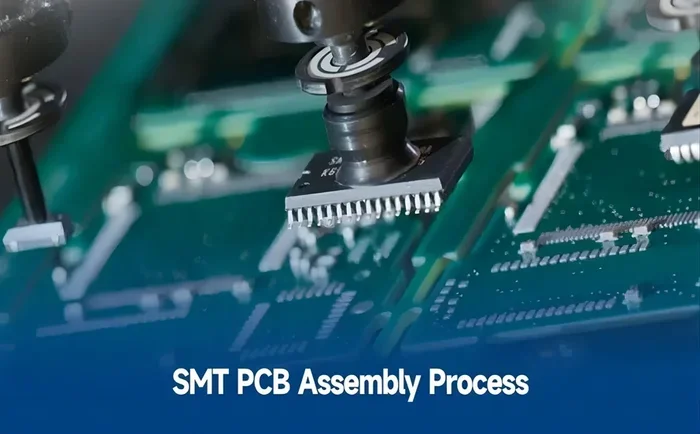

SMT meaning stands for Surface Mount Technology, a method used to mount electronic components directly onto printed circuit boards. This SMT assembly process has revolutionized how manufacturers build electronic devices by making them smaller, faster, and more reliable. Understanding what SMT is helps anyone involved in PCB assembly or electronic design grasp the backbone of modern manufacturing.
If you have ever wondered what goes on inside the gadgets you use every day, the answer lies in a process called Surface Mount Technology. The SMT meaning is simple on the surface, but the impact it has had on modern electronics is enormous. From your smartphone to your car’s navigation system, nearly every electronic device you own relies on this method.
Surface Mount Technology, or SMT, is the process of mounting electronic components directly onto the surface of a printed circuit board, also known as a PCB. Unlike older methods that required drilling holes and inserting components, SMT lets manufacturers place tiny parts right on top of the board. This shift changed everything about how electronics are made, and it opened the door to smaller, faster, and more affordable devices.
In this article, we will break down the SMT meaning in plain language. You will learn how the process works, what equipment is involved, and why it has become the gold standard in electronic manufacturing. Whether you are a hobbyist, a student, or someone working in the industry, this guide will give you a clear picture of what SMT is and why it matters.
Key Takeaways
- SMT meaning refers to Surface Mount Technology, the dominant method for assembling electronic components on circuit boards.
- SMT components are smaller, lighter, and more efficient than traditional through-hole parts, enabling miniaturization of devices.
- The SMT assembly process involves solder paste printing, component placement, reflow soldering, and inspection.
- Pick and place machines automate the placement of thousands of components per hour with high precision.
- SMT vs through-hole technology shows clear advantages in speed, size, and cost for most modern applications.
- Surface mount devices (SMDs) are used in nearly every consumer electronic product today, from smartphones to medical equipment.
- Learning what SMT is gives you a strong foundation for understanding modern electronic manufacturing.
📑 Table of Contents
What Does SMT Meaning Actually Mean?
The SMT meaning is Surface Mount Technology. It is a manufacturing process used to attach electronic components, known as SMDs or surface mount devices, directly onto the surface of a printed circuit board. Before SMT came along, the industry relied heavily on through-hole technology, where component leads were inserted into holes drilled in the board and soldered on the other side.
A Brief History of Surface Mount Technology
Surface Mount Technology emerged in the 1960s but really took off in the 1980s and 1990s. As electronic devices shrank in size, manufacturers needed a way to build smaller boards with more components. SMT answered that call perfectly. By the late 1990s, it had largely replaced through-hole methods in most mass production lines around the world.
The push for miniaturization drove this change. Consumers wanted phones that were thinner, laptops that were lighter, and watches that could do more than tell time. SMT assembly made all of that possible by allowing components to be placed much closer together on a board. The result was a revolution in design freedom for engineers and product developers.
Why SMT Became the Industry Standard
Several factors pushed SMT meaning to the forefront of electronic manufacturing. First, SMT components are much smaller than their through-hole counterparts. A single SMD resistor can be tiny enough to sit on the tip of a pencil. Second, SMT allows for automated assembly, which dramatically speeds up production. Third, the process is more cost-effective at scale, making it the go-to choice for manufacturers worldwide.
Today, if you look at any PCB assembly line, you will almost certainly see SMT in action. It has become the backbone of how we produce electronic devices, from simple LED lights to complex computer motherboards. The SMT meaning has evolved from a niche technique to the universal standard in electronics production.
How Does Surface Mount Technology Work?
Understanding what SMT is becomes much easier when you see the process step by step. The SMT assembly process follows a specific sequence of steps, each one critical to producing a reliable and functional circuit board. Let us walk through the main stages.
Step-by-Step SMT Assembly Process
Step 1: PCB Design and Preparation – Everything starts with a well-designed circuit board. Engineers use specialized software to lay out the board, placing pads where each component will sit. The design must account for component size, spacing, and electrical connections. A good PCB design is the foundation of a successful SMT run.
Step 2: Solder Paste Printing – Once the board is ready, a stencil is placed over it. Solder paste, a mixture of tiny metal balls and flux, is spread across the stencil. The paste lands only on the pads where components will be attached. This step requires precision because the paste determines how well each component will bond to the board during the next stages.
Step 3: Component Placement – This is where the magic happens. A pick and place machine picks up tiny SMD components from reels or trays and places them precisely on the solder paste pads. These machines work at incredible speed, placing thousands of components per hour. Modern automated assembly lines can handle boards with hundreds of different components in a single run.
Step 4: Reflow Soldering – After placement, the board moves through a reflow oven. The oven heats the board in a carefully controlled profile, melting the solder paste and creating solid electrical connections. Once the board cools, the components are permanently attached to the board. This soldering process is the heart of SMT assembly.
Step 5: Inspection and Testing – The final step is quality control. Manufacturers use various inspection methods to check for defects. Automated Optical Inspection, or AOI, uses cameras to scan the board for misplaced or missing components. X-ray inspection can look inside hidden joints, especially for components like BGAs, or Ball Grid Arrays. Electrical testing confirms that every connection works as it should.
Key Equipment Used in SMT Lines
A modern SMT production line is a marvel of automation. Here are the key pieces of equipment that make it all work:
- Screen Printers – These machines apply solder paste to the PCB with high accuracy and consistency.
- Pick and Place Machines – These are the workhorses of SMT assembly, rapidly placing components onto the board with micron-level precision.
- Reflow Ovens – These ovens control the heating profile to melt solder paste without damaging sensitive components.
- AOI Machines – Automated Optical Inspection systems use cameras and software to detect defects quickly and accurately.
- Stencil Printers – These ensure the solder paste stencil is aligned perfectly with the PCB pads every time.
SMT vs Through-Hole Technology
To truly appreciate what SMT is, it helps to compare it with the older method it largely replaced. Through-hole technology, or THT, involves inserting component leads into pre-drilled holes on a PCB and soldering them on the opposite side. Both methods have their place, but they serve very different needs.
Key Differences at a Glance
| Feature | SMT (Surface Mount) | THT (Through-Hole) |
|---|---|---|
| Component Size | Very small, ideal for compact designs | Larger, leads need to fit through holes |
| Assembly Speed | Fast, highly automated | Slower, often requires manual soldering |
| Board Density | High, components on both sides | Lower, holes limit routing space |
| Cost at Scale | Lower cost per unit | Higher cost due to drilling and manual work |
| Mechanical Strength | Good for most applications | Excellent, especially for high-stress parts |
| Best Use Case | Mass production, small devices | Prototyping, high-reliability connectors |
When to Choose Which Method
Most modern electronic manufacturing leans heavily toward SMT because of its speed and efficiency. However, through-hole technology still has a place. For components that need to handle high mechanical stress, such as connectors that plug and unplug frequently, through-hole offers superior durability. In prototype builds or small production runs, through-hole can also be easier and more cost-effective because it requires less specialized equipment.
Many manufacturers today use a mixed approach, combining SMT and through-hole components on the same board. This hybrid method gives them the best of both worlds, leveraging the size and speed benefits of SMT while using through-hole parts where mechanical strength is critical.
Key Components Used in SMT Assembly
To understand the SMT meaning fully, you need to know the types of components that make up this process. SMT components, also called surface mount devices, come in many shapes and sizes. Each one serves a specific purpose in the circuit, and knowing them helps you appreciate the complexity and elegance of modern board design.
SMD Resistors and Capacitors
Resistors and capacitors are the most common components you will find on any PCB assembly. In SMT, these parts are tiny, often no bigger than a grain of rice. They come in standardized packages, such as the 0402 or 0603 size codes, which refer to the component’s dimensions in inches. Despite their small size, these SMD components handle significant electrical loads and are essential for controlling current flow and storing energy in circuits.
Integrated Circuits and IC Packages
Integrated circuits, or ICs, are the brains behind most electronic devices. In SMT, ICs come in various packages designed to fit snugly on the board surface. The BGA packaging style, for example, uses an array of solder balls on the bottom of the package to create connections. Other common IC packages include QFN, SOIC, and TQFP. Each package type offers different benefits in terms of size, thermal performance, and ease of assembly.
Connectors and Other SMT Parts
Connectors are essential for linking different parts of a circuit or for connecting the board to external devices. SMT connectors come in board-to-board, wire-to-board, and board-to-wire configurations. Other common SMT components include inductors, diodes, transistors, and fuses. All of these parts are designed to sit flat on the board surface, which is what makes the SMT assembly process so efficient and compact.
Benefits of Surface Mount Technology
The rise of Surface Mount Technology is not accidental. It happened because SMT delivers real, measurable advantages over older methods. Let us look at the key benefits that make what SMT is so valuable in today’s electronics industry.
Smaller Size and Weight
The most obvious benefit of SMT is size reduction. Because SMD components have no long leads, they take up far less space on a board. This miniaturization allows manufacturers to create devices that are thinner, lighter, and more portable. Think about how much smartphones have shrunk over the past two decades. That progress would not have been possible without SMT assembly.
Faster Production Speeds
Automated assembly is a game-changer. Pick and place machines can install thousands of components per hour with remarkable accuracy. This speed means manufacturers can produce large volumes of boards quickly and consistently. For companies that need to meet high demand, the production speed of SMT is a major competitive advantage.
Cost Efficiency
While the initial investment in SMT equipment can be significant, the long-term savings are substantial. Automated assembly reduces labor costs, and the smaller component sizes mean less material is used per board. At scale, the cost efficiency of SMT is hard to beat. Companies that adopt SMT early often see a strong return on their investment within the first year of production.
Improved Reliability
SMT connections tend to be more reliable than through-hole solder joints because the components sit flat against the board surface. This design reduces mechanical stress and improves resistance to vibration and shock. Combined with modern inspection methods like AOI and X-ray, manufacturers can achieve extremely high yields and consistent product quality.
Common Applications of SMT
The reach of Surface Mount Technology extends far beyond a single industry. Because SMT enables small, reliable, and affordable electronic assemblies, it is used across a wide range of fields. Here are some of the most common applications where SMT assembly plays a critical role.
Consumer Electronics
Your smartphone, laptop, tablet, smartwatch, and headphones all rely on SMT. Consumer electronics demand small form factors, high performance, and low cost. SMT components deliver on all three fronts. The PCB assembly inside a modern phone can contain hundreds of SMD parts packed tightly together on a board no larger than a postage stamp.
Automotive Electronics
Modern cars are essentially computers on wheels. From engine control units to infotainment systems, advanced driver-assistance features, and electric vehicle battery management, SMT is everywhere in automotive electronics. The reliability benefits of Surface Mount Technology are especially valuable in vehicles, where components must withstand extreme temperatures, vibrations, and long-term use.
Medical Devices
Medical equipment demands the highest levels of precision and reliability. Devices like pacemakers, blood pressure monitors, and diagnostic imaging systems all use SMT assembly to pack sophisticated electronics into small, wearable, or implantable form factors. The ability to produce tiny, reliable boards makes SMT indispensable in the medical field.
Industrial and Aerospace
Industrial control systems, robotics, and aerospace equipment also benefit from SMT. In these applications, the combination of small size, high reliability, and the ability to handle complex circuitry gives SMT a clear edge. Engineers designing systems for harsh environments trust SMT components to perform under extreme conditions.
Common Mistakes to Avoid in SMT Assembly
Even with the best equipment, mistakes can happen in SMT assembly. Knowing the common pitfalls can save you time, money, and headaches. Here are a few mistakes to watch out for:
- Poor solder paste printing – If the stencil is not aligned properly or the paste is the wrong consistency, you will get weak or missing joints.
- Incorrect reflow profile – Every board and component type needs a specific heating profile. Getting this wrong can cause cold joints, component damage, or board warping.
- Ignoring component polarity – Many SMD components, like diodes and electrolytic capacitors, have a polarity. Placing them backward will cause circuit failure.
- Skipping inspection steps – Rushing through AOI or X-ray inspection can let defects slip through, leading to costly rework or field failures.
- Using the wrong stencil material – Stencils come in different materials and thicknesses. Using the wrong one affects paste deposit quality and overall assembly reliability.
Expert Insights on the Future of SMT
The world of Surface Mount Technology continues to evolve. As devices get smaller and more powerful, the demands on SMT assembly grow as well. Experts predict that future trends will include even smaller component packages, the adoption of 3D printing in PCB manufacturing, and greater use of artificial intelligence in quality inspection. The SMT meaning will continue to expand as new materials and techniques emerge.
Automated assembly will become even smarter, with machine learning algorithms optimizing placement patterns and soldering profiles in real time. These advances will push the boundaries of what is possible in electronic manufacturing, making devices faster, smaller, and more capable than ever before.
Conclusion
The SMT meaning is more than just an acronym. It represents a fundamental shift in how we build the electronic devices that power our daily lives. Surface Mount Technology has enabled the miniaturization of electronics, boosted production speed, reduced costs, and improved reliability across countless industries. From the smartphone in your pocket to the medical devices saving lives in hospitals, SMT assembly is the invisible force behind modern innovation.
Understanding what SMT is gives you valuable insight into the world of electronic manufacturing. Whether you are a professional engineer, a maker, or simply a curious learner, knowing the basics of SMT components and the SMT assembly process empowers you to appreciate the technology around you. The future of electronics will only get smaller and more complex, and SMT will be at the center of that evolution.
Take what you have learned here and apply it. Explore PCB assembly further, experiment with SMD components in your own projects, or dive deeper into the manufacturing process. The world of Surface Mount Technology is vast, and there is always more to discover.
Frequently Asked Questions
What is the SMT meaning in electronics?
In electronics, SMT meaning stands for Surface Mount Technology. It is the process of mounting electronic components directly onto the surface of a printed circuit board without using through-hole leads. This method enables smaller, faster, and more reliable electronic devices.
How does SMT differ from through-hole technology?
Through-hole technology requires component leads to be inserted into drilled holes on the board and soldered on the opposite side. SMT, on the other hand, places components directly on the board surface. SMT is faster, allows for higher component density, and is better suited for automated production lines.
What are the main steps in the SMT assembly process?
The main steps include PCB design, solder paste printing, component placement using pick and place machines, reflow soldering, and final inspection using AOI or X-ray methods. Each step is critical to ensuring a reliable and functional circuit board.
What types of components are used in SMT?
Common SMT components include SMD resistors, capacitors, integrated circuits in packages like BGA and QFN, connectors, inductors, diodes, and transistors. All of these are designed to sit flat on the board surface for efficient assembly.
Why is SMT so popular in modern manufacturing?
SMT is popular because it supports miniaturization, enables high-speed automated assembly, reduces material and labor costs, and produces highly reliable connections. These advantages make it the ideal choice for mass-producing electronic devices at scale.
Can SMT and through-hole components be used together?
Yes, many manufacturers use a hybrid approach that combines SMT and through-hole components on the same board. This allows them to take advantage of the size and speed benefits of SMT while using through-hole parts where mechanical strength or high reliability is needed.



