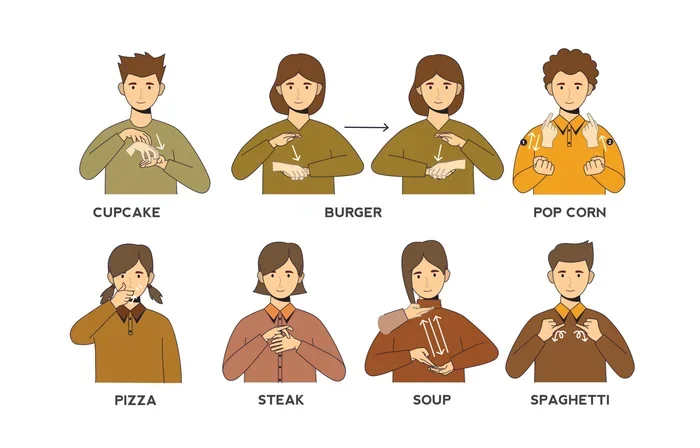

Learning how to say food in ASL is easier than you think. This guide walks you through basic food signs, category-specific gestures, and common mistakes to avoid. You will walk away with practical skills you can use right away in everyday conversations with the deaf community.
Have you ever wanted to communicate about food using American Sign Language but did not know where to start? You are not alone. Millions of people are curious about sign language and how to express everyday words like food. Whether you are talking to a deaf friend, working in a restaurant, or simply expanding your communication skills, knowing how to say food in ASL opens up a whole new world of connection.
The good news is that food signs in ASL are intuitive and fun to learn. Most of them mimic the action of eating or the shape of the food itself. This guide breaks everything down into simple, easy-to-follow steps. By the end, you will feel confident signing about meals, snacks, and everything in between.
So grab a snack, get comfortable, and let us dive into the wonderful world of food signs in sign language. This is not a boring textbook lesson. It is a practical, hands-on guide designed for real beginners who want real results.
Key Takeaways
- Start with the basics: The sign for food and drink forms the foundation of ASL food vocabulary.
- Group signs by category: Learning fruits, vegetables, meats, and snacks separately makes retention easier.
- Avoid common hand-shape mistakes: Using the wrong hand position is the top error beginners make.
- Practice with real-life scenarios: Signing while eating or shopping builds muscle memory fast.
- Context matters in ASL: Facial expressions and body language add meaning to food signs.
- Use online resources: ASL dictionaries and videos complement hands-on practice perfectly.
- Consistency beats intensity: Short daily practice sessions work better than long weekly ones.
📑 Table of Contents
What Is ASL and Why Learn Food Signs?
American Sign Language is a complete visual language used by the deaf and hard-of-hearing community in the United States and parts of Canada. It uses hand shapes, movements, facial expressions, and body posture to convey meaning. Unlike spoken English, ASL has its own grammar and sentence structure.
You might wonder why food signs matter so much. Think about it. Food is a part of daily life. We talk about meals, ingredients, cravings, and restaurants all the time. Being able to sign about food in ASL helps you connect with deaf friends, coworkers, and community members on a personal level.
Learning food signs also builds your confidence in sign language basics. Food words are among the most common signs you will use. They are simple, visual, and easy to remember. Once you master these signs, you will find it much easier to tackle more complex ASL vocabulary later on.
For a deeper look at how signs work in everyday text and chat, check out our guide on ASL meaning to understand the broader context of sign language communication.
Why Food Signs Are a Great Starting Point
Food signs are visually descriptive. The sign for apple looks like you are biting into an apple. The sign for drink mimics holding a cup to your lips. These natural connections between the sign and the object make learning ASL food signs feel less like memorization and more like play.
Here is why food signs are perfect for beginners:
- They use simple hand shapes that are easy to form.
- The movements are small and repeatable.
- You can practice them anytime, anywhere.
- They connect directly to real-life experiences like eating and cooking.
- They build a strong foundation for more advanced ASL food vocabulary.
Basic Food Signs Every Beginner Should Know
Let us get into the core of this guide. These are the basic food signs that every beginner should learn first. Each sign includes a simple description of the hand shape and movement.
The Sign for Food
The sign for food in ASL is one of the first signs you should learn. Hold your dominant hand with your fingers slightly curled and extended. Tap your fingertips against your mouth twice. This motion mimics bringing food to your lips. It is quick, simple, and easy to remember.
Think of it this way. When you say the word “food,” your mind goes to eating. The sign captures that same idea. It is one of the most versatile ASL food signs you will learn. You can use it to ask for something to eat, talk about a meal, or describe what you are hungry for.
The Sign for Drink
The sign for drink is just as easy. Make a C shape with your dominant hand. Bring it to your mouth as if you are sipping from a cup. This sign covers all types of beverages. Whether you want to sign water, juice, or coffee, the drink sign works as a general term.
For more specific beverage signs, you will learn those later in this guide. But for now, mastering the basic food and drink signs gives you a solid starting point.
Common Food Items in ASL
Here are some of the most frequently used food signs in ASL that beginners should add to their repertoire:
- Apple: Pinch your cheek with your index finger and twist slightly. This mimics taking a bite.
- Banana: Hold your hand as if peeling a banana. Start at the top and pull downward.
- Bread: Flatten your hands and bring them together, then apart, as if squeezing dough.
- Egg: Make a fist and tap the side of your index finger against your cheek twice.
- Cheese: Squeeze your fist with your fingers tucked in, like pressing a wedge of cheese.
- Meat: Tap your open hand against your chest a few times with a claw-like shape.
- Rice: Tap your fingertips against your palm repeatedly, as if sprinkling grains.
- Soup: Make a C shape with one hand and stir it with the other hand in a circular motion.
These basic food signs ASL cover a wide range of everyday items. Practice each one a few times until the motion feels natural. Muscle memory plays a big role in sign language fluency.
How to Sign Different Food Categories
Once you have the basics down, it is time to expand your vocabulary. ASL food signs can be organized into categories. This makes it easier to learn and remember them. Let us explore each category with practical examples.
Fruits and Vegetables
Fruits and vegetables have some of the most creative food signs in ASL. Each sign often looks like the actual item or the action of eating it.
For fruits, the sign for orange involves making a fist and tapping your chin with your thumb, mimicking peeling the fruit. The sign for strawberry uses your index and middle fingers to tap your chin, representing the shape of the fruit.
For vegetables, the sign for corn involves moving your hand in a brushing motion across your lips, as if eating corn on the cob. The sign for carrot uses your index finger to tap your mouth at an angle, mimicking biting into a carrot.
These visual connections make learning ASL food vocabulary enjoyable. You are not just memorizing random gestures. You are seeing the food in the movement itself.
Meals and Snacks
Meal-related signs are practical and useful for daily conversations. The sign for breakfast combines the sign for eat with a morning gesture. The sign for lunch involves making an L shape near your shoulder. The sign for dinner uses a similar motion but lower, representing the evening meal.
Snack signs are equally fun. The sign for cookie involves shaping your hand like you are holding a cookie and mimicking taking a bite. The sign for candy uses your thumb and index finger to pinch and pull away, as if unwrapping a piece.
For more on how casual and slang signs work in ASL, you can explore our article on ASL meaning slang to see how informal signs differ from formal ones.
Fast Food and Restaurant Signs
If you enjoy eating out, you will love these fast food signs in ASL. The sign for hamburger involves patting your open hand against your chest twice, mimicking a patty. The sign for pizza uses a flat hand to make a slicing motion in front of your body.
Restaurant-related signs include menu (flipping pages with both hands), order (pointing to yourself and then forward), and bill (making a writing motion in the air). These signs are perfect for real-world situations where you need to communicate in a restaurant setting.
You might even find it fun to explore creative and humorous names for food concepts. If you enjoy the playful side of food culture, check out our collection of funny food names for a lighthearted take on food terminology.
Common Mistakes When Learning Food Signs in ASL
Every learner makes mistakes. The key is to recognize them early and correct them. Here are the most common errors beginners make when learning how to say food in ASL.
Using the Wrong Hand Shape
One of the biggest mistakes is using the wrong hand shape. For example, the sign for food requires a slightly curved hand, not a flat palm. If you use a flat hand, it can look like you are signing something entirely different. Pay close attention to the hand shape for each sign.
Skipping Facial Expressions
ASL is not just about hand movements. Facial expressions play a huge role in conveying meaning. When you sign about food you love, your face should show excitement. When you sign about food you dislike, your expression should match. Skipping facial expressions can make your signs unclear or confusing.
Practicing Too Fast
Many beginners rush through practice sessions. They try to learn twenty signs in one day and forget half of them by the next. Slow and steady wins the race. Focus on mastering three to five signs per session. Review them daily until they feel automatic.
Ignoring Context and Grammar
ASL has its own grammar rules. Signing “I eat food” in ASL follows a different word order than English. The sentence might look like “I food eat” in sign language. Understanding basic ASL grammar helps you use food signs correctly in real conversations.
If you want to understand how slang and informal signs work in ASL, our funny food truck names article offers a fun look at creative food naming that parallels the playful nature of informal sign language.
Tips for Practicing Food Signs in ASL
Knowing the signs is only half the battle. Practicing them consistently is what turns knowledge into skill. Here are proven tips to help you improve your ASL food vocabulary quickly.
Practice While Eating
One of the best ways to learn food signs is to sign while you eat. When you reach for your sandwich, sign “sandwich.” When you sip your coffee, sign “drink.” This real-life practice creates strong mental connections between the sign and the object.
Use ASL Dictionaries and Videos
Visual learning is essential in sign language. Watch videos of native signers demonstrating food signs. ASL dictionaries, both online and in apps, provide slow-motion demonstrations that help you see the exact hand shape and movement. Repetition through video is one of the fastest ways to build fluency.
Sign with a Partner
Practice makes progress, and a partner makes it more fun. Find a friend who also wants to learn ASL. Take turns signing about different foods. Play games like “sign the food on your plate” to make practice feel like play.
Keep a Sign Journal
Write down new food signs you learn each day. Include the hand shape, movement, and a visual description. Review your journal regularly. Over time, you will build a personal ASL food dictionary that reflects your learning journey.
Watch Deaf Creators and Content
Following deaf creators on social media exposes you to natural, everyday sign language. You will see how they use food signs in real conversations and cultural contexts. This kind of immersion is invaluable for developing authentic signing skills.
Building Your ASL Food Vocabulary Over Time
Learning how to say food in ASL is a journey, not a destination. Start with the basic signs and gradually expand your vocabulary. Within a few weeks, you will be able to describe full meals, talk about your favorite dishes, and even order food at a restaurant using sign language.
Consistency is the secret ingredient. Ten minutes of daily practice beats one long session per week. Celebrate small wins. Master the sign for apple today. Add the sign for soup tomorrow. Before you know it, your ASL food vocabulary will grow into something impressive.
Remember that every expert was once a beginner. The deaf community is generally very supportive of people who make the effort to learn their language. Do not be afraid to make mistakes. Sign with confidence, smile, and enjoy the process of connecting with others through American Sign Language.
As you continue your journey, explore more creative and cultural aspects of food language. If you are curious about fun and imaginative food naming, our article on funny food names for cats shows how playful language can be applied to food in unexpected and entertaining ways.
The world of ASL food signs is rich, expressive, and full of personality. You now have the tools to start exploring it. Practice daily, stay curious, and enjoy every sign you learn.
Frequently Asked Questions
What is the ASL sign for food?
The sign for food in ASL involves tapping your fingertips against your mouth twice with a slightly curved hand. It mimics the motion of bringing food to your lips. This is one of the first signs beginners learn in American Sign Language.
How many food signs are there in ASL?
There are hundreds of food signs in ASL covering fruits, vegetables, meats, meals, snacks, and beverages. Beginners should start with the most common signs and gradually expand their vocabulary over time.
Can I use ASL food signs in everyday conversations?
Absolutely. ASL food signs are practical and useful in daily life. You can use them when talking with deaf friends, in educational settings, or even in restaurants to communicate with staff who use sign language.
Is learning food signs in ASL hard for beginners?
Not at all. Food signs are among the easiest sign language signs to learn because they are visual and intuitive. Most mimic the action of eating or the shape of the food, making them easy to remember.
Do I need to learn facial expressions for food signs?
Yes. Facial expressions are a key part of ASL grammar. They add emotion and context to your signs. When signing about food, your expression should match whether you are excited about a meal or disappointed with a dish.
Where can I practice ASL food signs online?
You can practice ASL food vocabulary through online dictionaries, YouTube channels, and apps dedicated to sign language learning. Watching native signers demonstrate signs is one of the most effective ways to improve your skills.
=== CONCLUSION ===
Learning how to say food in ASL is a rewarding experience that connects you more deeply with the deaf community and enriches your communication skills. From the basic food and drink signs to more specific vocabulary for fruits, meals, and restaurant scenarios, you now have a solid foundation to build on.
Remember to practice consistently, use facial expressions, and focus on proper hand shapes. Avoid the common mistakes we covered, and lean into the fun and visual nature of sign language. Every sign you learn brings you one step closer to fluency.
Start today. Pick three food signs and practice them with a friend or in front of a mirror. Share what you learn. The journey of mastering ASL food vocabulary is one of the most enjoyable paths in language learning. Keep signing, keep learning, and most importantly, keep enjoying the delicious world of food signs in ASL.