
The immolation meaning refers to the deliberate act of sacrifice or destruction by fire, rooted in ancient religious rituals and modern protest movements. Understanding immolation requires exploring its deep cultural, spiritual, and historical contexts across civilizations worldwide.
Key Takeaways
- Immolation means sacrifice by fire: The immolation meaning centers on the deliberate destruction or offering of something through fire, with deep spiritual and cultural significance.
- Ancient roots span multiple civilizations: From Mesopotamia to Greece to the Aztecs, fire sacrifice and immolation were central to religious practice in the ancient world.
- Religion shapes the immolation meaning deeply: Hinduism, Buddhism, and other faiths assign profound spiritual meaning to acts of immolation and self-sacrifice.
- Self-immolation is a powerful protest tool: Modern cases like Thich Quang Duc and Mohammed Bouazizi show how immolation draws global attention to injustice.
- Misconceptions are common: Many people confuse immolation with suicide or violence, but the immolation meaning varies greatly by context and intent.
- Media coverage shapes public understanding: How the world sees immolation depends heavily on media framing and cultural sensitivity.
- Context is everything: The immolation meaning shifts dramatically depending on culture, religion, and historical period.
📑 Table of Contents
What Does Immolation Mean?
The immolation meaning is simple at its core. It refers to the act of destroying or sacrificing something, especially by fire. When you look up the immolation definition in a dictionary, you will find it describes the killing or destruction of a person or animal, typically as a sacrifice.
But the immolation meaning goes much deeper than that. It carries heavy emotional, spiritual, and cultural weight. People across different societies have used this practice for thousands of years. Whether in ancient temples or modern protests, the act holds powerful symbolism.
Understanding the immolation meaning requires looking at history, religion, and human behavior. It is not just about fire and destruction. It is about what fire represents in different cultures and why people choose this extreme path.
In this article, we will explore every angle of the immolation meaning. You will learn about its roots, its role in religion, its use in protests, and how it appears in modern life. By the end, you will have a thorough and nuanced understanding of this powerful concept.
Breaking Down the Word
The word immolation comes from the Latin word immolare. This Latin term originally meant to sprinkle something with sacrificial grain. Over time, the meaning shifted to include burning as a form of sacrifice.
Many people confuse immolation with simple burning. But there is a key difference. Burning can be accidental or destructive without purpose. Immolation, on the other hand, carries intent. It is a deliberate act, often tied to ritual, belief, or deep personal conviction.
The immolation meaning also depends on what is being destroyed. In ancient times, it was often animals or grain. In more modern contexts, it can refer to the self-sacrifice of a person. Each context gives the word a slightly different shade of meaning.
The Historical Roots of Immolation
The practice of immolation stretches back thousands of years. Ancient civilizations used fire sacrifices as a way to communicate with gods and spirits. The immolation meaning in these early societies was deeply spiritual and tied to survival.
Fire was seen as a bridge between the human world and the divine. When something was offered in flames, it was believed to reach the gods directly. This belief shaped many cultural practices around the world and gave the immolation meaning its sacred foundation.
Ancient Civilizations and Fire Sacrifice
In ancient Mesopotamia, people offered animals and goods in fire as part of their immolation rituals. The Babylonians and Assyrians believed these offerings kept the gods pleased. Without them, they feared drought, disease, and war. The immolation meaning here was practical and spiritual at the same time.
The ancient Greeks also practiced forms of immolation. They burned offerings on altars to honor Zeus and other gods. The immolation meaning in Greek culture was about giving the best to the divine. It was a sign of respect, gratitude, and devotion.
In South America, the Aztecs are well known for their sacrificial practices. While many of these involved human sacrifice, the burning of offerings was also common. The immolation meaning for the Aztecs was tied to keeping the sun moving and the world alive. Fire was life itself.
Immolation in World History
Throughout history, the immolation meaning has evolved. In medieval Europe, the practice was sometimes linked to witch trials and religious persecution. People accused of heresy were sometimes burned, and this was called immolation. The immolation meaning in this dark period was twisted by fear and power.
In Asia, the practice took on different forms. In India, the immolation meaning became closely tied to certain religious traditions. The practice of sati, where a widow would self-immolate on her husband’s funeral pyre, is one historical example. This practice was outlawed by the British in the 19th century, but its immolation meaning in cultural memory remains complex and painful.
The immolation meaning in history is not one-dimensional. It has been used to honor gods, to enforce power, and to express devotion. Each era and culture added new layers to what immolation represents.
| Context | Immolation Meaning | Common Form |
|---|---|---|
| Ancient Religion | Offering to gods | Animal or grain sacrifice by fire |
| Hindu Tradition | Devotional sacrifice | Historical widow self-sacrifice |
| Buddhist Practice | Spiritual liberation | Self-immolation as protest or devotion |
| Modern Protest | Political statement | Self-immolation to draw attention |
| Fiction and Media | Symbol of sacrifice or destruction | Metaphorical or literal depiction |
| Indigenous Traditions | Ancestral connection | Fire ceremonies with offerings |
Immolation in Religion and Culture
The immolation meaning in religion is profound. Across different faiths, fire represents purification, transformation, and connection to the divine. When something is immolated, it is believed to be transformed through fire into something sacred.
Understanding the immolation meaning in religious contexts helps us see why the practice has survived for millennia. It is not simply about destruction. It is about transformation and offering. Fire burns away the physical to reveal the spiritual.
Immolation in Hinduism
Hinduism has a complex relationship with immolation. The immolation meaning in Hindu tradition often centers on sacrifice and devotion. In ancient texts, fire sacrifices called yajnas were central to worship.
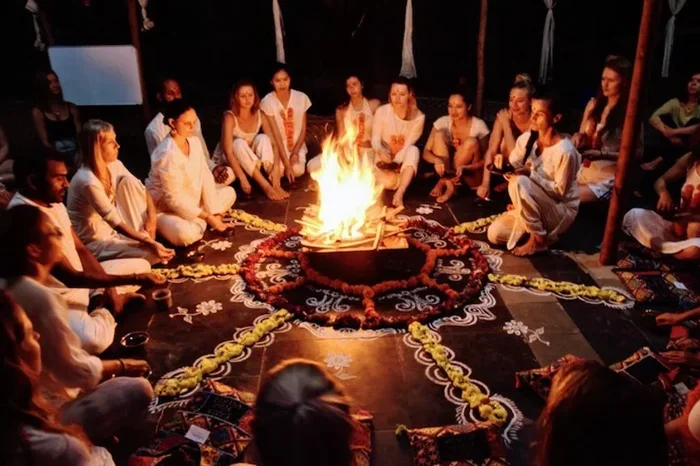
During a yajna, offerings of ghee, grains, and herbs were placed into a sacred fire. The immolation meaning here was about giving up the material to receive blessings from the gods. It was an act of letting go and trust. The fire carried the offering to the heavens.
One of the most well-known historical practices related to immolation in Hinduism is sati. This was the practice where a widow would throw herself onto her husband’s funeral pyre. The immolation meaning in this context was seen as the ultimate act of devotion and loyalty. However, this practice is now illegal and widely condemned. Modern understanding of the immolation meaning in Hinduism focuses more on the positive aspects of fire sacrifice and purification.
Immolation in Buddhism
Buddhist immolation has a very different immolation meaning compared to Hindu practices. In Buddhism, self-immolation is often seen as an act of deep compassion and spiritual sacrifice.
The most famous cases of Buddhist self-immolation occurred during the Vietnam War. Monks like Thich Quang Duc set themselves on fire to protest the persecution of Buddhists by the South Vietnamese government. His act shocked the world and brought global attention to the conflict. The immolation meaning in this case was about standing firm in the face of oppression.
The immolation meaning in Buddhism is not about suicide. It is about using one’s own body as a final offering for a greater cause. Those who practice self-immolation in this context see it as the ultimate act of non-attachment and compassion. It is a profound expression of the Buddhist teaching that the self is an illusion.
Immolation in Other Faiths
Other religions also have connections to immolation. In some indigenous traditions, fire ceremonies involve burning offerings to honor ancestors. The immolation meaning in these practices is about maintaining a connection between the living and the dead. The smoke carries prayers upward.
In Judaism and Islam, animal sacrifice by fire has historical roots, though modern practice has largely moved away from it. The immolation meaning in these Abrahamic faiths was about obedience to God and the willingness to give up something precious. The immolation meaning across faiths shares a common thread: fire transforms the ordinary into the sacred.
Immolation as Protest and Self-Sacrifice
In modern times, the immolation meaning has become closely tied to political protest and self-sacrifice. When someone chooses to self-immolate, it is almost always a desperate call for attention. The immolation meaning in this context is about making a statement so powerful that it cannot be ignored.
Self-immolation as a protest tool is not new. It has been used throughout the 20th and 21st centuries to draw attention to injustice, oppression, and suffering. The immolation meaning in protest is about sacrifice for a cause larger than oneself.
Notable Immolation Cases in History
Several cases have shaped how the world understands the immolation meaning in protest:
- Thich Quang Duc (1963): A Vietnamese Buddhist monk who self-immolated to protest the persecution of Buddhists by the South Vietnamese government. His act was captured in a famous photograph that won a Pulitzer Prize and changed global awareness.
- Jan Palach (1969): A Czech student who set himself on fire to protest the Soviet invasion of Czechoslovakia. His act inspired a wave of protests across Eastern Europe and became a symbol of resistance.
- Mohammed Bouazizi (2010): A Tunisian street vendor who self-immolated after his goods were confiscated by police. His act sparked the Arab Spring, a series of protests that changed the Middle East and North Africa.
- Various Protesters in Tibet and China: Multiple Tibetans have self-immolated over the years to protest Chinese government policies. The immolation meaning in these cases is tied to the fight for cultural and religious freedom.
Each of these cases shows a different immolation meaning. But they all share one thing in common: they were acts of last resort by people who felt they had no other way to be heard. The immolation meaning in protest is born from desperation and hope at the same time.
Why People Choose This Extreme Act
Understanding why someone chooses self-immolation is difficult. Most people cannot imagine taking such an extreme step. But for those who do, the immolation meaning is deeply personal and tied to their beliefs.
People who self-immolate often feel they have exhausted all other options. They may face oppression, injustice, or hopelessness. For them, the immolation meaning is about sacrifice and making their suffering visible to the world. It is a final, devastating statement.
It is important to note that self-immolation is not the same as suicide in the traditional sense. Those who choose this path often see it as a political or spiritual act, not an act of despair. The immolation meaning in these cases is about giving something of yourself for a cause greater than yourself. It is about transforming personal pain into public awareness.
Common Misconceptions and Controversies
The immolation meaning is often misunderstood. Many people associate it only with violence or madness. But the reality is far more complex. The immolation meaning depends heavily on context, culture, and intent. Let us clear up some of the most common misunderstandings.
Myths Surrounding Immolation
Let us address some of the biggest myths about immolation:
- Myth 1: Immolation is always a suicide. In many religious contexts, immolation is a voluntary sacrifice, not a desire to end one’s life. The immolation meaning in these cases is about devotion, not despair. The person believes they are offering something sacred.
- Myth 2: Immolation is only a modern phenomenon. The practice dates back thousands of years. The immolation meaning in ancient cultures was often positive, tied to worship, gratitude, and connection to the divine.
- Myth 3: All immolation is violent. While some forms of immolation are violent, many are ritualistic and peaceful. The immolation meaning in a religious ceremony is about offering, not harming. The intent matters deeply.
- Myth 4: Immolation only happens in certain religions. The practice spans many faiths and cultures worldwide. The immolation meaning varies widely depending on the tradition, from Hindu fire sacrifices to Buddhist protests to indigenous ceremonies.
The Controversy Around Self-Immolation
Self-immolation remains one of the most controversial acts in the world today. Some people view it as a courageous stand against injustice. Others see it as a waste of life. The immolation meaning in these debates is deeply personal and often divisive.
Governments around the world have different responses to self-immolation. Some countries treat it as a political protest and protect the right to protest. Others criminalize it and punish those who attempt it. The immolation meaning in law and policy varies greatly from place to place. Understanding these differences is key to grasping the full picture.
Experts urge people to approach the topic with empathy rather than judgment. The immolation meaning cannot be reduced to a single label. It is shaped by history, belief, suffering, and hope.
Quick Tips for Understanding Immolation
- Always consider the cultural context when learning about immolation and its meaning.
- Distinguish between religious sacrifice and political protest when exploring the immolation meaning.
- Read primary sources and firsthand accounts to understand the personal motivations behind self-immolation.
- Avoid judgment. The immolation meaning is deeply personal and tied to individual beliefs and circumstances.
- Look for scholarly sources and expert analyses to get a balanced view of this complex topic.
Immolation in the Modern World
Today, the immolation meaning continues to evolve. In some cultures, traditional fire sacrifices still take place as part of religious ceremonies. In others, self-immolation has become a powerful tool for political expression. The immolation meaning in the modern world is shaped by technology, media, and global connectivity.
The way media covers immolation has also changed how the world understands its immolation meaning. Graphic images of self-immolation spread quickly on social media, raising awareness but also sparking debate about ethics, sensitivity, and the responsibility of viewers.
How Media Covers Immolation Today
Media outlets face a difficult challenge when covering immolation. On one hand, the public has a right to know about acts of protest and sacrifice. On the other hand, showing graphic images can be deeply distressing to viewers.
Many news organizations now use content warnings before showing images of immolation. They also try to provide context, explaining the immolation meaning behind the act rather than just showing the act itself. This approach helps audiences understand the significance without being overwhelmed by the visuals.
Social media has changed the game entirely. Videos and images of self-immolation can go viral in minutes. This has both raised awareness and led to misinformation. Understanding the immolation meaning in the age of social media requires critical thinking and careful research. Not everything you see online tells the full story.
Expert Insights on Immolation
Experts in religious studies and human rights offer valuable perspectives on the immolation meaning. Dr. Sarah Chen, a scholar of comparative religion, explains that “understanding immolation requires looking beyond the act itself. You have to understand the beliefs, the culture, and the circumstances that drive someone to this extreme choice. The immolation meaning is never just about the fire.”
Dr. James Okafor, a historian of African political movements, adds that “self-immolation in protest is not about seeking death. It is about demanding life. The immolation meaning in protest is about making the invisible visible and the silent heard. It is the ultimate cry for justice.”
These expert voices remind us that the immolation meaning is not a simple concept. It shifts depending on who you ask, what culture you are in, and what context you are examining. But one thing remains constant: it is an act that carries enormous weight and significance.
Common Mistakes People Make When Learning About Immolation
When people first explore the immolation meaning, they often make a few common mistakes. Being aware of these can help you understand the topic more deeply and avoid spreading misinformation:
- Mistake 1: Confusing immolation with suicide. While self-immolation can look like suicide, the intent is often very different. The immolation meaning in protest or religious contexts is about sacrifice and statement, not ending one’s life out of despair.
- Mistake 2: Ignoring cultural context. The immolation meaning changes dramatically depending on the culture and tradition. What is sacred in one context may be shocking in another. Always research before judging.
- Mistake 3: Focusing only on the negative. Many people only associate immolation with violence or tragedy. But the immolation meaning in many religious traditions is positive and sacred. Fire can be a force of creation, not just destruction.
- Mistake 4: Using the term loosely. Not every fire-related death is immolation. The immolation meaning specifically refers to deliberate sacrifice or destruction, not accidental fires or negligent acts.
- Mistake 5: Overgeneralizing. The immolation meaning is not the same across all cultures. Assuming it is always one thing leads to a shallow and inaccurate understanding of this complex topic.
By avoiding these mistakes, you can develop a more nuanced and accurate understanding of the immolation meaning and its place in human history and culture. The more carefully you approach the topic, the more you will gain from it.
Conclusion
The immolation meaning is a topic that spans thousands of years, countless cultures, and deep human emotions. From ancient fire sacrifices to modern-day protests, the act of immolation carries profound significance. It is one of the most powerful and controversial acts in human history.
Whether you are exploring the immolation meaning for religious reasons, historical curiosity, or to understand current events, the key is to approach the topic with empathy and openness. The immolation meaning is not one-size-fits-all. It changes with context, culture, and intent.
By understanding the roots, the religious significance, the protest movements, and the modern implications of immolation, you gain a deeper appreciation for the incredible lengths people will go to for their beliefs, their faith, and their causes. The immolation meaning reminds us of the power of sacrifice and the human drive to be heard.
Take what you have learned here and apply it in your conversations and research. The more we understand the immolation meaning, the better equipped we are to engage with this complex and sensitive topic thoughtfully and respectfully. Knowledge is the first step toward empathy.
Frequently Asked Questions
What is the basic immolation meaning in simple terms?
The immolation meaning in simple terms is the act of destroying or sacrificing something, especially a person or animal, by fire. It is a deliberate act that has been used in religious rituals, cultural ceremonies, and political protests throughout human history. The immolation meaning always involves intent and symbolism, not just accidental fire.
Is immolation the same as suicide?
No, immolation is not the same as suicide in most contexts. While self-immolation involves a person setting themselves on fire, the immolation meaning in protest or religious settings is about sacrifice and making a statement. Those who choose self-immolation often see it as a political or spiritual act, not an act of ending their own life out of despair. The intent and context are very different.
Why do people self-immolate as a form of protest?
People choose self-immolation as a protest because it is an extremely powerful way to draw attention to injustice. The immolation meaning in protest is about sacrifice and visibility. When someone immolates themselves, it creates a shocking and unforgettable image that forces the world to pay attention. Throughout history, self-immolation has been used as a last resort when all other forms of protest have failed.
What role does immolation play in Hinduism?
In Hinduism, the immolation meaning is deeply tied to fire sacrifices called yajnas, where offerings are made to the gods through fire. Historically, the practice of sati was also connected to immolation, where a widow would self-immolate on her husband’s funeral pyre. Today, the immolation meaning in Hinduism focuses more on the positive aspects of fire as a purifying and transformative force in religious rituals.
How has the meaning of immolation changed over time?
The immolation meaning has changed significantly over time. In ancient civilizations, it was primarily a sacred act of offering to gods. In medieval Europe, it was twisted by persecution and fear. In modern times, it has become a powerful tool for political protest and self-expression. The immolation meaning continues to evolve as cultures and societies change.
Where can I learn more about the immolation meaning in different cultures?
To learn more about the immolation meaning across cultures, you can explore academic books on comparative religion, historical texts on ancient civilizations, and scholarly articles on human rights and protest movements. Reputable sources like university presses and expert scholars provide the most balanced and in-depth perspectives on this complex topic.
=== CONCLUSION ===
The immolation meaning is a profound and multifaceted concept that touches on religion, history, culture, and human rights. From ancient fire sacrifices to modern-day acts of protest, immolation carries a weight that few other actions can match. Understanding its immolation meaning requires empathy, open-mindedness, and a willingness to look beyond surface impressions.
This guide has walked you through the historical roots, religious significance, protest movements, and modern implications of immolation. You now have a solid foundation for understanding this complex topic. The immolation meaning is not something that can be reduced to a single sentence. It is a living concept that continues to shape human experience around the world.
We encourage you to carry this knowledge forward. Share what you have learned with others, approach the topic with respect, and continue to explore the rich tapestry of human culture and belief. The immolation meaning is a reminder of the deep connections between fire, sacrifice, and the human spirit.



