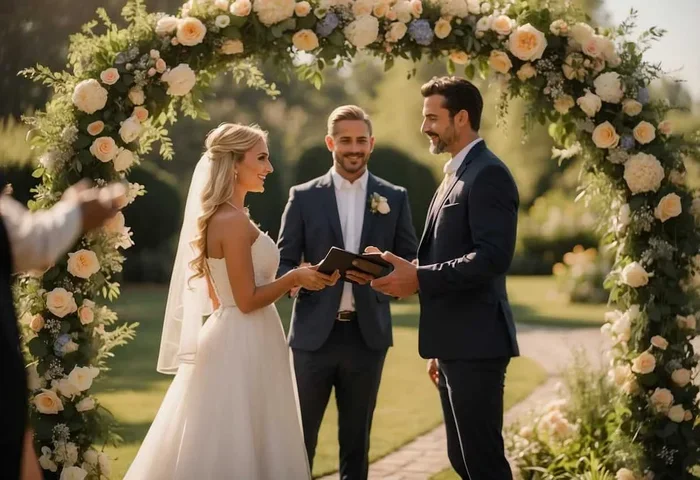

The lavender marriage meaning refers to a marriage between a heterosexual-appearing couple who are actually hiding their true sexual orientation. This practice originated in Hollywood and has deep roots in LGBTQ history. Understanding the lavender marriage meaning helps us appreciate the social pressures and personal sacrifices that shaped relationships for decades.
Key Takeaways
- A lavender marriage is a marriage of convenience: it masks one or both partners’ true sexual orientation from the public.
- The term has deep historical roots: it emerged in the early 20th century when LGBTQ individuals faced severe social and professional consequences.
- Hollywood popularized the concept: many famous actors and entertainers entered lavender marriages to protect their careers.
- LGBTQ rights have changed the landscape: modern lavender marriages are far less common but still exist in certain communities.
- Lavender marriages come with real emotional costs: both partners often sacrifice personal happiness and authenticity.
- Understanding lavender marriage meaning builds empathy: it helps us recognize the struggles of LGBTQ individuals in less accepting eras.
- Today, open relationships and acceptance are replacing lavender marriages: younger generations have far more options for living authentically.
📑 Table of Contents
What Does Lavender Marriage Meaning Actually Mean?
Have you ever heard the term lavender marriage and wondered what it really means? You are not alone. This phrase carries a rich and sometimes painful history. At its core, the lavender marriage meaning is simple. It refers to a marriage where one or both partners are actually LGBTQ but pretend to be straight for public appearances.
The word “lavender” has long been a symbol of the LGBTQ community. It represents pride, identity, and visibility. When you combine that with the word “marriage,” you get a union that exists on the surface as a traditional partnership but hides a deeper truth. This is what the lavender marriage definition captures.
A lavender marriage is not a real romantic partnership in most cases. It is a strategic arrangement. Both partners agree to present themselves as a married heterosexual couple. They go to dinner together. They attend parties. They pose for photos. And they keep their true identities hidden from the world.
Understanding the lavender marriage meaning opens a window into a time when being openly LGBTQ was dangerous. It also helps us understand the sacrifices people made to survive in a society that did not accept them. Let us dig deeper into this fascinating topic.
The lavender marriage meaning has evolved over the decades. What once was a survival tactic is now a historical concept. Yet it still matters today because it shapes how we think about identity, authenticity, and the pressure society puts on people to conform.
Why Is It Called a Lavender Marriage?
The color lavender has been tied to the LGBTQ community for a very long time. In the 1950s and 1960s, the phrase “lavender scare” described the fear of LGBTQ individuals in government jobs. The color became a quiet code for the community. So when people started entering marriages of convenience to hide their orientation, the term “lavender marriage” stuck naturally.
Some people also use the phrase lavender marriage meaning in relationships to describe any union where one partner is not fully honest about their sexuality. It is a broader term now. It can apply to any relationship where authenticity is sacrificed for social acceptance.
The History and Origin of Lavender Marriage
The history of the lavender marriage goes back further than most people realize. In the early 1900s, being openly gay, lesbian, or bisexual could ruin your career. It could cost you your family. It could even put your safety at risk. In this environment, many LGBTQ individuals had only one choice. They married someone of the opposite sex and pretended everything was normal.
The lavender marriage origin is closely tied to Hollywood. In the golden age of cinema, studios had strict moral codes. Actors who were known to be LGBTQ were often fired or blacklisted. To protect their careers, many stars entered into lavender marriages. These arrangements were kept secret from the public and sometimes even from close friends.
During the same period, the Lavender Scare of the 1950s targeted LGBTQ government employees. Senator Joseph McCarthy and others pushed to remove gay and lesbian workers from federal jobs. This created even more urgency for LGBTQ individuals to hide their identities. A lavender marriage became a shield against discrimination and job loss.
Lavender Marriage in the Film Industry
Hollywood was one of the biggest drivers of the lavender marriage trend. Studios wanted their stars to appear wholesome and heterosexual. They feared that any hint of queerness would hurt box office sales. So they encouraged or even arranged marriages between gay and lesbian actors.
These marriages were often loveless. They were business deals disguised as romance. The partners agreed to a public performance. They smiled for the cameras. They attended events together. And behind closed doors, they lived separate lives or pursued relationships with people of the same sex when they could.
The lavender marriage meaning in Hollywood was clear. It was a survival tool. It was also a form of self-erasure. Many actors spent their entire lives pretending to be something they were not. The emotional toll was enormous.
How the Lavender Marriage Practice Spread
It was not just Hollywood. Lavender marriages happened in politics, business, and everyday life. Any place where being LGBTQ carried serious consequences saw these arrangements. In the 1940s, 1950s, and 1960s, the practice was widespread. It was one of the few options available to queer people who wanted to live openly in society.
Over time, as LGBTQ rights movements gained strength, the need for lavender marriages decreased. The lavender marriage meaning shifted from a survival strategy to a historical footnote. But the legacy of these marriages still affects how the LGBTQ community thinks about identity and acceptance today.
Why People Choose Lavender Marriage
You might wonder why anyone would agree to a lavender marriage. The answer is not simple. It comes down to pressure, fear, and the desire for a normal life. In many cases, the people entering these marriages had no other choice.
Society in the mid-20th century was brutally unforgiving toward LGBTQ individuals. Losing your job was one thing. Losing your family was another. Being arrested or publicly shamed was a real possibility. A lavender marriage offered a way out. It gave queer people a mask to wear in public. It allowed them to move through the world without drawing suspicion.
Even today, in some parts of the world, the lavender marriage meaning carries practical weight. In countries where homosexuality is illegal or heavily stigmatized, marriages of convenience still happen. People marry to satisfy family expectations. They marry to gain legal protections. They marry to avoid violence or persecution.
The Emotional Cost of Lavender Marriage
While a lavender marriage might solve some problems, it creates others. The emotional toll is significant. Both partners often feel trapped. They cannot be themselves. They cannot share their true feelings. And the relationship itself usually lacks genuine intimacy and love.
Children born into lavender marriages can also be affected. They grow up in a household built on a lie. They may sense that something is off. They may feel confused about their parents’ true identities and feelings.
The lavender marriage challenges go beyond just the couple. Friends and family members are often kept in the dark. They do not know the truth about their loved one’s orientation. This secrecy can damage trust and create distance in relationships.
Modern Reasons for Lavender Marriage
In today’s world, the reasons for a lavender marriage have shifted. Some LGBTQ individuals still face family pressure to marry. In certain cultures, arranged marriages are the norm. A queer person might enter a lavender marriage to please their parents or to avoid bringing shame to the family.
Others might choose a lavender marriage for financial reasons. In some legal systems, marriage comes with tax benefits, inheritance rights, and healthcare access. A same-sex couple in a country without marriage equality might use a lavender marriage as a workaround.
The lavender marriage purpose today is very different from what it was in the 1950s. It is less about hiding from danger and more about navigating a world that is still not fully accepting. Progress has been made, but the need for lavender marriages has not disappeared entirely.
Lavender Marriage Meaning in Today’s World
How does the lavender marriage meaning apply in the modern era? The short answer is that it matters less than it used to. LGBTQ rights have expanded significantly in many countries. Same-sex marriage is legal in dozens of nations. Open adoption, anti-discrimination laws, and public acceptance have all grown.
But the world is not perfect. Even in progressive societies, LGBTQ individuals still face discrimination. They still experience rejection from families. They still worry about their safety in certain environments. For these people, the idea of a lavender marriage might still feel like the safest option.
The lavender marriage meaning has also expanded in modern conversations. It is no longer just about marriages between a gay man and a lesbian. It can describe any relationship where one or both partners hide their true sexual orientation. It can apply to queer people who are not out to their coworkers, their neighbors, or even their own families.
The Shift from Lavender Marriages to Open Relationships
One of the most positive changes in recent decades is the shift toward open relationships and authentic living. Younger generations of LGBTQ individuals are far more likely to be out and proud. They have role models, support groups, and legal protections that previous generations did not have.
This shift has reduced the need for lavender marriages. But it has not eliminated it entirely. In conservative communities, in certain religious groups, and in parts of the world where LGBTQ rights are limited, the practice continues. The lavender marriage meaning remains relevant for those who still feel they must hide who they are.
The Role of Social Media and Visibility
Social media has changed everything for the LGBTQ community. Platforms like Instagram, TikTok, and Twitter have given queer people a voice. They have created spaces for connection and support. They have also increased visibility, which makes lavender marriages harder to sustain.
When LGBTQ people are visible and celebrated, the pressure to hide diminishes. The lavender marriage stigma fades as society becomes more accepting. Today’s young people are growing up in a world where being gay, lesbian, bisexual, or transgender is increasingly seen as just another part of human diversity.
Famous Lavender Marriage Examples
History is full of famous lavender marriages. Many of these stories are heartbreaking. They reveal the immense pressure that LGBTQ individuals faced and the lengths they went to in order to survive.
Rock Hudson and Phyllis Gates
One of the most well-known lavender marriage examples involves the actor Rock Hudson. Hudson was one of the biggest movie stars of the 1950s and 1960s. He was secretly gay but married his female assistant, Phyllis Gates, in 1955. The marriage lasted only three years. Gates later revealed that Hudson was gay, which shocked the public.
This lavender marriage was a classic example of the era. Hudson needed to protect his image. Gates may have entered the marriage for love or for career reasons. Either way, the lavender marriage meaning in this case was clear. Both partners sacrificed their truth for the sake of public perception.
Other Notable Lavender Marriages
Rock Hudson was not alone. Many other celebrities entered lavender marriages over the decades. Some of these arrangements were well known in Hollywood circles but hidden from the public. Others became public only after one partner passed away or came out posthumously.
The lavender marriage meaning in celebrity culture was tied to image management. Studios, agents, and publicists all played a role in maintaining the illusion. They understood that a star’s personal life could make or break their career. So they encouraged lavender marriages as a way to keep things under control.
Today, many of these stories are told with compassion. We understand that the people involved were not villains. They were victims of a society that forced them to choose between their careers and their identities. The lavender marriage history is a reminder of how far we have come and how much work still needs to be done.
What These Examples Teach Us
Studying famous lavender marriages helps us understand the broader lavender marriage and society dynamic. These stories show us the human cost of discrimination. They remind us that behind every lavender marriage, there are real people with real feelings.
They also show us the power of authenticity. As more LGBTQ individuals have come out publicly, the cultural landscape has shifted. The need for lavender marriages has decreased. And younger generations have grown up with more freedom to be themselves.
The Challenges and Downsides of Lavender Marriage
A lavender marriage might look like a solution from the outside. But it comes with serious challenges. Both partners carry a heavy burden. They must maintain a lie every single day. They must watch their words, their actions, and their relationships carefully.
The lavender marriage challenges are both emotional and practical. Emotionally, partners often feel isolated and lonely. They cannot share their true selves with anyone. They cannot seek support from friends or family because doing so would expose the truth.
Practically, lavender marriages can be complicated. Legal issues around divorce, custody, and finances become messy if the truth comes out. The partners may also have different expectations about the arrangement. One might want out, while the other is invested in maintaining the facade.
The Impact on Mental Health
The mental health effects of a lavender marriage can be severe. Living a double life creates constant stress and anxiety. Partners may develop depression, low self-esteem, or feelings of worthlessness. They may turn to unhealthy coping mechanisms like substance abuse.
The lavender marriage meaning in terms of mental health is important to understand. It is not just a social arrangement. It is a psychological burden. The pressure to perform as a straight couple can take a real toll on a person’s well-being.
Impact on Children and Family
When children are involved, the challenges multiply. Kids in lavender marriages may grow up without a clear understanding of their parents’ identities. They may feel confused, betrayed, or ashamed when the truth eventually comes out.
Some children of lavender marriages have spoken publicly about their experiences. They describe feeling like they were part of a performance. They describe the confusion of not knowing which parent was truly their mom or dad in an emotional sense. The lavender marriage and identity impact on children is profound and lasting.
Can a Lavender Marriage Ever Work?
Is it possible for a lavender marriage to be successful? In rare cases, yes. Some partners in lavender marriages develop genuine affection and friendship. They may even become close companions. But these cases are the exception, not the rule.
Most lavender marriages are built on a foundation of dishonesty. And dishonesty tends to erode trust over time. The lavender marriage meaning in terms of long-term success is mixed. Some partnerships survive for decades. Others fall apart quickly. The emotional cost is almost always high.
Key Takeaways
- A lavender marriage is a marriage of convenience: it masks one or both partners’ true sexual orientation from the public.
- The term has deep historical roots: it emerged in the early 20th century when LGBTQ individuals faced severe social and professional consequences.
- Hollywood popularized the concept: many famous actors and entertainers entered lavender marriages to protect their careers.
- LGBTQ rights have changed the landscape: modern lavender marriages are far less common but still exist in certain communities.
- Lavender marriages come with real emotional costs: both partners often sacrifice personal happiness and authenticity.
- Understanding lavender marriage meaning builds empathy: it helps us recognize the struggles of LGBTQ individuals in less accepting eras.
- Today, open relationships and acceptance are replacing lavender marriages: younger generations have far more options for living authentically.
Conclusion
The lavender marriage meaning is more than just a historical curiosity. It is a powerful reminder of the struggles that LGBTQ individuals have faced for generations. From Hollywood stars to everyday people, lavender marriages were a response to a world that refused to accept them for who they were.
Understanding the lavender marriage definition helps us appreciate the progress that has been made. It also reminds us that the fight for full acceptance is not over. In many parts of the world, LGBTQ individuals still face the same pressures that led to lavender marriages decades ago.
The lavender marriage meaning in today’s context is about empathy and awareness. When we learn about lavender marriages, we learn about the human need for acceptance and belonging. We learn about the courage it takes to live authentically. And we learn about the importance of creating a world where no one has to hide who they are.
As we move forward, the goal should be clear. Every person deserves the right to love openly and honestly. Lavender marriages were born out of necessity. With continued progress, they can become a thing of the past. The lavender marriage meaning will always be a part of LGBTQ history. And that history deserves to be remembered, understood, and respected.
Let us use this knowledge to build a more accepting future. Let us support LGBTQ individuals in living their truth. And let us ensure that no one ever has to enter a lavender marriage just to survive.
FAQs
What is the lavender marriage meaning in simple terms?
A lavender marriage is a marriage where one or both partners are actually LGBTQ but pretend to be straight in public. It is a marriage of convenience designed to hide a person’s true sexual orientation. The term comes from the lavender color, which has long been associated with the LGBTQ community.
Why is it called a lavender marriage?
The word “lavender” has been a symbol of the LGBTQ community for decades. In the mid-20th century, phrases like “lavender scare” described the fear of gay and lesbian individuals in public life. When people started entering marriages to hide their orientation, the term “lavender marriage” became the natural label for this practice.
Are lavender marriages still common today?
Lavender marriages are far less common today than they were in the past. The rise of LGBTQ rights, same-sex marriage legalization, and greater social acceptance have reduced the need for these arrangements. However, in some conservative communities and countries, lavender marriages still happen out of necessity or family pressure.
What are the risks of entering a lavender marriage?
The risks include emotional distress, loss of personal authenticity, and mental health challenges. Partners may feel trapped, isolated, or depressed. Children born into lavender marriages may also be affected by the dishonesty. Legal complications around divorce and custody can add further stress if the truth is eventually revealed.
Can a lavender marriage turn into a real relationship?
In rare cases, yes. Some partners in lavender marriages develop genuine affection and friendship over time. However, most lavender marriages lack the foundation of honesty and mutual love that healthy relationships need. The emotional cost is usually high, and long-term satisfaction is uncommon.
How has the lavender marriage meaning changed over time?
The lavender marriage meaning has evolved significantly. In the early 20th century, it was primarily a survival tactic against discrimination and job loss. Today, it is more often a response to family pressure, cultural expectations, or legal limitations. The core concept remains the same, but the reasons and context have shifted with changing social attitudes.



