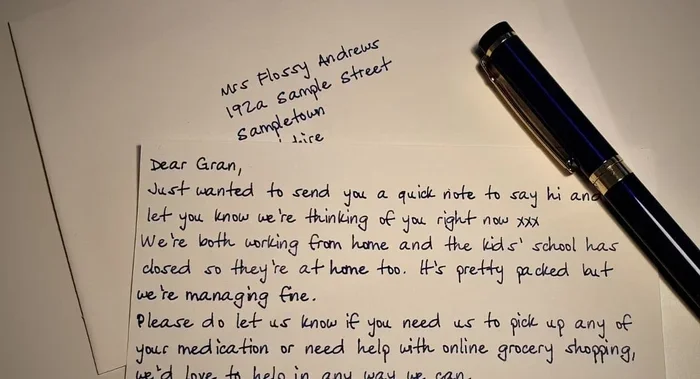

The PS meaning is “postscript,” a short note added after the main body of a letter or message. It comes from the Latin phrase “post scriptum” and has been used for centuries. Learning how to use PS correctly can improve your writing, boost your emails, and add a personal touch to any message.
Key Takeaways
- PS stands for “postscript”: It is a note added after the main content of a letter or message.
- The origin of PS is Latin: “Post scriptum” means “written after,” and it dates back to handwritten letter traditions.
- PS is used in many contexts: From personal letters to business emails and marketing campaigns.
- Using PS in emails can boost engagement: Marketers use it because people naturally read the P.S. first.
- Common mistakes include overusing PS: Too many postscripts can clutter your message and reduce impact.
- PS in texting is informal: It is casual and works best in friendly or personal communication.
- Formatting matters: Knowing where to place PS in a letter or email makes your writing look polished.
📑 Table of Contents
What Does PS Mean?
So you have seen those two little letters at the end of a letter or email. Maybe a friend wrote them. Maybe you saw them in a marketing email. Either way, you probably wondered about the PS meaning. Let us clear that up right now.
PS stands for postscript. A postscript is a short note that comes after the main body of a letter or message. Think of it as an afterthought. You finish writing your main message, and then you remember something else. That is where PS comes in.
The full phrase is P.S., which stands for post scriptum. That is Latin for “written after.” It tells the reader that what follows was added after the original message was complete. Simple, right?
In everyday writing, PS is used in letters, emails, texts, and even social media posts. It is one of the oldest writing conventions still in use today. And despite all the technology changes, it has not gone away at all.
Here is a quick example of how it looks:
Dear Sarah,
Thank you for the birthday gift. I really appreciate it.
Best wishes,
John
P.S. I loved the book you recommended. I finished it in one night!
See how easy that is? The P.S. adds a personal touch that the main message did not include.
PS in Different Types of Writing
The PS abbreviation works in many different types of writing. Here are some common places you will see it:
- Personal letters: Adding a warm thought or forgotten detail.
- Business emails: Highlighting a key point or call to action.
- Marketing emails: Drawing attention to a special offer or deadline.
- Text messages: Adding a quick thought after sending a message.
- Social media posts: Adding a bonus note at the end of a caption.
No matter where you use it, PS meaning postscript stays the same. It is always that extra thought added at the end.
The Origin and History of PS
The PS origin goes way back. Before typewriters and computers, people wrote letters by hand. And here is the thing about handwriting: it is easy to forget something. You finish your letter, seal the envelope, and then suddenly remember. “Oh no, I forgot to mention the dinner on Saturday!”
That is exactly where the postscript was born. Writers would add a note at the end of the letter after it was already written. The word post scriptum literally means “after writing” in Latin. So P.S. is just a shortened form of that Latin phrase.
How PS Evolved Over Time
In the old days, letters were the main way to communicate over long distances. People took their time writing them. And the PS in letters became a common and expected part of the format. It was so normal that readers would actually look forward to reading the P.S. section.
When typewriters came along in the 1800s, the practice carried over. People still forgot things and added P.S. notes at the bottom. The same thing happened when email replaced handwritten letters. The P.S. in emails became a natural part of digital communication.
Today, PS in texting has become more casual. People use it in informal messages all the time. But the core idea remains the same: it is a note added after the main message.
Why the Latin Connection Matters
You might wonder why we still use a Latin phrase in everyday writing. The answer is simple. Latin phrases carry weight and formality. They make a message feel more intentional. When you write “P.S.,” you are connecting to hundreds of years of letter-writing tradition.
Other Latin phrases we still use every day include:
- etc. (et cetera) – meaning “and so on”
- i.e. (id est) – meaning “that is”
- e.g. (exempli gratia) – meaning “for example”
Just like these, PS meaning postscript has stuck around because it is useful and understood by everyone.
How to Use PS in Different Contexts
Now that you know the PS meaning, let us talk about how to actually use it. The way you write a P.S. depends on who you are writing to and why. A casual text message is very different from a formal business letter.
Using PS in Personal Letters
Personal letters are the most natural place for a postscript. You are writing to someone you care about, so the P.S. feels warm and genuine. Here are some tips:
- Keep it short and sweet. A P.S. in a personal letter should be one or two sentences at most.
- Add something personal. Share a thought, a memory, or a small detail you forgot earlier.
- Be sincere. The P.S. is a great place to say something heartfelt that you did not want to interrupt your main message with.
Example of a personal letter P.S.:
P.S. I am thinking of you today. Hope your week is going well.
Using PS in Business Emails
The PS in business emails is a powerful tool. Many professionals use it to highlight a key point that they do not want to bury in the main body of the email. Here is why it works so well:
- People read the P.S. first. Studies show that readers often scan the postscript before the main content.
- It draws attention. Because the P.S. is unexpected, it stands out.
- It adds a personal touch. A well-placed P.S. can make a business email feel more human.
Example of a business email P.S.:
P.S. Our team is offering a 10% discount this week only. Let me know if you are interested.
Using PS in Marketing Emails
If you have ever received a marketing email, you have probably noticed the PS in marketing emails. Smart marketers use postscripts because they know people read them. The P.S. is often the second most-read part of an email, right after the subject line.
Here are some ways marketers use PS effectively:
- Adding urgency: “P.S. This offer ends tonight!”
- Sharing a testimonial: “P.S. Here is what one of our customers had to say…”
- Including a bonus: “P.S. I have added a free guide for you.”
- Reinforcing the main message: “P.S. Remember, this is the last chance to save.”
The P.S. examples in marketing show just how versatile this small addition can be. It takes very little space but can have a big impact.
Using PS in Texting and Social Media
PS in texting is very informal and casual. You might text a friend something and then add “P.S.” to include a quick thought. It works great in casual conversations and social media captions too.
Here is how PS looks in texting:
- “Can’t wait for the game tonight! P.S. Bring extra snacks.”
- “Thanks for helping me move yesterday. P.S. Pizza is on me this Friday!”
On social media, people often use P.S. at the end of captions to add a bonus thought or a call to action. It keeps the post feeling personal and engaging.
PS in Business and Marketing: Why It Works
The PS in sales emails and marketing messages is not just a habit. It is backed by psychology. Here is why the postscript works so well in business communication.
The Psychology Behind PS
When you read a letter or email, your brain processes the main content first. But the P.S. feels different. It feels like a secret or a bonus. That is why people tend to read it more carefully.
Research has shown that PS in professional communication increases response rates. When you add a P.S. to a sales email or a request, more people pay attention to it. It is a small addition with a big payoff.
PS in Formal Writing vs. Informal Writing
The way you use PS depends on the formality of your writing. Here is a quick comparison:
- Formal writing: Use “P.S.” followed by a complete sentence. Keep it professional and relevant. Place it after your signature.
- Informal writing: Use “P.S.” or even “ps” in lowercase. Keep it casual and friendly. Place it at the very end of the message.
For PS in formal writing, always make sure the postscript adds value. Do not use it just for the sake of using it. In informal writing, you have more freedom to be creative and playful.
PS in Love Letters and Personal Messages
One of the most romantic uses of the PS meaning is in love letters. A P.S. at the end of a love letter can be incredibly powerful. It is that final thought that lingers with the reader.
Here is an example:
P.S. I wish every day could be like this one with you.
Simple, right? But that one short line can mean the world to the person reading it. The postscript gives you a chance to say something emotional without interrupting the flow of your main message.
Common Mistakes When Using PS
Even though using PS is simple, there are some mistakes people make. Let us look at the most common ones so you can avoid them.
Using Too Many Postscripts
This is the number one mistake. Some people write P.S. 1, P.S. 2, P.S. 3, and so on. That is too much. A letter or email should have one postscript at most. If you have more than one thought to add, try to fit it into the main body of your message.
Making the PS Too Long
The whole point of a postscript is that it is short. If your P.S. is longer than your main message, something is wrong. Keep it to one or two sentences. Make it count.
Forgetting the Period
Always write “P.S.” with periods after each letter. Writing “PS” without periods is a common mistake. The periods are part of the abbreviation and should not be left out.
Using PS in the Wrong Place
The postscript always comes at the very end of your message, after your signature. Placing it in the middle of your email or letter breaks the flow and confuses the reader. Always put it last.
Using PS When It Is Not Needed
Not every message needs a postscript. If your main message is complete and clear, do not add a P.S. just for the sake of it. Use PS only when you have something genuinely valuable to add.
Why PS Still Matters in Modern Communication
You might think that PS in modern communication is outdated. After all, we have instant messaging, video calls, and social media. Why would anyone need a postscript anymore?
The answer is that the PS abbreviation has adapted to modern communication. It is not stuck in the past. It has evolved with us. Today, P.S. appears in emails, text messages, social media posts, and even video captions.
Here is why PS still matters:
- It stands out. In a world full of noise, a P.S. catches the eye.
- It adds personality. A postscript shows that you care enough to add one extra thought.
- It is memorable. People remember the P.S. section of a message long after they forget the main content.
- It builds connection. A personal P.S. makes your message feel more human and warm.
The PS meaning has not changed. It is still “postscript.” But the way we use it has grown with technology. And that is exactly why it remains relevant today.
PS in Digital Marketing and SEO
If you are in digital marketing, you should pay attention to the PS in marketing emails. It is one of the most effective places to put a call to action. Many email marketers test different P.S. lines to see which ones get the best response.
The PS in sales emails is especially powerful. A well-crafted postscript can be the difference between a customer clicking “buy” and ignoring your email entirely.
Quick Tips for Writing a Great PS
Want to make your postscripts better? Here are some quick tips:
- Keep it under three sentences. Short is always better.
- Make it relevant. The P.S. should add value to your message.
- Use it to reinforce your main point. Repetition helps people remember.
- Add a personal touch. Even in business writing, warmth goes a long way.
- Proofread your P.S. A typo in a postscript is just as bad as a typo anywhere else.
- Place it after your signature. Always end with the postscript, not before it.
- Use “P.S.” with periods. It is the correct format.
Expert Insights on Using PS Effectively
Communication experts agree that the postscript is one of the most underused tools in writing. According to email marketing studies, emails with a P.S. line tend to have higher engagement rates than those without one.
Professional writers often say that the P.S. is where you can be the most honest. The main body of a letter or email is structured and polished. But the postscript feels like a side conversation. It is where you can let your guard down a little.
Business communication coach Jane Miller says, “The P.S. is your secret weapon. Use it to say what really matters.” That is great advice for anyone who wants to improve their writing.
Whether you are writing a love letter, a sales email, or a quick text to a friend, the PS meaning gives you a powerful way to add that extra something. It is small, but it makes a difference.
Conclusion
The PS meaning is simple: it stands for “postscript,” a note added after the main message. But the impact of a well-written postscript goes far beyond its size. From handwritten letters to modern marketing emails, the P.S. has stood the test of time.
We covered a lot in this article. You learned about the PS origin in Latin, how to use PS in different contexts, and why it still works so well in business and marketing. You also saw common mistakes to avoid and quick tips to make your postscripts more effective.
The key takeaway is this: PS meaning postscript is more than just two letters. It is a way to connect, to emphasize, and to add a personal touch to your writing. Whether you are a student, a professional, or a marketer, learning to use PS well is a skill that pays off.
So the next time you write a letter, send an email, or type a text, try adding a postscript. Keep it short, keep it sincere, and watch how it makes your message stand out. The PS meaning may be simple, but its power is real.
Frequently Asked Questions
What does PS stand for in a letter?
PS stands for “postscript,” which comes from the Latin phrase “post scriptum” meaning “written after.” It is a short note added at the end of a letter or message after the main content and signature.
Where should I place PS in an email?
Always place the P.S. after your email signature, at the very end of the message. This is the traditional and correct placement that keeps your email looking clean and professional.
Can I use PS in a text message?
Yes, absolutely. PS in texting is very common and works well for adding a quick thought or detail after your main message. Keep it casual and short for the best results.
Is PS the same as P.S.?
Yes, P.S. is the standard way to write the abbreviation for postscript. You should include periods after each letter. Some people write “PS” without periods, but “P.S.” is the correct format.
Why do marketers use PS in their emails?
Marketers use PS because studies show that people naturally read the postscript section of an email. It stands out and draws attention, making it a great place to highlight offers, deadlines, or key messages.
How many PS notes should I include in one message?
You should include only one postscript per message. Having more than one P.S. can clutter your writing and reduce the impact of your note. Keep it to one clear, valuable thought.



