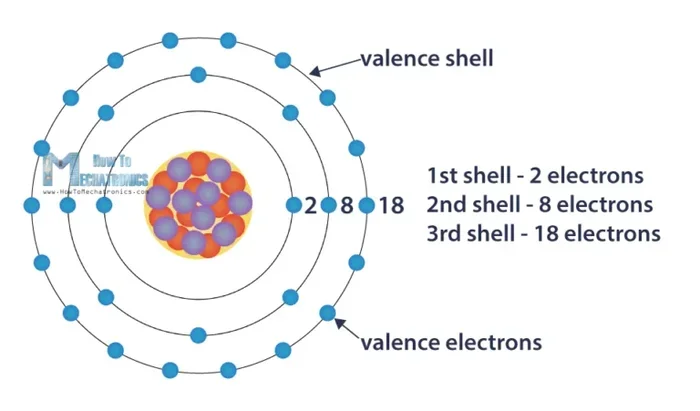

The valence meaning in chemistry refers to how many electrons an atom can share, gain, or lose to form bonds with other atoms. Valence determines everything from how water molecules form to why rust appears on iron. Understanding valence gives you a powerful lens into how the world of chemicals works at a fundamental level.
Key Takeaways
- Valence defines bonding power: It tells you exactly how many bonds an atom can form with other atoms.
- Valence electrons are the key players: Only the outermost electrons participate in chemical bonding.
- Valence numbers follow patterns: The periodic table lets you predict an element’s valence quickly.
- Real-world applications are everywhere: From batteries to medicines, valence drives chemical reactions that shape daily life.
- Common mistakes are easy to avoid: Confusing valence with oxidation state is the most frequent error learners make.
- Valence applies beyond chemistry: Psychology and linguistics also use the term “valence” with distinct meanings.
📑 Table of Contents
- What Is Valence Meaning in Chemistry?
- How Valence Electrons Actually Work
- Valence and Chemical Bonding Explained
- Valence Numbers of Common Elements
- Why Understanding Valence Matters in Real Life
- Common Mistakes People Make About Valence
- Valence Beyond Chemistry
- Expert Insights on Mastering Valence Concepts
- Conclusion
What Is Valence Meaning in Chemistry?
Let us start with the basics. When people ask about valence meaning, they usually want to know one simple thing. How many bonds can an atom make? That is it. That is the core idea.
Every atom has a certain number of electrons orbiting its nucleus. The electrons in the outermost shell are called valence electrons. These outer electrons are the ones that interact with other atoms. They form the connections that create molecules and compounds. Without valence electrons, nothing would stick together in the chemical world.
Think of valence like the hands on a clock. A clock needs hands to show time. An atom needs valence electrons to form bonds. Some atoms have one “hand.” Some have four. Some have seven. The number tells you how many connections that atom can make.
The Simple Definition of Valence
So what does valence actually mean? In plain language, valence is the combining capacity of an element. It measures how many hydrogen atoms an atom can bond with. Or how many electrons it can gain, lose, or share during a reaction.
For example, hydrogen has a valence of one. That means it can form one bond. Oxygen has a valence of two. It can form two bonds. Carbon has a valence of four. It can form four bonds. These numbers are not random. They come from the electron arrangement inside each atom.
Understanding valence meaning opens the door to understanding all of chemistry. It explains why sodium reacts so violently with water. It explains why carbon is the backbone of all life. It explains why table salt exists as it does. The concept is simple, but its implications are enormous.
Why Valence Goes by Other Names
You may hear people use the word “valency” instead of “valence.” These terms mean the same thing. Some textbooks say “combining power” or “valence number.” In older chemistry texts, you might see “atomicity.” Do not let these different terms confuse you. They all point to the same core idea. The combining capacity of an atom. How many bonds it forms.
Some sources also use the term “oxidation state” when discussing valence. While related, these are not always identical. We will explore that distinction later in this article. For now, just remember that valence meaning centers on bonding capacity.
How Valence Electrons Actually Work
Now let us go deeper. Valence electrons are the electrons in the outermost shell of an atom. The outermost shell is also called the valence shell. Electrons in inner shells do not participate in bonding. Only the outer ones matter.
Atoms “want” to have a full outer shell. This is called the octet rule. Most atoms seek eight electrons in their outermost shell. The exception is hydrogen, which is happy with two. When an atom does not have a full outer shell, it becomes reactive. It will try to gain, lose, or share electrons to reach stability.
The Octet Rule Explained Simply
The octet rule is one of the most important ideas in chemistry. Here is how it works in simple terms.
- Atoms are most stable when their outer shell has eight electrons.
- If the outer shell is not full, the atom will react with other atoms.
- Through bonding, atoms share or transfer electrons to fill their outer shells.
- Once the outer shell is full, the atom becomes stable and less reactive.
Think of it like filling seats in a movie theater. If a row has eight seats and only five are filled, the row is incomplete. The atom “wants” to fill all eight seats. It will reach out to other atoms to make that happen. This drive for a full outer shell is what powers almost all chemical reactions.
Electron Configuration and Valence
Each element has a unique electron configuration. This is just a fancy way of saying how electrons are arranged around the nucleus. The arrangement determines the valence number.
Take sodium, for example. Sodium has 11 electrons. Two sit in the first shell. Eight sit in the second shell. One electron sits in the third shell. That single outer electron is sodium’s valence electron. Since it has just one valence electron, sodium has a valence of one. It can easily lose that one electron to form a bond.
Take chlorine. Chlorine has 17 electrons. Two in the first shell. Eight in the second. Seven in the third. Chlorine needs just one more electron to complete its outer shell. So chlorine also has a valence of one. It will eagerly gain that missing electron.
This is exactly why sodium and chlorine react so readily. Sodium gives away its one valence electron. Chlorine accepts it. Both atoms achieve full outer shells. They form the compound we know as table salt. Sodium chloride. The valence meaning here is clear. One bond each. Simple and elegant.
Valence and Chemical Bonding Explained
Valence is the driving force behind all types of chemical bonding. When atoms come together, they do so because of valence electrons. The type of bond that forms depends on the elements involved and their valence numbers.
Ionic Bonds
Ionic bonds form when one atom completely transfers electrons to another atom. This usually happens between metals and nonmetals. The metal loses electrons and becomes a positively charged ion. The nonmetal gains electrons and becomes a negatively charged ion. Opposite charges attract. The ions stick together and form a strong ionic bond.
Consider magnesium oxide. Magnesium has a valence of two. It loses two electrons. Oxygen has a valence of two. It gains those two electrons. The result is a stable compound held together by strong electrostatic forces. Ionic compounds like this tend to form crystals. They have high melting points. They conduct electricity when dissolved in water.
Covalent Bonds
Covalent bonds form when atoms share electrons instead of transferring them. This typically happens between nonmetal atoms. Each atom contributes electrons to the shared pool. Both atoms benefit from the shared electrons because their outer shells become full.
Water is the perfect example. Oxygen has a valence of two. Each hydrogen has a valence of one. Oxygen shares one electron with each hydrogen. Each hydrogen shares its electron with oxygen. The result is H2O. Two hydrogen atoms bonded to one oxygen atom through covalent bonds. The valence meaning in water is two for oxygen and one for each hydrogen.
Metallic Bonds
Metallic bonding is a third type. Metal atoms share their valence electrons freely across a lattice of positive ions. This “sea of electrons” model explains why metals are good conductors of heat and electricity. It also explains why metals are malleable and ductile. The valence electrons move freely, allowing layers of metal atoms to slide past each other without breaking the structure.
Valence Numbers of Common Elements
One of the most practical things you can learn is how to predict valence from the periodic table. The group number of a main-group element usually tells you its valence. Let us look at some common examples.
| Element | Group Number | Valence Electrons | Typical Valence | Common Compounds |
|---|---|---|---|---|
| Hydrogen | 1 | 1 | 1 | H2O, HCl, CH4 |
| Carbon | 14 | 4 | 4 | CO2, CH4, C6H12O6 |
| Nitrogen | 15 | 5 | 3 | NH3, N2O, HNO3 |
| Oxygen | 16 | 6 | 2 | H2O, CO2, Fe2O3 |
| Sodium | 1 | 1 | 1 | NaCl, NaOH |
| Magnesium | 2 | 2 | 2 | MgO, MgCl2 |
| Aluminum | 13 | 3 | 3 | Al2O3, AlCl3 |
| Chlorine | 17 | 7 | 1 | NaCl, HCl, NaClO |
Quick Tips for Remembering Valence Numbers
Here are some practical tips to help you remember valence numbers quickly.
- Group 1 elements (lithium, sodium, potassium) always have a valence of one.
- Group 2 elements (beryllium, magnesium, calcium) always have a valence of two.
- Group 13 elements (boron, aluminum) typically have a valence of three.
- Group 14 elements (carbon, silicon) have a valence of four.
- Group 15 elements (nitrogen, phosphorus) often have a valence of three.
- Group 16 elements (oxygen, sulfur) usually have a valence of two.
- Group 17 elements (fluorine, chlorine) almost always have a valence of one.
- Noble gases (helium, neon, argon) have a valence of zero. They are already stable.
Once you memorize this pattern, you can predict valence for most main-group elements instantly. This makes writing chemical formulas much easier. It also helps you understand valence meaning at a deeper level.
Transition Metals and Variable Valence
Not all elements follow the simple group-number rule. Transition metals often show variable valence. Iron can have a valence of two or three. Copper can be one or two. Tin can be two or four. This variability happens because transition metals have electrons in d orbitals that can participate in bonding.
When a transition metal has multiple valence states, chemists use Roman numerals in the compound name. For example, iron(II) chloride has iron with a valence of two. Iron(III) chloride has iron with a valence of three. This naming system removes any confusion about which valence state is present.
Why Understanding Valence Matters in Real Life
You might wonder why you need to know about valence meaning. Does it really matter outside of a chemistry classroom? Absolutely. Valence affects countless aspects of daily life, technology, and industry.
Medicine and Pharmaceuticals
Every drug you take works because of chemical bonding. Pharmaceutical chemists design molecules based on valence principles. They need to know exactly how many bonds each atom can form. The shape and reactivity of a drug molecule depend entirely on its valence electrons.
For instance, aspirin contains carbon, hydrogen, and oxygen atoms. Carbon’s valence of four, oxygen’s valence of two, and hydrogen’s valence of one determine how the aspirin molecule is built. Change any valence, and the molecule would not work the same way. Understanding valence meaning is essential for creating safe and effective medicines.
Batteries and Energy Storage
Batteries rely on electron transfer between elements. The valence of each element determines how much energy a battery can store. Lithium-ion batteries work because lithium has a valence of one. It can easily lose a single electron, releasing energy in the process.
Researchers are constantly exploring new materials with specific valence properties to build better batteries. Better batteries mean longer-lasting phones, electric vehicles with more range, and more efficient energy storage for renewable power. Valence is at the heart of this technology.
Environmental Science
Valence plays a big role in environmental chemistry too. When iron rusts, its valence changes from zero to three. Oxygen’s valence of two drives the reaction that creates iron oxide. Understanding these valence shifts helps scientists develop anti-corrosion treatments and cleaner industrial processes.
Nitrogen valence is also critical for environmental health. Nitrogen has a valence of three in ammonia but five in nitrate. These different valence states affect water quality and plant growth. Too much nitrate in drinking water is a health concern. Chemists use their knowledge of valence to address these environmental challenges.
Cooking and Food Chemistry
Even cooking involves valence concepts. When you bake bread, gluten proteins form bonds through their valence electrons. The structure of the bread depends on how these atoms connect. When you caramelize sugar, you are breaking and forming covalent bonds. The color and flavor changes are direct results of valence-driven reactions.
Salt dissolves in water because of ionic bonding driven by valence. The sodium ion and chloride ion separate and interact with water molecules. Without understanding valence, food science would be guesswork instead of a precise discipline.
Common Mistakes People Make About Valence
Learning about valence can be tricky. Many students and even professionals make the same errors. Let us highlight the most common ones so you can avoid them.
Confusing Valence with Oxidation State
This is the number one mistake. Valence and oxidation state are related but not the same. Valence refers to the combining capacity of an atom. Oxidation state refers to the hypothetical charge on an atom if all bonds were ionic.
For simple compounds, the two numbers often match. But for more complex molecules, they can differ. For example, iron in iron(III) oxide has an oxidation state of three and a valence of three. But in some compounds, the oxidation state and valence diverge. Always check which concept a question is asking about.
Forgetting That Valence Can Be Positive or Negative
Atoms that lose electrons have a positive valence. Atoms that gain electrons have a negative valence. Some learners forget the sign and only focus on the number. This matters when balancing chemical equations and predicting reaction products.
Assuming All Elements Have Fixed Valence
As we discussed with transition metals, many elements show variable valence. Do not assume an element always has the same valence. Check the context of the compound or reaction. The periodic table gives you a starting point, but exceptions exist.
Ignoring the Octet Rule Exceptions
Not all atoms follow the octet rule. Some molecules have atoms with fewer than eight electrons. Others have atoms with more than eight. These exceptions exist, especially with elements in period three and beyond. Be aware of them and do not blindly apply the octet rule to every situation.
Valence Beyond Chemistry
Here is something interesting. The term “valence” appears in other fields too, each with its own distinct meaning. Understanding these broader uses enriches your knowledge of the word.
Valence in Psychology
In psychology, valence refers to the emotional quality of an experience. A positive valence means something feels good. A negative valence means something feels bad. Neutral valence means no strong emotional response. Psychologists use valence to study mood, motivation, and decision-making.
While this meaning is very different from the chemistry sense, the root idea is similar. In chemistry, valence measures how atoms connect. In psychology, valence measures how experiences connect to emotions. Both deal with the fundamental nature of interaction and connection.
Valence in Linguistics
In linguistics, valence refers to the number of arguments a verb takes. A transitive verb has a valence of one (it takes a direct object). A ditransitive verb has a valence of two (it takes a direct and indirect object). This grammatical concept borrows the idea of “combining capacity” from chemistry. The parallel is striking.
So when you explore valence meaning across disciplines, you find a unifying theme. Valence always relates to how things connect and combine. Whether atoms, emotions, or sentence structures, valence describes the capacity for interaction.
Expert Insights on Mastering Valence Concepts
Chemistry educators and researchers offer valuable advice for truly understanding valence. Here are some insights that go beyond textbook definitions.
Use visual models. Drawing Lewis structures helps you see valence electrons in action. When you physically draw dots around an element symbol, the bonding patterns become obvious. Many students who struggle with valence concepts find that visualizing the electrons changes everything.
Practice with real compounds. Do not just memorize valence numbers. Use them to write real chemical formulas. Try predicting what happens when you mix certain elements. When you apply valence to actual compounds, the concept clicks much faster.
Connect valence to the periodic table. The periodic table is not just a chart. It is a map of valence behavior. Each row adds a new shell. Each column groups elements with similar valence. Spend time studying the table and you will start to see patterns everywhere.
Ask “why” questions. Instead of just accepting that carbon has a valence of four, ask why. The answer lies in electron configuration. Carbon has four valence electrons because its outer shell has four spots. Filling those four spots requires four bonds. The “why” behind valence makes the concept stick.
These expert strategies help you move beyond rote memorization. You develop genuine understanding of valence meaning and how it shapes the chemical world around you.
Conclusion
Valence meaning is one of the most important concepts in all of chemistry. It explains how atoms combine, how molecules form, and how the material world works. From the salt on your table to the air you breathe, valence is at play in every moment.
We covered a lot of ground in this article. We explored the basic definition of valence. We looked at how valence electrons drive chemical bonding. We examined valence numbers for common elements. We discussed real-world applications in medicine, energy, and the environment. We also addressed common mistakes and explored valence in psychology and linguistics.
The key takeaway is this. Valence is the language of chemical connection. Once you understand it, you can read the story of how molecules form and react. You can predict how elements will behave. You can appreciate the elegance of the atomic world.
Take what you have learned here and apply it. Look at the periodic table with fresh eyes. When you see an element, ask about its valence. Think about how it bonds. Think about what it can build. The more you practice, the more natural valence meaning becomes. You will start seeing chemistry in everything around you, and that is a truly powerful thing.
Frequently Asked Questions
What is the valence meaning in simple terms?
Valence is the number of bonds an atom can form with other atoms. It depends on how many valence electrons are in the atom’s outermost shell. Atoms use these outer electrons to connect with other atoms and create molecules and compounds.
How do you find the valence of an element?
For main-group elements, look at the group number on the periodic table. Group 1 elements have a valence of one. Group 2 elements have a valence of two. Group 17 elements have a valence of one. Group 18 noble gases have a valence of zero. Transition metals often have variable valence and require checking the specific compound.
Is valence the same as valency?
Yes, valence and valency mean the same thing. Both terms describe the combining capacity of an atom. Some textbooks prefer one term over the other, but they refer to the same concept. Valence tells you how many bonds an atom can form.
Why do valence electrons matter so much?
Valence electrons are the outermost electrons in an atom. They are the ones involved in chemical bonding. Without valence electrons, atoms would not connect to form molecules. All of chemistry, from simple salt to complex DNA, depends on how valence electrons interact between atoms.
Can an element have more than one valence?
Yes, many elements have multiple valence states. This is especially common with transition metals like iron, copper, and manganese. Iron can have a valence of two or three. Copper can be one or two. The specific valence depends on the compound or reaction the element is involved in.
How does valence relate to everyday life?
Valence affects everything from the food you eat to the medicine you take. It determines how batteries store energy, how metals resist rust, and how medicines interact with your body. Even cooking bread involves valence-driven chemical reactions. Understanding valence helps you see the chemistry hidden in ordinary life.